
 Worksheets
GMJ 9189 Phase 3 MCQ Hot Water Systems Quiz
Total questions: 20
Worksheet time: 10mins
What units does a weir cup measure in?
Bar
Millimetres
Litres per minute
Degree centigrade
Which Approved Document covers hot water installation temperatures?
Part L
Part H
Part G
Part P
What is the approximate temperature range for instantaneous water heaters?
15-35oC
20-45oC
35-55oC
45-65oC
In a newbuild domestic property, where must the thermostatic mixer valve be installed?
Prior to every hot water outlet
Prior to the hot water cylinder
Prior to a bath
Prior to a shower
Which British Standard states the capacity of the hot water cylinder based on the number of persons occupying the property?
BSEN12056
BSEN806
BS1010
BS8000
By how much does water expand when it is heated between 4oC and 99oC?
4%
5%
6%
7%
When carrying out maintenance on an appliance, which document should be followed?
Approved Document Part G
BSEN806
Manufacturer's instructions
BS8000
According to BSEN806 Part 4, a newly installed hot water pipework system should be flushed through with which of the following?
Drinking water
Hot water
Chlorinated water
Cold water
How is the temperature of the hot water produced by a combination boiler varied?
Altering the pressure of the water
Higher or lower gas rates
Controlled via a mixer valve
Changing the flow rate of the water
Which of the following is not a design criteria for the D1 and D2 pipework?
The tundish must be installed within 600mm of the cylinder
The D2 pipework can be made from copper and PVCu
The D2 pipework must fall continuously over its entire length
The D1 must not be smaller than the outlet of the temperature pressure relief valve
The design rule for 22mm D2 pipework is that it should not offer a hydraulic resistance greater than what distance?
1.0m
5.0m
9.0m
11.0m
What happens in the commissioning process immediately after the disinfection has taken place?
Handed over to the customer
Secondary fill takes place
Temperature and pressure readings are taken, along with flow rates
The Benchmark certificate and commissioning records are completed
Between what temperatures does the bacteria Legionella multiply?
15-35oC
20-25oC
20-45oC
25-35oC
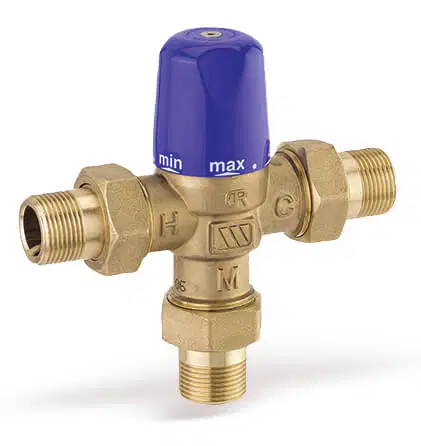
Identify the item shown here.
Flow reducing valve
Pressure regulating valve
Thermostatic mixer valve
Thermostatic regulating valve
Which one of the following will not cause poor flow rates in a system?
Poor design
Blockage
Fullway gate valve
Stop valve
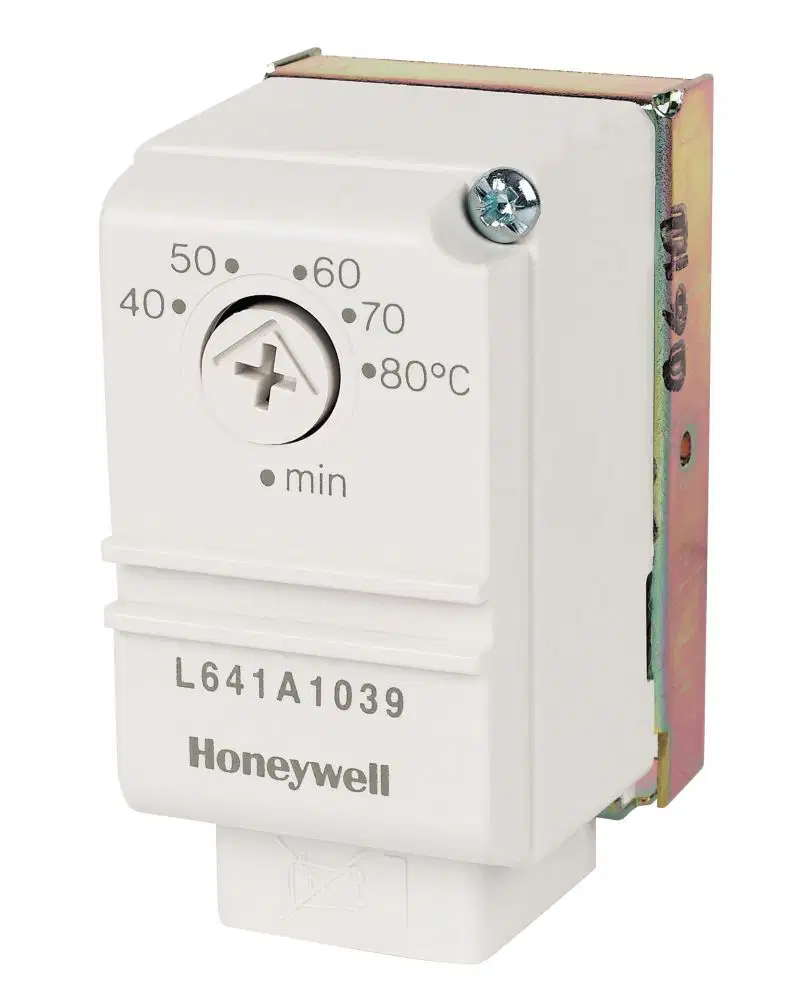
Identify the item shown here.
Cylinder thermostat
Boiler thermostat
Immersion heater thermostat
Room thermostat
Which one of the following would not be part of a PPM schedule?
Adjusting water levels
Burst pipes
Cleaning filters
Checking the operation of valves
According to the Water Supply (Water Fittings) Regulations, at less than what temperature should the hot water in a domestic property not be distributed?
55oC
65oC
45oC
35oC
At what temperature should the hot water in a hot water cylinder be stored at?
40oC
50oC
60oC
70oC
The HSE state in their guidance about "the control of Legionella bacteria in water systems" that the return temperature on a secondary system should not be less than.......
70oC
60oC
50oC
40oC

