Wayground logo

Free Printable Worksheets

Font size

S
M
L
XL
Worksheets

2026 Cohort Electricity Quiz

Total questions: 20

Worksheet time: 9mins

Name
Class
Date
1.

Two 2.0 Ω resistors are connected in parallel. What is the combined resistance of the resistors

a)

less than 2.0 Ω

b)

exactly 2.0 Ω

c)

more than 2.0 Ω but less than 4.0 Ω

d)

exactly 4.0 Ω

2.
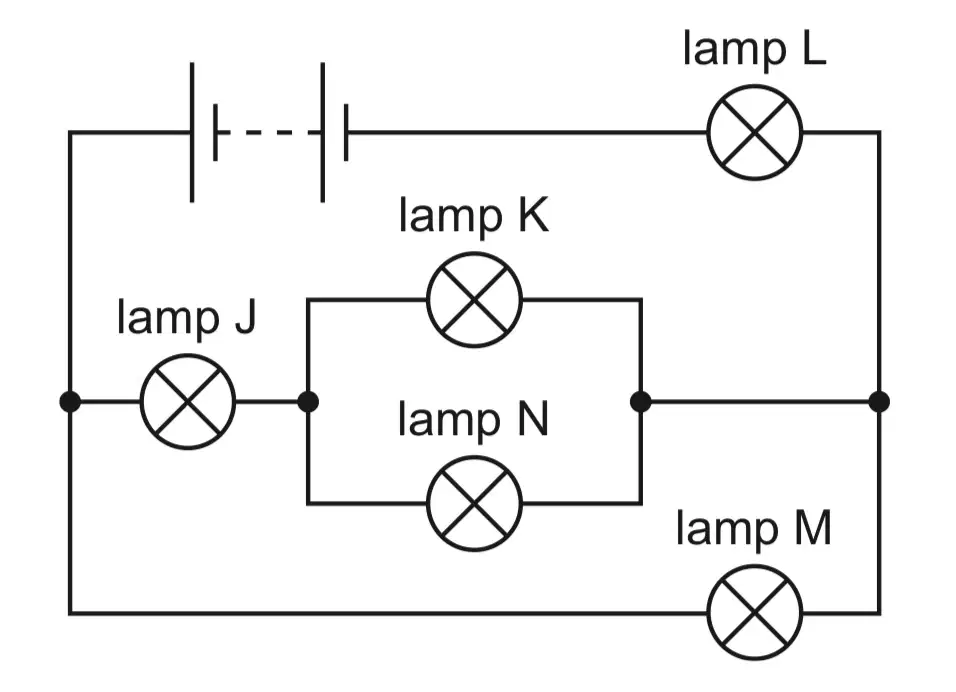
The circuit shown contains five lamps J, K, L, M and N. All the lamps are glowing. One lamp is removed and two other lamps go out. Which lamp is removed?
a)
Lamp J
b)
Lamp K
c)
Lamp L
d)
Lamp M
3.
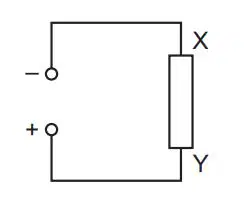
A power source is connected to a resistor XY. In which directions are the conventional current and the flow of free electrons through the resistor?
a)
Conventional current: X to Y / Free electron flow: X to Y
b)
Conventional current: X to Y / Free electron flow: Y to X
c)
Conventional current: Y to X / Free electron flow: X to Y
d)
Conventional current: Y to X / Free electron flow: Y to X
4.
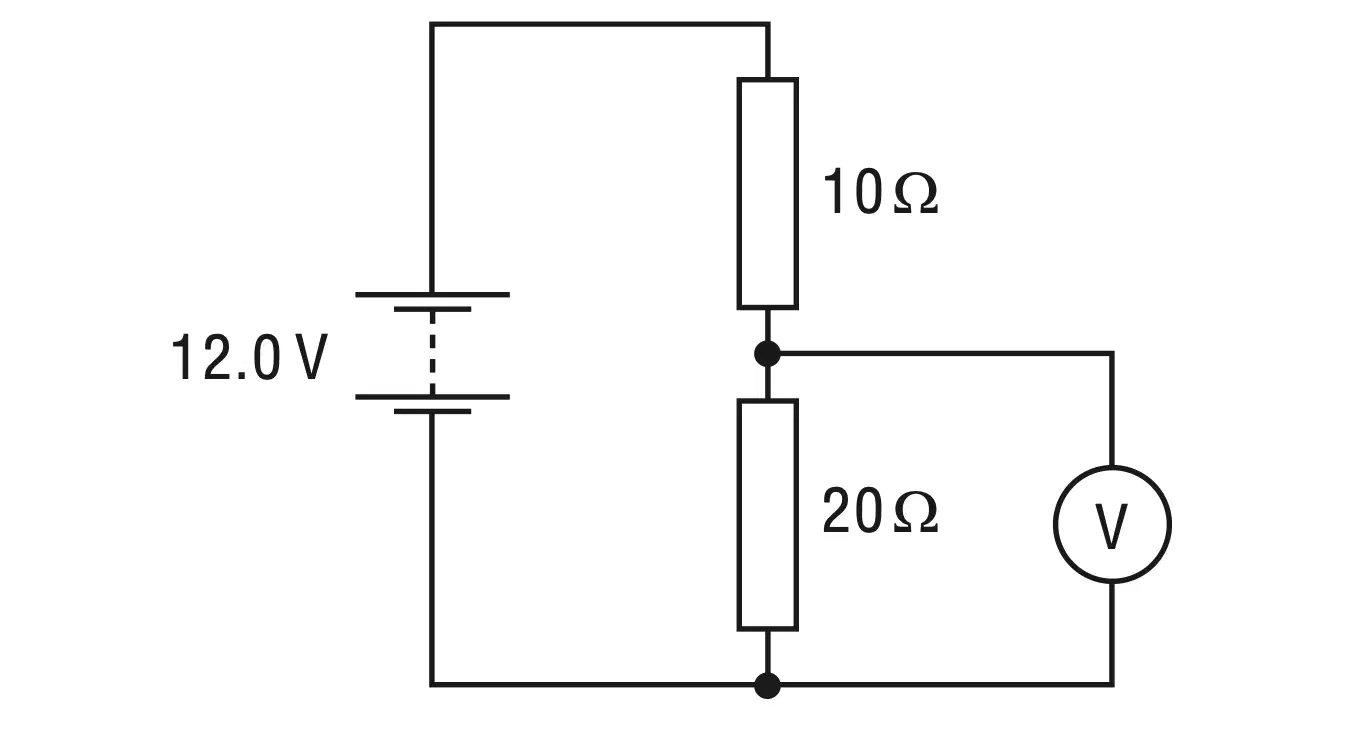
The diagram shows a 10 Ω resistor and a 20 Ω resistor connected in a potential divider circuit. What is the reading on the voltmeter?
a)
4.0V
b)
6.0V
c)
8.0V
d)
12.0V
5.

Which equation is correct for resistance R, potential difference (p.d.) V and current I?
a)
R = V / I
b)
R = V + I
c)
R = I / V
d)
R = V x I
6.
An electric heater is plugged into the mains supply using a fused plug. The current in the heater is 10A. The cable attached to the heater is rated at 15A. The fuses available are rated at 1.0A, 3.0A, 5.0A and 13A. Which fuse should be used?
a)
1.0A
b)
3.0A
c)
5.0A
d)
13A
7.
Which produces an elctromotive force (e.m.f)?
a)
a battery
b)
a filament lamp
c)
a resistor
d)
a spring balance
8.
A battery is connected to an ammeter and a resistor.The ammeter reading is 0.20A. An electrical insulator is connected in parallel with the resistor. What is the ammeter reading?
a)
0A
b)
Between 0A and 0.20A
c)
0.20A
d)
Greater than 0.20A
9.
A wire has a certain electrical resistance. The diameter and length of the wire may be changed. Which pair of changes must cause the resistance of the wire to increase?
a)
Change of diameter: decrease; change in length: decrease
b)
Change of diameter: decrease; change in length: increase
c)
Change of diameter: increase; change in length: decrease
d)
Change of diameter: increase; change in length: increase
10.
A homeowner buys a security light that switches on automatically when it gets dark. When it gets dark, what happens to the resistance of the LDR and what happens to the potential difference across the LDR?
a)
Resistance of LDR: increases | p.d. across LDR: increases
b)
Resistance of LDR: decreases | p.d. across LDR: increases
c)
Resistance of LDR: increases | p.d. across LDR: decreases
d)
Resistance of LDR: decreases | p.d. across LDR: decreases
11.
Why are lamps in a house lighting circuit connected in parallel rather than series?
a)
If one lamp stops working, the remaining lamps become brighter
b)
Less current is taken from the power supply.
c)
The lamps can be turned off independently using switches.
d)
When more lamps are added, their brightness decreases.
12.
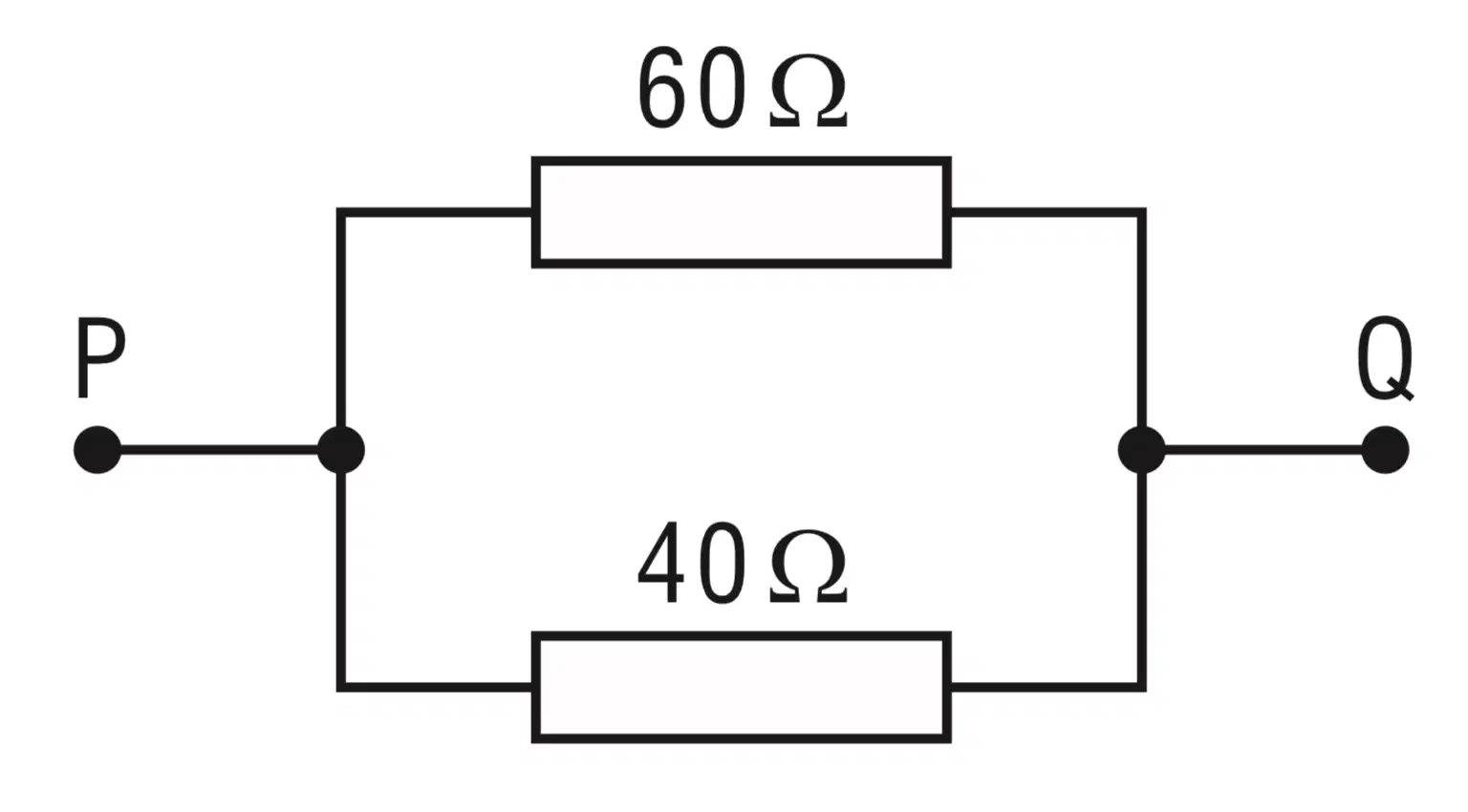
The diagram shows a 40 Ω resistor and a 60 Ω resistor connected in parallel. What is the total resistance between points P and Q?
a)
less than 40 Ω
b)
50 Ω
c)
between 60 Ω and 100 Ω
d)
100 Ω
13.

A cell passes a current of 2.0A in a circuit for 30s. In this time the cell transfer 120J of energy. What is electromotive force (e.m.f) of the cell?

a)
0.50V
b)
1.5V
c)
2.0V
d)
8.0V
14.
What is the unit of electromotive force (e.m.f)?
a)
ampere
b)
joule
c)
volt
d)
watt
15.

What is the unit of power?

a)
joule
b)
newton
c)
volt
d)
watt
16.

Which statement is not correct for lamps connected in parallel?

a)

They can be switched on and off separately

b)

They will remain bright if another lamp is connected in the parallel

c)

They share the supply voltage equally between them

d)

They still operate if one lamp is removed

17.
Two meters are connected in a circuit to measure the current in a component and the potential difference across the component. Which meters are used and how are they connected to the component?
a)
an ammeter in parallel for current, a voltmeter in series for potential difference
b)
an ammeter in series for current, a voltmeter in parallel for potential difference
c)
a voltmeter in parallel for current, an ammeter in series for potential difference
d)

a voltmeter in series for current, an ammeter in parallel for potential difference
18.
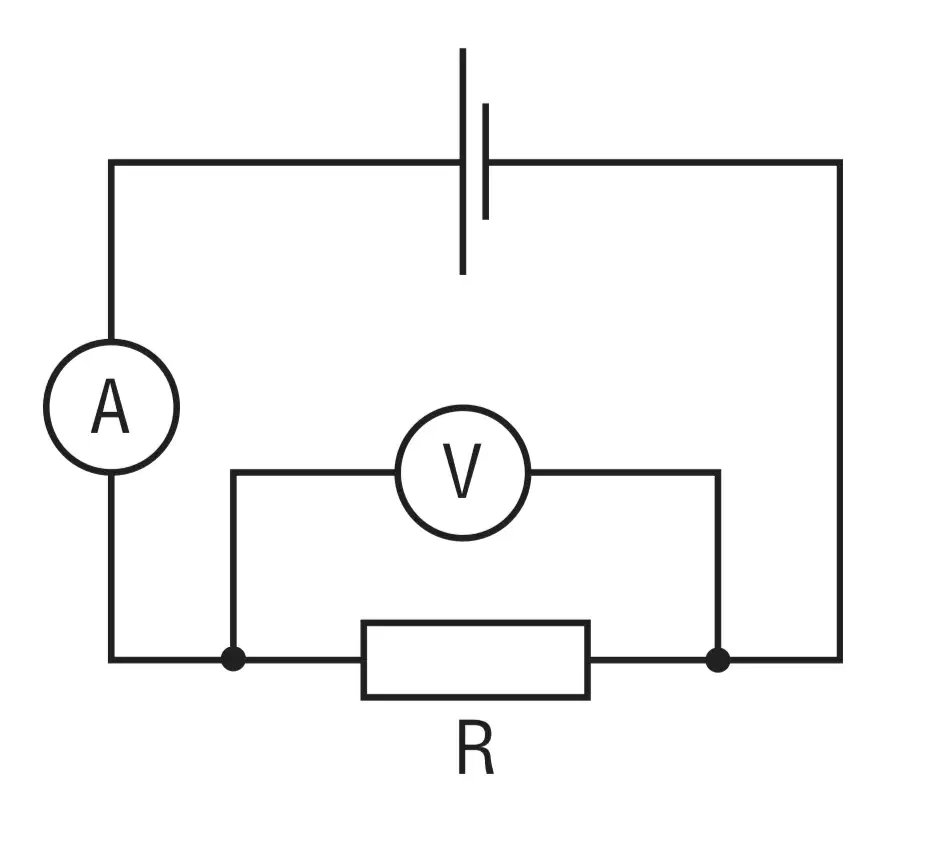
A circuit is set up to determine the resistance of a resistor R. The meter readings are 2.0A and 3.0 V. What is the resistance of the resistor R?
a)
0.67 Ω
b)
1.5 Ω
c)
5.0 Ω
d)
6.0 Ω
19.

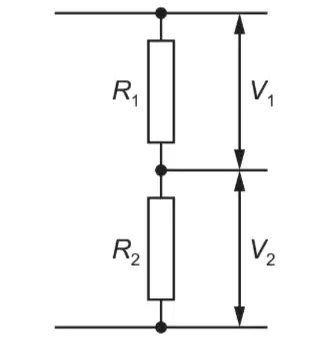
Two resistors, with resistances R1 and R2, are used as a potential divider. What is the relationship between R1,​ R2 and potential differences V1 and V2?
a)
R1*R2 = V1*V2
b)
R1*V1 = R2*V2
c)
R1/R2 = V1*V2
d)
R1/R2 = V1/V2
20.

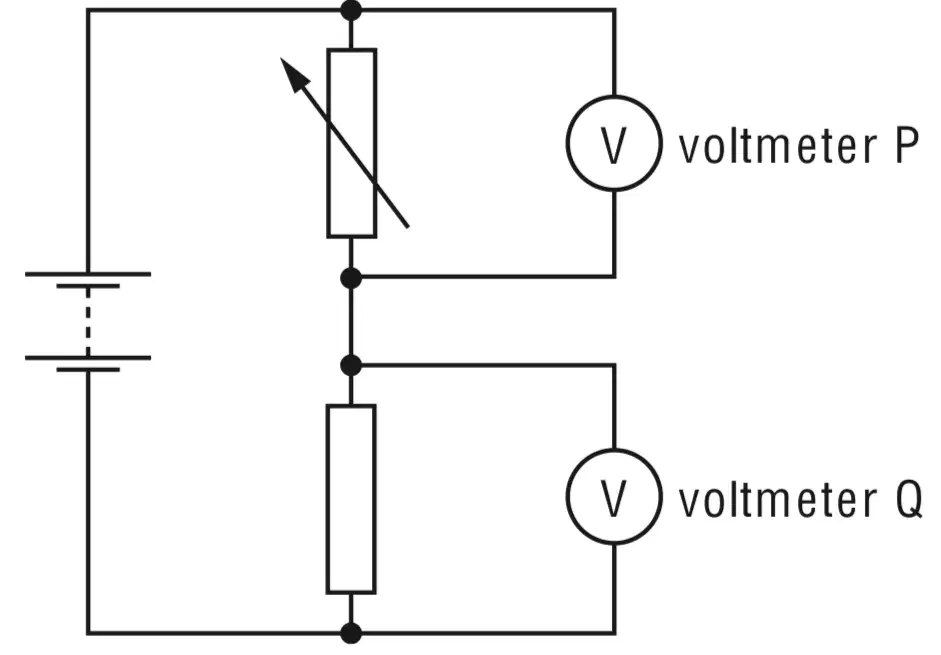
The diagram shows a potential divider connected to two voltmeters P and Q. The resistance of the variable resistor is decreased. Which row shows what happens to the reading on each voltmeter?

a)

Reading on voltmeter P: decreases | reading on voltmeter Q: decreases

b)

Reading on voltmeter P: decreases | reading on voltmeter Q: increases

c)

Reading on voltmeter P: increases | reading on voltmeter Q: decreases

d)

Reading on voltmeter P: increases | reading on voltmeter Q: increases