

wayground logo

Free Printable Worksheets

Font size

S
M
L
XL
Worksheets

Care and Handling of Flowers Quiz

Total questions: 42

Worksheet time: 1hrs 11mins

Name
Class
Date
1.

What are the two products of photosynthesis?

4 lines
2.

What is the definition of photosynthesis?

4 lines
3.

What are the three things plants need to conduct photosynthesis?

4 lines
4.

What is the definition of respiration?

4 lines
5.

What are the two inputs needed for respiration to occur?

4 lines
6.

What are the three products of respiration?

4 lines
7.

How can we measure respiration rate?

4 lines
8.

What is the minimum temperature for flowers in a floral cooler?

4 lines
9.

What is the recommended range for most flowers?

4 lines
10.

What is the recommended temperature for tropical plants?

4 lines
11.

What are the key differences between chilling injury and freezing injury?

4 lines
12.

What does it mean when flowers are dry packed?

4 lines
13.

How often does water need to be replaced after placing water in the floral cooler?

4 lines
14.

What is flower food mostly made from?

4 lines
15.

What is the flower food mixed into to allow absorption by the flower?

4 lines
16.

True or false: Flowers are shipped in water for the majority of the distribution process?

4 lines
17.

What angle should stems be cut to ensure absorption by flowers?

4 lines
18.

What can occur if flowers are cut at a 90° angle?

4 lines
19.

What is the best time to place flowers into fresh water after recutting stems?

4 lines
20.

In 5 sentences, summarize what you have learned from sections 1-3 of this Digital Interactive Notebook.

4 lines
21.
First Name
4 lines
22.
Last Name
4 lines
23.
What is definition of photosynthesis?
a)
The process of plants making their own food.
b)
A process conducted by both plants and animals to convert oxygen and sugars into energy for the cells to consume.
c)
A process conducted only by plants where carbon dioxide is converted into oxygen for energy
d)
The process of plants making energy to perform the functions of life.
24.
What is definition of respiration?
a)
The process of plants making their own food.
b)
A process conducted by both plants and animals to convert oxygen and sugars into energy for the cells to consume.
c)
A process conducted only by plants where carbon dioxide is converted into oxygen for energy
d)
The process of plants making energy to perform the functions of life.
25.
Firmly wrapping or tying similar materials together to form a larger individual unit
a)
vase life
b)
framing
c)
bundling
d)
pillowing
26.
What is the ideal range for temperatures in a floral cooler
a)
33-53 degrees
b)
31-35 degrees
c)
above 50 degrees
d)
33-37 degrees
27.
The level of light received on a plant surface
a)
reflection
b)
absorption
c)
light intensity
d)
refraction
28.
A design technique in which branches of flowers are sued around the perimeter of a floral arrangement to direct attention tot he materials in the center of the arrangement.
a)
framing
b)
pillowing
c)
ikebana
d)
terracing or layering
29.
The tight positioning of flower clusters at the base of an arrangement, forming rounded hills.
a)
framing
b)
pillowing
c)
ikebana
d)
terracing or layering
30.
The Japanese style of floral arrangements characterized by their linear forms.
a)
framing
b)
pillowing
c)
ikebana
d)
terracing or layering
31.
Similar design techniques to place similar materials horizontally on top of each other
a)
framing
b)
pillowing
c)
ikebana
d)
terracing or layering
32.
What is the minimum temperature for flowers in a floral cooler?
a)
32
b)
33
c)
34
d)
35
33.
What is the ideal cooler temperature or tropical plants and flowers?
a)
34-37 degrees
b)
45-55 degrees
c)
At or below 50 degrees
d)
At or above 50 degrees
34.
What is the most basic, most important step of processing flowers?
a)
Fresh cutting of the stems
b)
putting the flowers in fresh water
c)
allowing the flowers to warm to room temperature
d)
replacing the water every 2 to 4 days
35.
Why is it important to provide flowers with floral food?
a)
floral food preserves flowers and prevents them from dying
b)
floral food provides sugars (food) which the plant is no longer able to make on their own
c)
floral food stimulates water intake and keeps flowers fresh longer
d)
floral food prevents wilting by providing vitamins needed for photosynthesis
36.
What is the purpose of cutting the stems of flowers before putting them in fresh water with floral food.
a)
To ensure flowers are able to continue the process of photosynthesis
b)
To ensure proper light intensity is applied inside the cooler.
c)
To ensure flowers maintain the proper temperature
d)
To ensure flowers intake the nutrients from the water and food.
37.
At what angle should stems be cut?
a)
45 degrees
b)
90 degrees
c)
75 degrees
d)
25 degrees
38.
What is flower food mostly made from?
a)
Hydrogen Peroxide
b)
Hydrochloric Acid
c)
Sugars
d)
Salts
39.
Flowers are shipped in water for the majority of the distribution process?
a)
True
b)
False
40.
If flowers are cut at a 90 degree angle, what can happen that would be detrimental to the flowers vase life?
a)
stems could be crushed in the bucket and prevent water and plant food absorption.
b)
stems could be damaged and prevent water and food absorption.
c)
stems could be too short and prevent water and food absorption
d)
stems could lay flat on the bottom of the bucket and prevent water and food absorption
41.
How can you measure respiration rate in cut flowers?
a)
respiration rate can be measured by determining the amount of carbon dioxide produced by the plant over a given time.
b)
respiration rate can be measured by determining the amount of oxygen produced by the plant over a given time.
c)
respiration rate can be measured by determining the amount of ATP energy produced by the plant over a given time.
d)
respiration rate can be measured by determining the amount of glucose produced by the plant over a given time.
42.
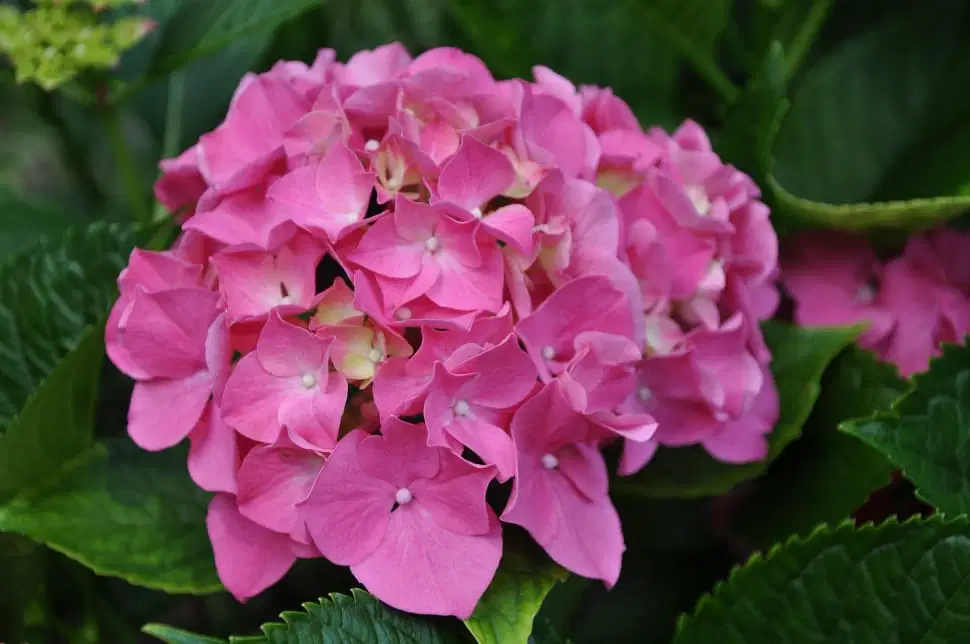
Identify the following flower
a)
Tulip
b)
Hydrangea
c)
Hibiscus
d)
Orchid