
 Worksheets
DNA-Serology Review
Total questions: 57
Worksheet time: 43mins
What is the main reason for packaging items suspected of containing DNA evidence in paper bags instead of plastic?
Plastic bags are not readily available at crime scenes
Paper bags are easier to handle
Plastic retains moisture which can destroy DNA evidence
Paper bags are cheaper
What are some sources of DNA that can be found in a crime scene?
Sweat and dandruff
Saliva and mucus
All of the above
Ear wax and blood
True or False: Red blood cells DO NOT contain a nucleus, therefore do not have DNA.
True
False
What is the technology that makes multiple copies of a specific DNA segment?
Replication
Transcription
Translation
Polymerase Chain Reaction
What is the name of the technique used to separate DNA fragments by size?
Chromatography
Electrophoresis
Centrifugation
Distillation


Whose DNA was found in the blood stain at the crime scene?
Bob
Sue
John
Lisa
Which DNA strands move the fastest through the agarose gel when electricity is applied?
long strands
short strands
medium strands
They all move the same
How many distinctive markers are used for DNA fingerprinting to distinguish between two people?
10
13
15
20
There are multiple male suspects involved in a case. Which of the following analysis techniques would be most helpful in differentiating the men from one another ?
Y-Marker Analysis
SNP Analysis
Amelogenin Gene Analysis
Mitochondrial DNA Analysis
The computerized database for DNA profiles that is maintained by the FBI
IAFIS
CODIS
NIBIN
IBIS
DNA can be used for ...
determining paternity
identifying human remains
identifying a suspect
All of these

Which suspect's DNA matches the DNA left at the crime scene?
Suspect 1
Suspect 2
Suspect 3
All are excluded
How many pairs of chromosomes do humans have?
46 pairs
30 pairs
20 pairs
23 pairs
What are the nitrogenous bases found in DNA?
A, T, G, U
A, T, G, C
A, T, U, C
A, G, C, U
What is the process in which DNA makes a copy of itself?
DNA Mutation
DNA Transcription
DNA Replication
DNA Translation
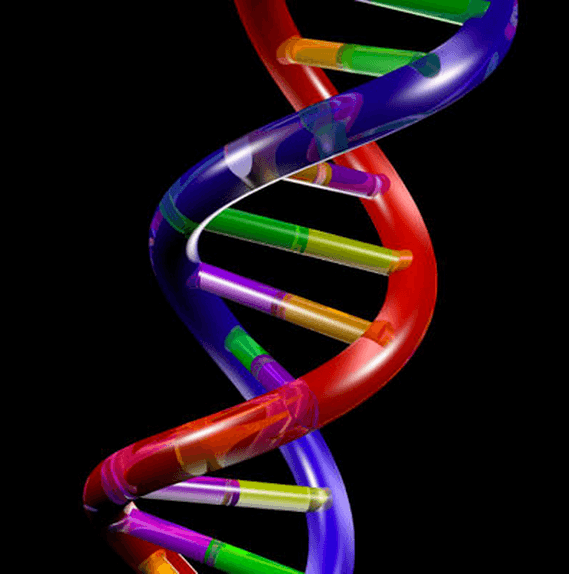
What is the shape of the DNA molecule?
Spiral
Double Helix
Single Helix
Circle
Which enzyme is responsible for unzipping the DNA double helix during replication?
Ligase
Helicase
Polymerase
Nuclease
Guanine bonds with ______________.

it serves as the blueprint for everything a living organism needs
Which 2 molecules forms the sides and backbone of the DNA ladder?
DNA in its tightly coiled form is referred to as
chromosomes
nitrogen bases
genes
nucleus
the shape (structure) of the nitrogen bases
the order (sequence) of the nitrogen bases
the color of the nitrogen bases
the frequency (number) of nitrogen bases

Identify the unique parts of each person's DNA.
Identify genes responsible for human diseases.
Identify genes responsible for human behavior.
Determine the entire sequence of human DNA.
DNA is found in all cells that have a _____________.
chromosome
nucleus
CODIS
napalm
True or False: Red blood cells DO NOT contain a nucleus, therefore do not have DNA.
True
False
Mitochondrial DNA is inherited from:
Just mom
both parents
The name of the FBI's DNA database is:
CODIS
PCR
RFLP
Why is non-coding DNA the best for identifying individuals?
It has to code for important proteins.
It is not important for the cell's production of protein and thus can have different amounts for everyone.
It is not important so it is not the best.
Which process uses long fragments of repeating nitrogen bases to create a unique DNA fingerprint for an individual?
RFLP
STR
PCR
Recombinant DNA
This process uses short repeating sections of DNA to identify an individual.
Gel Electrophoresis
PCR
STR Analysis
RFLP Analysis
Biological evidence should be
stored in air-tight containers
frozen using liquid nitrogen
packaged as quickly as possible
put into breathable containers
Poly-ambiguous chain reaction
Pentahedral corrosion remnant
Polymerase chain reaction
Peroxide corrosion remnant
To determine paternity
To determine if a crime scene sample matches a suspect
Generate a DNA profile
Generate multiple copies of DNA
This technique allows scientists to separate DNA fragments by size.
PCR
electrophoresis
STR
RFLP

Male 1
Male 2
Neither could be the father
Either could be the father

John
Lisa
Bob
Sure

Who can be included as source of paternal DNA for this child?
male #1
male #2
neither male
What is the primary function of blood?
To transport gases
To provide defenses for the body
To distribute nutrients
All of the above
What is the function of red blood cells (RBCs)?
To produce antibodies
To interact with clotting proteins
To carry oxygen from the lungs to the body's tissues
To fight off bacteria and viruses
What is the function of white blood cells (WBCs)?
To carry oxygen from the lungs to the body's tissues
To destroy bacteria
To interact with clotting proteins
To carry nutrients
What is the main function of platelets?
To destroy bacteria
To stop or prevent bleeding
To produce antibodies
To carry oxygen from the lungs to the body's tissues
What is the primary function of plasma?
To provide defenses for the body
To distribute nutrients
To transport gases
To serve as the medium for blood cells

Transfer
Passive
Projected


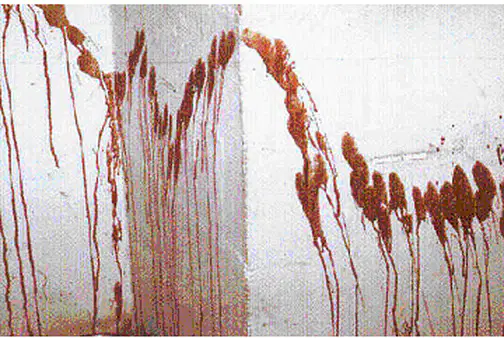
What type of blood spatter is shown here?
transfer stains
medium impact spatter
high impact spatter
arterial spray
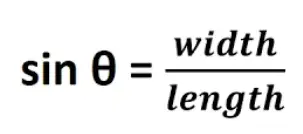
A blood droplet is 1.5cm long and .5cm wide. What is the angle of impact?
21.5 deg
19.5 deg
8.86 deg

