
 Worksheets
Heat and Temperature Final Review
Total questions: 60
Worksheet time: 41mins

How does the thermal energy of the liquid in the larger beaker compare to the thermal energy of the liquid in the smaller beaker?
The liquid in the larger beaker has less thermal energy than the liquid in the smaller beaker.
The liquid in the larger beaker has more thermal energy than the liquid in the smaller beaker.
The liquid in the larger beaker has the same amount of thermal energy as the liquid in the smaller beaker.
The exact volume of the liquid in each beaker must be known to compare the thermal energy of the liquids.
Which description defines heat?
total thermal energy of an object or substance
change in the temperature of a substance in degrees Celsius
energy transferred between objects at different temperatures
average kinetic energy of the particles that make up a substance
How does heat affect the thermal energy of an object that is colder than the air that surrounds it?
Heat decreases the thermal energy of an object as energy moves to the air.
Heat causes the thermal energy of the object to increase as energy moves from the warmer air to the colder object.
Heat has no effect on thermal energy, but it increases the potential energy of an object.
Heat is not related to thermal energy, so it cannot affect the thermal energy of an object.

Kito puts his spoon into a helping of fresh, hot, mashed potatoes as shown in the picture. Which process takes place when the objects come together?
The temperature of the spoon increases, but its thermal energy does not change.
Energy in the form of heat is transferred by conduction from the warmer mashed potatoes to the cooler spoon.
The thermal energy of both the mashed potates and the spoon increase as the energy in the form of heat is transferred between them.
The average temperature of the spoon does not change.
As energy in the form of heat is added to an ice cube, it begins to melt. What causes melting.
Heat causes the molecules to expanded and forces them apart.
Heat removes thermal energy from the ice cube and causes it to become liquid water.
Adding energy causes the bonds between the hydrogen and oxygen in the ice cube to break.
The transfer of thermal energy to the ice cube causes its molecules to move faster.

Ashton warms a pure, solid substance. He graphs the changes in temperature as shown in the figure below. What is happening as he warms the substance?
molecules move more slowly
molecules move more rapidly
speed of the molecules in not changing
molecules speed up than slow down
Which example illustrate the transfer of energy through RADIATION?
feeling warmth when you sit in a sunny place.
feeling warm air while standing in front of the blower from a heating system.
feeling the warmth of the bricks around a fireplace by touching them with your hand.
feeling warmth on the soles of your feet when you walk along the beach on a sunny day.
Which of these processes is the result of the motion of particles in a gas or liquid?
conduction
convection
insulation
radiation
Emily has a cup of hot cocoa on the counter to cool off so she can drink it safely. She watches the steam rise from the hot cocoa. Which type of thermal energy transfer is occurring as the steam rises into the surrounding air?
conduction
convection
radiation
transformation
A fireplace warming the air in the room is and example of this type of heat transfer?
conduction
convection
radiation
transformation
A toaster warms a bagel for breakfast. What type of thermal energy transfer is occuring?
conduction
convection
radiation
transformation
When cold water is added slowly to warm water they will slowly blend over time evenly through the entire liquid. Which BEST explains the reason the heat moves throught the liquid?
The densities of the liquids are similar.
Cold liquids rise and hot liquids sink causing mixing.
Molecules creates chemical bonds the help spread energy.
Heat always moves from higer temperatures to lower temperatures.
At room temperature water is a liquid. How could the water be changed to a solid?
add heat
remove heat
decrease density
increase density
On a hot day the lake water warms and the temperature increases. How does the movement of the particles change?
move slower and farther apart
move slower and closer together
move faster and farther apart
move faster and closer together
Which of the following is an example of conduction?
Cooking on a stove
Cooking in a microwave
Cooking in an air fryer
Cooking in a basement
Where does energy come from?
Sun
The Earth's interior
Electrical sources
All of the above
The difference between an active and passive solar energy system is....
Active uses a fan or mechanical device, passive does not
Active is when the sun is out, passive is when the sun is behind the clouds
Active creates more solar energy than passive
Passive systems are much more expensive than active
Examples of renewable resources.....
Wind, oil, water
Solar, gas, forestry
Solar, wind, coal
Forestry, wind, solar
A match lighting, is an example of......
Solar energy converted to chemical energy
Chemical energy converted to thermal energy
Thermal energy converted to chemical energy
Kinetic energy converted to potential energy
What are the negatives of non-renewable resources?
Pollution, can be rare, not plentiful
Plentiful, loss cost of acquiring, non-polluting
Solar panels are expensive
Wind turbines breakdown easily
Heat loss causes matter to ________. Heat gain causes matter to ________.
contract ; expand
expand ; contract
stay ; change
change ; stay

A device that measures temperature.

Heat is the_____ of thermal energy from one thing to another.
Size
Amount
Speed
Transfer

When the flame is increased in the hot air balloon, what two consequences does heat have on the air inside it?
Change in state and temperature decrease.
Temperature decreases and particles contract.
Temperature increases and particles compact.
Temperature increases and particles expand.
Transition from a liquid to a gas
Condensation
Freezing
Evaporation
Melting
Amy was sitting outside on a hot, summer day, enjoying a glass of sweet iced tea. She notices some water droplets on the outside of her glass. What is causing those water droplets?
The outside air is heating up the ice, causing it to melt into a liquid.
The cold liquid in the glass is cooling the air around it, making it condense into a liquid.
The outside air is heating up the liquid in the glass, causing it to evaporate.
The liquid in the glass is cooling the air around it, causing it to evaporate.
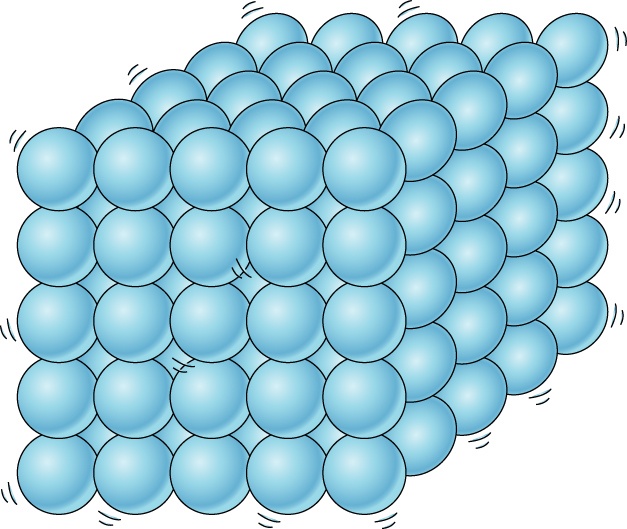
What state of matter?
Solid
Liquid
Gas
Plasma!!!
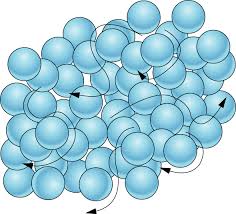
What state of matter?
Solid
Liquid
Gas
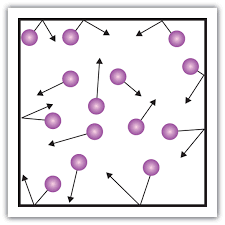
What state of matter?
Solid
Liquid
Gas

The temperature at which a liquid evaporates to a gas is called
freezing point
boiling point
melting point
condensation point
What is not an element of the particle model of matter?
There is space in between particles
Particles move
Particles change over time
Everything is made up of particles
Absolute Zero is...
-273 degrees C
The coldest temperature there is
A man made temperature, it does no get this cold in nature
All answers are correct
Alex noticed that a metal door that sticks on hot days does not stick when it cools off at night. This is because the metal contracts as it cools. The reason for this is that, as the metal cools, the particles:
become smaller and take up less space
slow down and move closer together
merge together to form fewer particles
speed up and move farther apart
Assuming that the thermal energy supplied to each of them is same, which of following states of matter would expand the least?
Solid
Liquid
Gas
Thermostats help to...
keep the temperature constant
increase thermal contraction
move particles from one area to another
create large temperature differences
What makes up matter?
Particles
Heat
Thermal Energy
Phase changes
McDonald's keeps my Big Macs warm under a heat lamp which transfers heat through
conduction
convection
radiation
science stuff
Smoke rises at a campfire because
the heated gas is less dense
the heated gas is more dense
the heated gas conducts heat to space
smoke follows beauty
Which describes what can happen as a result of radiation?
A piece of wood burns in a fire.
A shirt is hot after having been ironed.
A can of soup is heated in a pot on a stove.
A car’s inside temperature rises to over 100 degrees on a sunny day.
If I install windows in my house that have a higher R-value, heat transfer in my house should...
Increase, lowering my heating bill
Decrease, lowering my heating bill
Increase, raising my heating bill
Decrease, raising my heating bill

When thermal energy is decreased in a gas, what change in state is happening?
Melting
Freezing
Evaporation
Condensation
Why would you use a thermogram?
To see if your hot chocolate is cool enough to drink
To help scientists determine sublimation in dry ice
To enhance the amount of time a glow stick will glow
To help find out where heat is escaping a building
Thermostat contains ....................that consists of two different metals.
radiator
insulator coil
bimetallic coil
During the day when the sun heats up the land, and the beach is warmer than the ocean, which way would you expect the breeze to flow?
From the ocean to the beach
From the beach to the ocean
There would be no breeze because of the equilibrium of thermal energy
On a hot day, with no clouds, why would you want to wear a light coloured shirt?
The lighter colours will reflect the suns rays, and help you to stay cool
The lighter colours will absorb the sun rays, and help you to feel cooler
The lighter colours will increase your body's ability to sweat, therefore allowing your body to cool
The lighter colours will allow more heat transfer from the sun to your body
What happens when a bimetallic strip is heated?
It straightens out
It coils
It contracts
Nothing
Jessica and her friend Kim were heating up food in a microwave and it became too hot to eat, so the plate was placed on the counter to cool. Which of the following statements accurately identifies how tehrmal energy was transferred?
Thermal energy was transferred from the microwave to the food.
Thermal energy was transferred from the food to the air because the room was colder than the food.
Thermal energy was transferred form the food to the air because it is less dense.
Th cold from the room was transferred from the food because the cold gives to hot.
What does the Law of Conservation of Energy state?
Energy can be created but not destroyed.
Energy cannot be created but destroyed.
Energy can be transformed and destroyed.
Energy Cannot be created or destroyed, it can only be transformed from one form to another.
What are the three main ways we use energy?
Home, Transportation, and Industry
Home, Business and Sports
Transportation, Industry, and Schools
Cars, Airplanes and trucks

