
Font size
 Worksheets
4. Shapes of Molecules HOMEWORK
Total questions: 28
Worksheet time: 56mins



What is the correct Lewis Diagram for oxygen, which has electron configuration of 2, 6.


Which of the following is the correct Lewis diagram for the fluorine molecule, F2?


Which of the following is the correct Lewis diagram for ammonia, NH3?


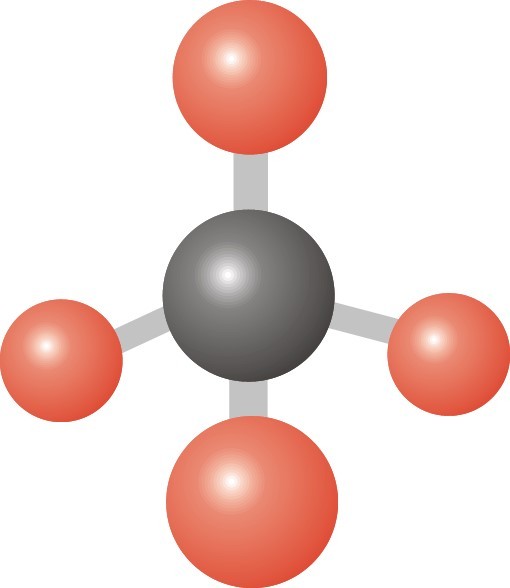
What would be the bond angle between atoms in this molecule?
180
120
90
109

What would be the bond angle between atoms in this molecule?
109.5
120
180
90

What 3-D shape would this molecule have: H2S ?
bent
tetrahedral
linear
trigonal pyramidal

What would be the bond angle between atoms in this molecule?
90
120
180
109.5
What is the goal of the Lewis Dot Structure?
To determine the electron position.
To show the element's valence electrons & bonding capabilities.
To find the atomic mass of an element.
To search for the number of electrons in an individual atom.
Which of these is incorrect?


Which two statments are correctly involved in determining the shape of a molecule.
How many regions of negativity there are around the central atom.
Repulsion between negative regions leads to maximum separation.
Attraction between lone pairs of electrons leads to minimum bond angle.
Double bonds have double the repulsive force leading to greater separation.
What are valence electrons?
The total number of electrons in an atom
The number of electrons in the outermost shell
The number of electrons in the second shell
The number of protons in the outermost shell
According to the Octet Rule, atoms of elements react with each other in order to attain ____ electrons in their outermost energy level or shell.
2
4
6
8
10

This could be the dot diagram of
Ne
H
C
F

What is unusual about this molecule?
it has single bonds
Be is electron deficient
it is trigonal planar
B is electron deficient

