wayground logo

Free Printable Worksheets

Font size

S
M
L
XL
Worksheets

1-29: Classification and Dichotomous Keys

Total questions: 35

Worksheet time: 46mins

Name
Class
Date
1.

Which of the following are levels of classification?

a)

Species

b)

Binary

c)

Phylum

d)

Tripod

2.

What kingdom do mushrooms and many molds belong to?

a)

Animalia

b)

Protista

c)

Archaea

d)

Fungi

3.
The scientific name for an organism is made from the:
a)
class and family name
b)
genus and species name
c)
domain and kingdom name
d)
kingdom and phylum name
4.
What statement would NOT be good for a dichotomous key?
a)
The organism has 1 dorsal fin
b)
The organism is ugly
c)
The organism has leaves in groups of three
d)
The organism has 6 legs
5.
In what kingdom would you find trees and flowers?
a)
Plantae
b)
Fungi
c)
Eubacteria
d)
Animalia
6.
All of the following have a nucleus except...
a)
Bacteria
b)
Animalia
c)
Plantae
d)
Protista
7.
When using a dichotomous key to identify organisms, what do we look at?
a)
physical features
b)
weather patterns
c)
environment
d)
diet
8.
What step do we always start with when using dichotomous keys?
a)
1
b)
2
c)
3
d)
4
9.
Term given to describe the 2 name naming system is:
a)
dichotmous key
b)
binomial nomenclature
c)
2 scientific names
d)
binomial key
10.
The first part of a scientific name is an organism's _______________ and the second part is its ________________.
a)
species, genus
b)
phylum, order
c)
class, spices
d)
genus, species
11.
What is a dichotomous key used for in science?
a)
To organize biomes
b)
Classify organisms
c)
Identify bacteria only
d)
None of these
12.
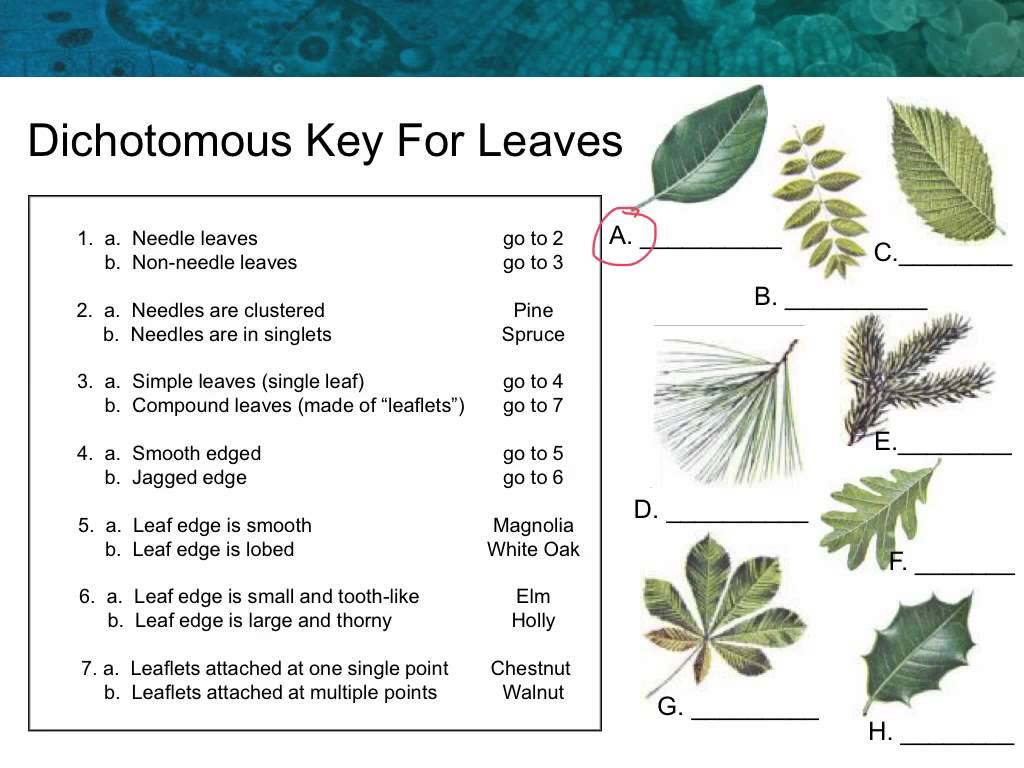
A dichotomous key for trees is provided. Hikers found a tree that has large brown cones and single sharp needles. What species of tree have the hikers found?
a)
Juniper
b)
Pine
c)
Spruce
d)
Fir
13.

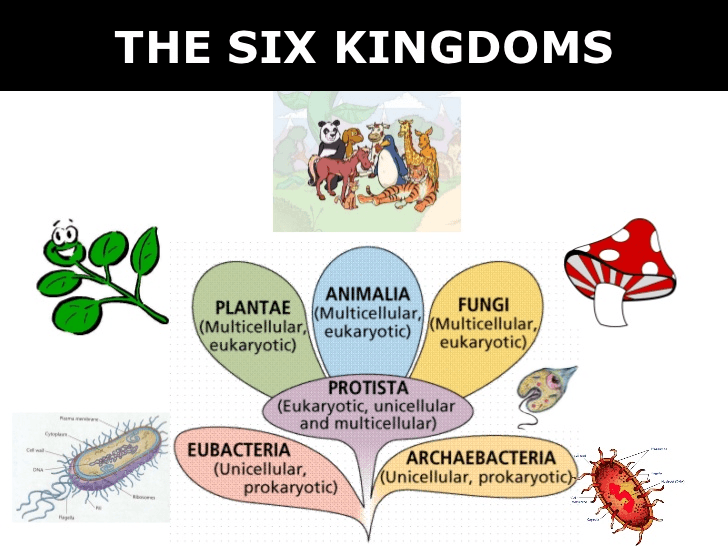
How many Kingdoms are there?

a)

8

b)

7

c)

6

d)

3

14.

The most specific term when classifying organisms is

a)

Genus

b)

Class

c)

Family

d)

Species

15.

What are the three domains?

a)

bacteria, archaea, eukarya

b)

prokarya, eukarya, zookarya

c)

protist, fungi, plant

d)

plant, animal, cookie

16.

Which of these is NOT in the eukarya domain?

a)

protist

b)

fungi

c)

bacteria

d)

plant

17.
Which kingdom contains members who are prokaryotic?
a)
Archaebacteria and Eubacteria
b)
Archaebacteria and Protista
c)
Eubacteria and Animalia
d)
Eubacteria  and Fungi
18.
Who first proposed binomial nomenclature as a way of classifying organisms?
a)
Carl Linnaeus
b)
Carl's Jr.
c)
Charles Darwin
d)
Henry Groseclose
19.
Tool used by a taxonomist to identify an unknown organism is a:
a)
dichotomous key
b)
binomial nmenclature
c)
scientific name
d)
binomial key
20.
Which of the following means sorting living things into groups based on similarities?
a)
Taxonomy
b)
Scientific Sortation
c)
Classification
d)
Taxidermy
21.
Which of the following is the least closely related animal:
Gray Wolf: Canis lupus
Aardwolf: Proteles cristatus
Coyote: Canis latrans
a)
Coyote
b)
Aardwolf
c)
Gray Wolf
d)
Need more information on body characteristics
22.
Cells that have a true nucleus are called....
a)
eukaryotes
b)
prokaryotes
c)
unicellular
d)
multicellular
23.

Based on the table, which bird is shown in the picture?

a)

Golden eagle

b)

Vulture

c)

Bald eagle

d)

owl

24.

According to the identification key, what type of creature is Creature Y?

a)

Ock

b)

Nanner

c)

Zapoom

d)

Waznat

25.

Which of these is a eukaryote?

a)

bacteria living in your digestive system

b)

archaea

c)

bacteria living in food

d)

mold

26.

A heterotroph

a)

cannot make its own food.

b)

is able to make its food.

27.

Which of these is an autotroph?

a)

mushroom

b)

rose

c)

seal

d)

tiger

28.

Biologist group living things based on ____.

a)

Habitat

b)

Size

c)

Colors

d)

Shared Characteristics

29.
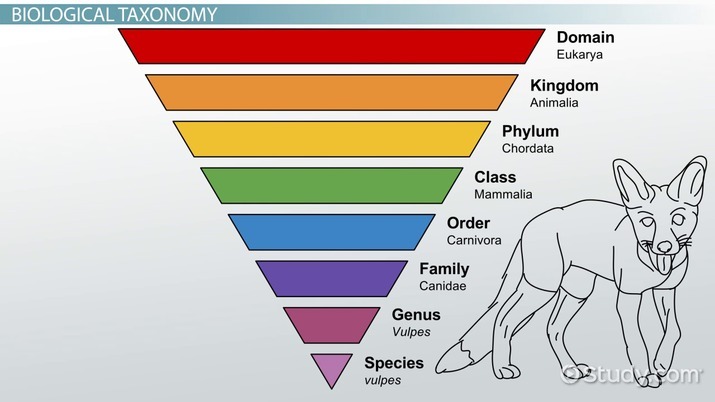
The 8 levels of classification, most broad to most specific.
a)
Domain, Genus, Family, Order, Class, Phylum, Kingdom, Species
b)
Domain, Species, Kingdom, Genus, Phylum, Family, Class, Order
c)
Domain, Kingdom, Phylum, Class, Order, Family, Genus, Species
d)
Domain, Kingdom, Species, Phylum, Family, Order, Class, Genus
30.
An organism that has cells that lack a nucleus are called:
a)
Eukaryote
b)
Heterotroph
c)
Prokaryote
d)
Autotroph
31.
Which characteristics best describes the Plant Kingdom?
a)
unicellular; eukaryote; autotroph
b)
multicellular, prokaryote, autotroph
c)
multicellular, eukaryote, autotroph
d)
unicellular, prokaryote, heterotroph
32.
Which characteristics best describes the Animal Kingdom?
a)
unicellular, eukaryote, autotroph
b)
multicellular, prokaryote, heterotroph
c)
multicellular, eukaryote, autotroph
d)
multicellular, eukaryote, heterotroph
33.
Which characteristics best describe the Kingdom Protista?
a)
multicellular, eukaryote, heterotroph and autotroph
b)
multicellular and unicellular, heterotoph and autotroph, eukaryote
c)
unicellular, autotroph, prokaryote
d)
multicellular and unicellular, prokaryote, heterotroph
34.
Which characteristics best describe the Kingdom Fungi?
a)
multicellular and unicellular, eukaryote, autotroph
b)
multicellular and unicellular, prokaryote, heterotroph
c)
multicellular, eukaryote, heterotoph
d)
multicellular and unicellular, eukaryote, heterotroph
35.
Which characteristics best describes the Kingdoms Eubacteria and Archaebacteria?
a)
unicellular, prokaryote, heterotroph
b)
unicellular, prokaryote, heterotroph and autotroph
c)
multicellular, eukaryote, autotroph
d)
multicellular, prokaryote, heterotroph and autotroph