
 Worksheets
Structures
Total questions: 52
Worksheet time: 26mins
A force acting on a structure is also called...
(A las fuerzas que actúan sobre una estructura se les denomina también...)
A Load (Carga)
A Joist (Vigueta)
A Mass (Masa)
None of them (Ninguna de las anteriores)

What type of structure is this?
¿Qué tipo de estructura es esta?
Massive (Masiva)
Hanging (Colgante o suspendida)
Triangular (Triangulada)
Frame (Entramada)

What type of structure is this?
¿Qué tipo de estructura es esta?
Hanging (Colgante o suspendida)
Triangular (Triangulada)
Frame (Entramada)
Massive (Masiva)
What type of structure is a suspension bridge?
¿Qué tipo de estructura es un puente colgante?
Massive (masiva)
Hanging (colgante o atirantada)
Triangular
Frame (Entramada)
What material is commonly used for the cables of a suspension bridge?
¿De qué material están hechos generalmente los tirantes de un puente?
Steel (acero)
Wood (madera)
Concrete (hormigón)
Aluminum (alumnio)
A set of elements in a body that are made to resist the effects of the forces that act on it is called... (conjunto de elementos de un cuerpo destinados a soportar las fuerzas que actúan sobre el, haciendo que no se deforme)
Force
(Fuerza)
Structure
(Estructura)
Load
(Carga)
Building
(Edificio)
Structures can be (Las estructuras pueden ser):
Natural and irregular
(Naturales e irregulares)
Natural and man-made (Naturales y artificiales)
Natural and regular
(Naturales y regulares)
Natural and massive
(Naturales y masivas)
It is easier to break a non cooked spaghetti by...
(Es más fácil romper un espaguetti sin cocinar por....)
Compression (Compresión)
Traction (Tracción)
Bending (Flexión)
Torsion (Torsión)
Which type of structure is a dam (presa)? ¿Qué tipo de estructura es una presa?
Triangular
(Triangular)
Hanging
(Colgante)
Massive
(Masiva)
Frame
(Entramada)
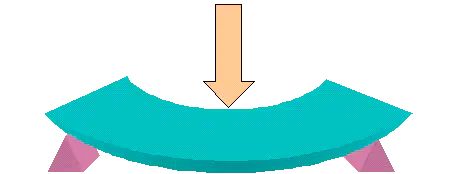
What type of effort does this picture represent?
(¿Qué tipo de esfuerzo representa la figura?)
Traction (Tracción)
Torsion (Torsión)
Compression (Compresión)
Bending (Flexión)

What type of effort does this picture represent?
(¿Qué tipo de esfuerzo representa la figura?)
Shearing or cutting
(Cortadura o cizalladura)
Compression
(Compresión)
Bending
(Flexión)
Traction
(Tracción)
It is a natural structure
(Es una estructura natural)
A stalactite
(Una estalactita)
A chassis car
(El chasis de un coche)
A pen
(Un bolígrafo)
A plastic cup
(Una taza de plástico)
The stress which the legs of the chair undergo is one of
(El esfuerzo al que se ven sometidas las patas de una silla es uno de...)
Compression
(Compresión)
Traction
(Tracción)
Bending
(Flexión)
Shearing or cutting
(Cortadura o cizalladura)
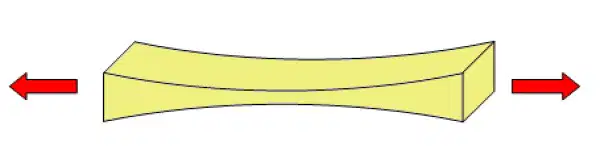
What type of effort does this picture represent?
(¿Qué tipo de esfuerzo representa la figura?)
Bending
(Flexión)
Torsion
(Torsión)
Traction
(Tracción)
Compression
(Compresión)

What type of effort does this picture represent?
(¿Qué tipo de esfuerzo representa la figura?)
Traction
(Tracción)
Torsion
(Torsión)
Bending
(Flexión)
Shearing or Cutting
(Cortadura o cizalladura)
Compression
(Compresión)
A structure is the set of elements in a body that are made to __________ the effects of the _________ that act on it.
(Una estructura es un conjunto de elementos de un cuerpo diseñados para ______ los efectos de los/las ______ que actúan sobre ella)
protect, structure.
resist, forces.
create, humans.
support, elements.

Forces that act on a structure are also called...
(A las fuerzas que actúan sobre una estructura se les denomina también...)
Foundations
(Cimentaciones)
Loads
(Cargas)
Beams
(Vigas)
Pillars
(PIlares)
Permanent loads are those...
(Las cargas permanentes son aquéllas ....)
made by humans.
(hehas por humanos)
that don't move.
(no se mueven)
that are constantly acting on a structure and don’t vary over time
(que actúan de forma constante sobre una estructura y no varían a lo largo del tiempo)
that vary over time, such as the force of the wind.
(que varían a lo largo del tiempo, como la fuerza del viento)
Variable loads are those...
(Las cargas variables son aquéllas...)
made by humans.
(hechas por humanos)
that don't move.
(no se mueven)
that are constantly acting on a structure and don’t vary over time
(que actúan de forma constante sobre una estructura y no varían a lo largo del tiempo)
that vary over time, such as the force of the wind.
(que varían a lo largo del tiempo, como la fuerza del viento)
Natural structures are those...
(Las estructuras naturales son aquellas...)
that change over time.
(que cambian a lo largo del tiempo)
created by humans.
(creadas por humanos)
that don't change over time.
(que no cambian a lo largo del tiempo)
created by nature.
(creadas por la naturaleza)

Our skeleton is a(n)...
(Nuestro esqueleto es una ...)
Basic structure
(Estructura básica)
Natural structure
(Estructura natural)
Artificial structure
(Estructura artificial)
Triangular structure
(Estructura triangulada)
Artificial structures are those...
(Las estructuras artificiales son aquellas...)
that change over time.
(que varían a lo largo del tiempo)
created by humans.
(Creadas por humanos)
that don't change over time.
(que no varían a lo largo del tiempo)
created by nature.
(Creadas por la naturaleza)

The bridge in the picture is a(n) ...
(El puente de la figura es una ....)
Natural structure.
(Estructura natural)
Basic structure.
(Estructura básica)
Artificial structure.
(Estructura artificial)
Which are natural structures? (More than one option is possible).
(¿Cuál de estas estructuras es natural? (Más de una respuesta posible)
Tree trunk.
Tronco de árbol
Bridge.
Puente
Mollusc shell.
Concha
Pyramid.
Pirámide

Which elements support the beams?
¿Cuáles de estos elementos soportan a las vigas?
Pillars
Pilares
Arches
Arcos
Foundations
Cimentaciones
Profiles
Perfiles

A good structure must be...
(Una buena estructura debe ser...)
Resistant
Resistente
Stable
Estable
Rigid
Rígida
All the options are correct.
Todas son correctas

_____________ structures are formed by the joining of bars, forming triangles. The example in the picture is a ___________.
( Las estructuras ______ están formadas por la unión de barras que forman triángulos . El ejemplo de la figura es un/a....)
Massive, crane.
Masivas, grúa
Laminar, electric tower.
Laminares, torre eléctrica
Triangular, crane.
Trianguladas, grúa
Frame, scaffolding.
Entramadas; andamio

When a structure remains upright and doesn’t fall over, we say it is ...
(Cuando una estructura se mantiene en pie y no se cae, decimos que es...)
Stable.
Estable
Resistant.
Resistente
Rigid.
Rígida
Natural
Natural

When a structure resists the stresses without breaking, we say it is...
(Cuando una estructura soporta los esfuerzos a los que se ve sometida sin romperse, decimos que es...)
Rigid.
Rígida
Stable
Estable
Resistant.
Resistente

Which stress is supporting the paper in the picture?
(¿Qué esfuerzo está soportando el papel de la fotografía?)


Which stress is supporting the object in the picture?
(¿Qué esfuerzo está soportando el objeto de la fotografía?)
Compression stress
Compresión
Traction stress
Tracción
Torsion stress
Torsión
Bending stress
Flexión

Which stress is supporting the nut in the picture?
(¿Qué esfuerzo está soportando ela tuerca de la fotografía?)
Traction stress
Tracción
Compression stress
Compresión
Torsion stress
Torsión
Bending stress
Flexión
We can improve (mejorar) the resistance of a structure by...
(Podemos mejorar la resistencia de una estructura...)
Choosing the right materials.
Eligiendo los materiales adecuados
Changing the shape of the structure.
Cambiando la forma de la estructura
Both anwers are correct.
Las dos opciones son correctas

Stress that tends to separate or cut the element of the structure.
(Esfuerzo que tiende a separar o cortar una estructura)
Compresion
Compresión
Traction
Tracción
Torsion
Torsión
Bending
Flexión
Shearing or cutting
Cortadura o cizalladura

____________ structures have vertical and horizontal elements
(Las estructuras _________ tienen elementos horizontales y verticales)
Massive
Masivas
Vaulted
Abovedadas
Triangular
Trianguladas
Frame
Entramadas
Internal forces that appear in the elements of a structure.
(Las fuerzas internas que aparecen en los elementos de una estructura se llaman....)
Stresses
Esfuerzos
Loads
Cargas
To improve the stability of a structure we can ...
(Para mejorar la estabilidad de una estructura podemos....)
Get the center of gravity closer to the ground.
Situar el centro de gravedad más próximo al suelo
Add weight to the base
Añadir peso a la base
Both options are correct
Ambas respuestas son correctas

The element 1 in the picture is a(n)...
(El elemento nº1 de la figura es un/a)
Pillar
Pilar
Beam
Viga
Arch
Arco
Bar
Barra
We can make a structure more rigid by...
(Podemos aumentar la rigidez de una estructura...)
Adding bars to form triangles.
Añadiendo barras que formen triángulos
Reinforcing the joints.
Reforzando las juntas
Both options are correct.
Ambas respuestas son correctas
Floors and walls of a structure are
(Paredes y suelos de una estructura son:)
Natural loads
Cargas naturales
Variable loads
Cargas variables
Permanent loads
Cargas permantentes
All the answers are wrong
Todas las respuestas son incorrectas
The snow, the wind, the people and the furniture are...
(La nieve, el viento, las personas y los muebles son...)
Permanent loads
Cargas permanentes
Natural loads
Cargas naturales
Artificial loads
Cargas artificiales
Variable loads
Cargas variables
The capacity of a structure to bear the tensions that it's subjected to without breaking.
(La capacidad de una estructura para soportar esfuerzos sin romperse...)
Stability
(Estabilidad)
Rigidity
(Rigidez)
Resistance
(Resistencia)
Unstability
(Inestabilidad)
The capacity of a structure to remain upright and not fall over
(La capacidad de una estructura para mantenerse en pie y no caer)
Resistance
(Resistencia)
Unstability
(Inestabilidad)
Stability
(Estabilidad)
Rigidity
(Rigidez)
The capacity of a structure to bear the tensions that it's subjected to without breaking
(La capacidad de una estructura de soportar esfuerzos sin romperse)
Stability
Estabilidad
Resistance
Resistencia
Rigidity
Rigidez
Unestability
Inestabilidad

What type of structure is this?
¿Qué tipo de estructura es esta?
Massive
Masiva
Frame
Entramada
Geodesic
Geodésica
Triangular
Triangulada

Which stress are supporting the legs of the stool in the picture?
(¿Qué tipo de esfuerzo están soportando las patas del taburete del dibujo?)


Which stress is supporting the bar number 1 in the picture?
(¿Qué esfuerzo soporta la barra número 1 del dibujo?)
Bending
(Flexión)
Compression
(Compresión)
Traction
(Tracción)
Torsion
(Torsión)
Shearing or cutting
(Cortadura o cizalladura)

The structure of the picture is ...
Lattice
Vaulted
Massive
Frame

Stress that tends to flatten the element of a structure
(Los esfuerzos que tienden a aplastar los elementos de una estructura)
Traction
Compression
Torsion
Bending
Shearing or cutting

The stress that supports the element in the picture.
(¿Qué tipo de esfuerzo está soportando la barra de la figura?)
Compression
Traction
Torsion
Bending
Shear

Stress that tends to twist the element of a structure
(Los esfuerzos que tienden a retorcer los elementos de una estructura)
Compression
Traction
Torsion
Bending
Shear
Stress that tends to separate or cut the element of the structure
(Los esfuerzos que tienden a separar o dividir los elementos de una estructura)
Compresion
Traction
Torsion
Bending
Shear

