
 Worksheets
Science and Agricultural Science
Total questions: 110
Worksheet time: 2hrs 59mins
What is the major difference between vertebrates and invertebrates?
Vertebrates have a backbone and invertebrates do not.
Invertebrates have a backbone and vertebrates do not.

Which group does it belong to?
invertebrate
vertebrate

Which group does it belong to?
vertebrate
invertebrate

Is this animal a vertebrate or invertebrate?
invertebrates
vertebrates

Are these animals vertebrates or invertebrates?
vertebrates
invertebrates

Which group does it belong to?
invertebrate
vertebrate
Crabs, lobsters, and shrimp with hard exoskeletons are ___.
invertebrates
vertebrates
Which answer best completes this statement?
An ecosystem is a/an ..........
building
non-living thing
ecosystem
community
Ecosystems are made up of ..........
plants only
living and non-living things
animals only
plants and animals only
Which plant was used to treat burns?
Corn
Chaconia
Aloe vera
Pumpkin vine
Which plant was used to treat colds and coughs?
Mango
Chaconia
Pineapple
Shining bush
Which plant was used to treat earache?
Wonder of the World
Chaconia
Pineapple
Rose
Which plant was used to treat fever?
Chaconia
Caraille Bush
Pineapple
Rose


What happens when you leave water in an open container for several days?
It melts
It rusts
It dissolves
It evaporates

What state is this matter?
solid
liquid
gas
Which of these does NOT happen when you heat butter?
It would freeze.
It would melt.
It would turn into a liquid.
__________ take the shape of the container.
liquids
solids
gasses
plasmas

This is an example of ice changing from a ___________.
liquid to a gas
gas to a liquid
solid to a liquid
gas to a solid
People can change matter by ____.
freezing it
heating it
seeing it
wanting it
What is left after a piece of paper burns?
ashes
salt
nothing
When you stir salt into a glass of water, the salt ____.
rusts
dissolves
grows
What are the three states of matter?
solid, liquid, and juice
solid, licorice, and gas
solid, liquid, and gas

This is an example of water changing from a ___________________.
gas to liquid
liquid to solid
liquid to gas
What is firm and stable, not fluid or liquid, does not have holes?
A liquid
A gas
A solid
A marshmallow
What is a substance that will expand freely to fill a whole container?
A gas
A solid
A cheeseburger
A liquid
What is a substance that flows freely but has a constant volume?
A solid
Lava
A liquid
A gas
What does it mean to reach a temperature a which a liquid bubbles?
Freeze
Boil
Melt
Rust
What is the degree of heat present in a substance or object?
Ice
Frozen
Condensation
Temperature
What is the process of taking a solid and causing it to become a liquid to make a solution?
Dissolve
Evaporate
Freeze
Melt
What is the process of turning a liquid into ice or another solid because of extreme cold?
Shiver
Melt
Freeze
Boil
What is the physical change of a gas to a liquid?
Condensation
Boiling
Evaporation
Freezing
What is the process of turning a liquid to a gas?
Condensation
Evaporation
Temperature
Melting
What is the substance of which a physical object is composed of?
Gas
Matter
Solid
Liquid
Temperature has an effect on the speed a solid dissolves in water.
True
False
Hot water makes a solid ___________________.
dissolve faster
dissolve slower
not dissolve
Cold water makes a solid ___________________.
dissolve faster
dissolve slower
not dissolve
Salt dissolves in water.
True
False
Sand dissolves in water.
True
False
Sugar dissolves in water.
true
false

What happened to the solid in this photograph?
it evaporated
it melted
it turned into condensation
it dissolved
Dissolving means...
to sink to the bottom
to float to the top
to break into tiny pieces you can't see
to evaporate
All materials dissolve in water
True
False

Sugar dissolves in water
True
False

Oil dissolves in water
True
False

Sand does not dissolve in water
True
False

Salt does not dissolve in water
True
False

Gold and Silver dissolve in water
True
False
When a material spreads out in water we say it has dissolved.
True
False
Substances that dissolve in water are called ...................
soluble
insoluble
solution
Substances that do not dissolve in water are called ...................
soluble
insoluble
solution
The mix of solute and solvent
soluble
insoluble
solution
The salt is …………………………., it means it can dissolve.
insoluble
solution
soluble
The followings are solute
Sand
Water
Tea
Sugar
Dissolved substances cannot be seen, they become part of the water.
True
False
Temperature has an effect on the speed a solid dissolves in water.
True
False
Sugar dissolves in water.
true
false
What happened to the solid in this photograph?
it evaporated
it melted
it turned into condensation
it dissolved

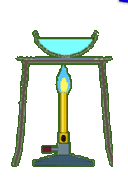
What separation technique does the picture show?
Sieving
filtering
magnetic separation
Distillation
True or False: A mixture must have at least two different materials.
True
False
True or False: You can use your hands or tweezers to separate salt from water.
True
False
True or False: The best way to separate rocks and sand is to use a sieve to sift the sand, this will allow the sand to fall through and the rocks to stay.
True
False
James wants to seperate the salt from the water in his glass of salt water. What seperation method should James use?
Magnets
Evaporation
Filter
Using his hands
Nicole wants to dissolve a substance in water. Which substance will dissolve the easiest?
Rocks
sugar
pepper
sand
The air around us is a mixture of gases.
True
False
The science teacher accidentally combined metal shavings with sand, what method can be used to separate the mixture?


True or False: If you combine metal shavings with sand, there is NO way you can separate them.
True
False

What mixture could you use this tool to best separate that mixture?
Sugar and Salt
Sand and rocks
Apples and grapes

How can we separate this mixture?
Filtering
Handpicking
Sieving

How can we separate this mixture?
Magnetism
Filtering
Handpicking

What is fish culture?
Breeding birds for commercial purposes
Growing plants in water
Raising fish in an enclosed area for commercial purposes
Raising cattle in a farm
Where can a fish farm be built?
Both on land and over naturally occurring water bodies
Over naturally occurring water bodies only
On land only
In the mountains
What is the purpose of fish farming?
To raise fish for commercial purposes
To manufacture cars
To produce fruits and vegetables
To build houses
What are the two possible locations for building a fish farm?
On land and over naturally occurring water bodies
In the forest and on a mountain
In a shopping mall
In the desert and on the beach
What is the main focus of fish farming?
Raising cats
Growing flowers
Raising fish for commercial purposes
Raising birds
What is the primary activity in fish farming?
Growing trees
Raising fish for commercial purposes
Selling clothes
Building cars
What is the goal of fish farming?
To raise fish for commercial purposes
To manufacture airplanes
To produce electricity
To produce music albums
What is the outcome of fish farming?
Raising fish for commercial purposes
Building skyscrapers
Producing movies
Selling toys
What is the result of fish farming?
Building bridges
Selling jewelry
Producing video games
Raising fish for commercial purposes
What is the product of fish farming?
Building tunnels
Raising fish for commercial purposes
Producing paintings
Selling electronics
These animals have feathers.
rabbit and cat
bird and chicken
fish and tiger
An elephant uses its ______ to breathe.
trunk
tusk
mouth

It is used to . . . .
protect the head
cover the body
attract female
Fish uses its … to breathe.
fins
gills
scales
These are not the body parts of an elephant.
feather
horn
tusk
trunk
leg
These animals are used as transportation.
goat
horse
camel
donkey
deer
These are the body parts of a cat.
whiskers
scales
claws
fur
mouth
Animal that can spread diseases and cause stomachache is . . . .


Snakes and crocodiles move by . . . .
crawling
running
swimming
Whales and octopuses live in the . . . .
land
water
zoo
It can run fast.
It has a mane and like to eat grass.
What animal it is?


Bird uses its . . . . to fly.
fins
wings
beak

