
Font size
 Worksheets
Module 5: Organic chemistry 1: alkanes, alkenes, and alkynes
Total questions: 20
Worksheet time: 24mins
Organic Chemistry is the study of the structure, properties, composition, reactions, and preparation of (a) , derived from (b) things
Carbon will always form ___ bonds.
Hydrocarbons where each carbon is bonded to four other atoms, and all bonds are single bonds.
Alkanes
Alkenes
Alkynes
Hydrocarbons that contain at least one carbon-to-carbon double bond.
Alkanes
Alkenes
Alkynes
Hydrocarbons that contain at least one carbon-to-carbon triple bond.
Alkanes
Alkenes
Alkynes
What is the prefix used when referring to ring structures?
Pyro-
Aro-
Cyclo-
None of the above
Characterized these types of organic molecules as saturated or unsaturated compounds
Alkanes
Only C-C single bonds
Cycloalkanes
At least one double or triple bond
Alkenes
Alkynes
Arenes
Match the functional group with the suffix that is used for naming.
Alkynes
-ane
Alkenes
-ene
Alkanes
-yne
Sort the steps for naming alkanes.
Find the longest carbon chain
Number the carbon chain so substituents have lowest possible numbers
Identify the types of substituents

What is the common name given to this alkyl branch?
Propyl
Methyl
Isopropyl
Ethane

What is the common name for alkyl branch A in the image?
sec-butyl
propyl
neopentyl
isopropyl
When writing names for organic compounds, commas separate....
numbers
names from numbers
When writing names for organic compounds, dashes separate....

What is the parent name of this structure (based on the longest carbon chain)?
nonane
pentane
heptane
cyclohexane

What is correct skeletal structure of this compound


2,5-dimethyloctane


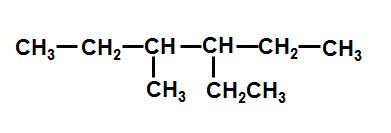
Give the IUPAC name for this compound
3-methyl-4-ethylhexane
3-ethyl-4-methylhexane
3-methyl-4-ethylheptane
3-ethyl-4-methylheptane
Which is the structures with IUPAC nomenclature
2,2,4-trimethylpentane
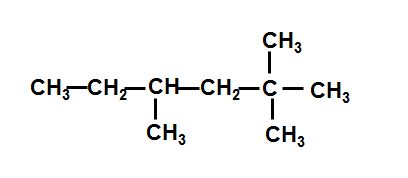
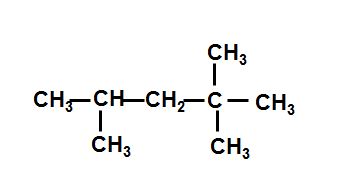
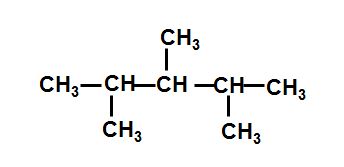
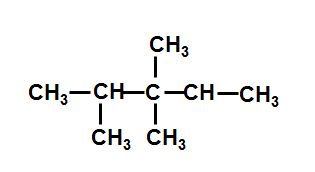

Review from module 4:
Is this reaction exothermic or endothermic?
Exothermic, because the products are lower energy than the reactants
Endothermic, because the products are lower energy than the reactants
Exothermic, because the products are higher energy than the reactants
Endothermic, because the products are higher energy than the reactants
Review from Module 4:
What is activation energy?

