
 Worksheets
MICROECONOMICS: UNIT 1 EXAM STUDY GUIDE
Total questions: 55
Worksheet time: 2hrs 50mins
which of the following statements pertains to macroeconomics?
because the minimum wage was raised, mrs. olsen decided to enter the labor force
a decline in the price of soybeans caused farmer wanek to plant more wheat
national income grew by 2.7 percent last year
the PC state bank increased its interest rate on consumer loans by 1 percentage point
the economizing problem is one of deciding how to make the best use of:
virtually unlimited resources to satisfy virtually unlimited wants
limited resources to satisfy virtually unlimited wants
unlimited resources to satisfy limited wants
limited resources to satisfy limited wants
which of the following will shift the production possibilities curve to the right?
an increase in the unemployment rate from 6 to 8 percent
a decline in the efficiency with which the present labor force is allocated
a decrease in the unemployment rate from 8 to 6 percent
a technological advance allowing manufacturers to produce more output from given input
as a consequence of the problem of scarcity,
there is never enough of anything
individuals have to make choices from among alternatives
only some people can "have it all”
things which are plentiful have relatively high prices
which of the following is a positive economic statement?
government must maintain the current level of defense spending to keep the nation safe
the minimum wage should be increased to give people a decent wage
americans should buy american products in order to boost the national economy
stock prices rose to a new record last month for the fourth month in a row
if the marginal benefit of a good is less than its marginal cost, then the producer should:
produce more of that good
maintain the current level of production of that good
reduce the marginal benefit of that good
reduce the production of that good
a person should consume more of something when its marginal:
benefit exceeds its marginal cost
cost exceeds its marginal benefit
cost equals its marginal benefit
benefit is still better
opportunity costs exist because:
the decision to engage in one activity means forgoing some other activity
wants are scarce relative to resources
households and businesses make rational decisions
most decisions do not involve sacrifices or trade-offs
the four factors of production are:
land, labor, capital, and money
land, labor, capital, and entrepreneurial ability
labor, capital, technology, and entrepreneurial ability
labor, capital, entrepreneurial ability, and money
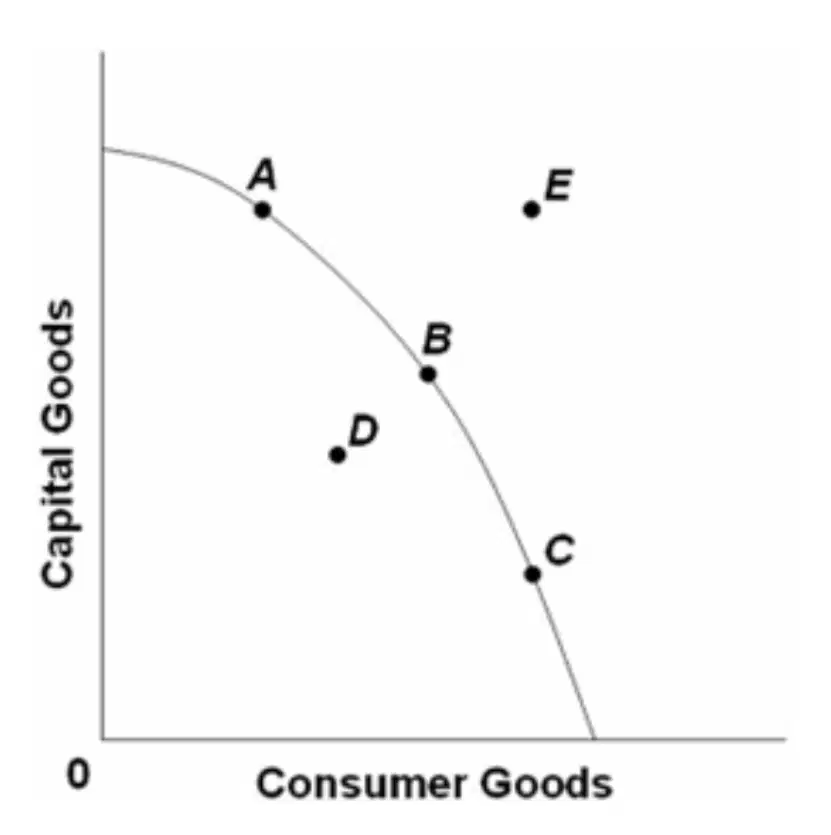
refer to the diagram above. other things equal, this economy will (eventually) shift its production possibilities curve outward the most if:
the ratio of capital to consumer goods is minimized
it chooses point C
it chooses point B
it chooses point A
the law of demand states that, other things equal,
price and quantity demanded are inversely related
the larger the number of buyers in a market, the lower will be product price
price and quantity demanded are directly related
consumers will buy more of a product at high prices than at low prices
which of the following would not shift the demand curve for beef?
a widely publicized study that indicates beef consumption increases one's cholesterol
a reduction in the price of cattle feed
an effective advertising campaign by pork producers
a change in the incomes of beef consumers
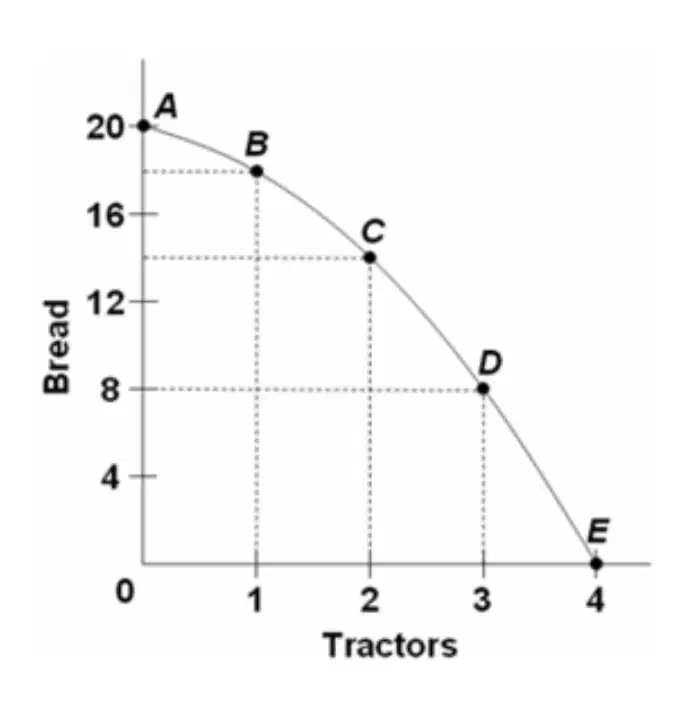
refer to the diagram above. this production possibilities curve is constructed so that:
resources are presumed to be perfectly shiftable between bread and tractors
the opportunity cost of bread diminishes as more bread is produced
the opportunity cost of tractors increases as more bread is produced
the opportunity costs of both bread and tractors increase as more of each is produced
because successive units of a good produce less and less additional satisfaction, the price must fall to encourage a buyer to purchase more units of the good. this statement is most consistent with which explanation for the law of demand?
diminishing marginal utility
the rationing function of prices
the substitution effect
the income effect
if the demand curve for product B shifts to the right as the price of product A declines, then:
both A and B are inferior goods
A is a superior good and B is an inferior good
A is an inferior good and B is a superior good
A and B are complementary goods
if the demand for steak (a normal good) shifts to the left, the most likely reason is that:
consumer incomes have fallen
cattle production has declined
the price of steak has risen
the price of cattle feed has gone up
if products C and D are close substitutes, an increase in the price of C will:
tend to cause the price of D to fall
shift the demand curve for C to the left and the demand curve for D to the right
shift the demand curve for D to the right
shift the demand curves of both products to the right
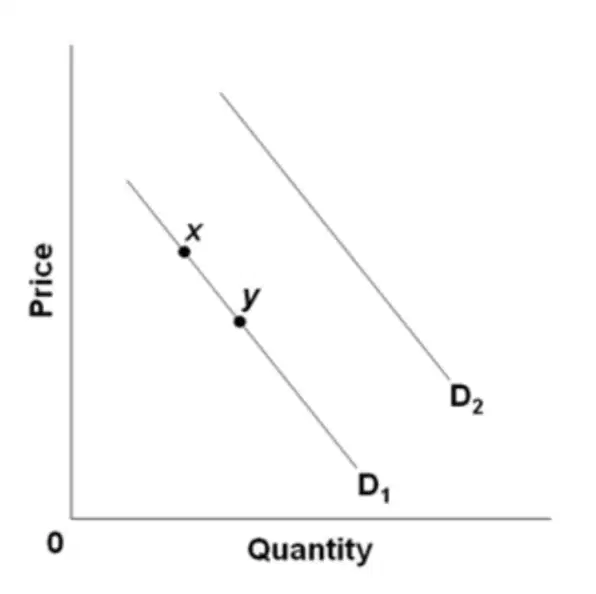
refer to the diagram above. a decrease in demand is depicted by a:
move from point x to point y
shift from D1 to D2
shift from D2 to D1
move from point y to point x
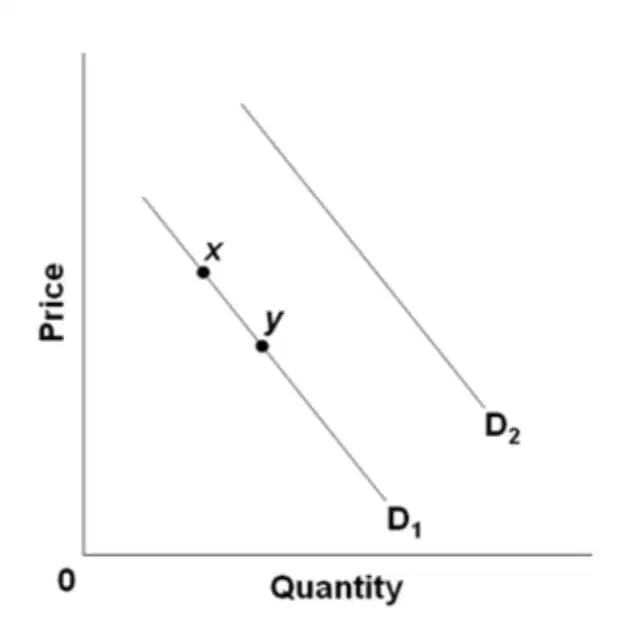
refer to the diagram above. a decrease in quantity demanded is depicted by a:
move from point x to point y
shift from D1 to D2
shift from D2 to D1
move from point y to point x
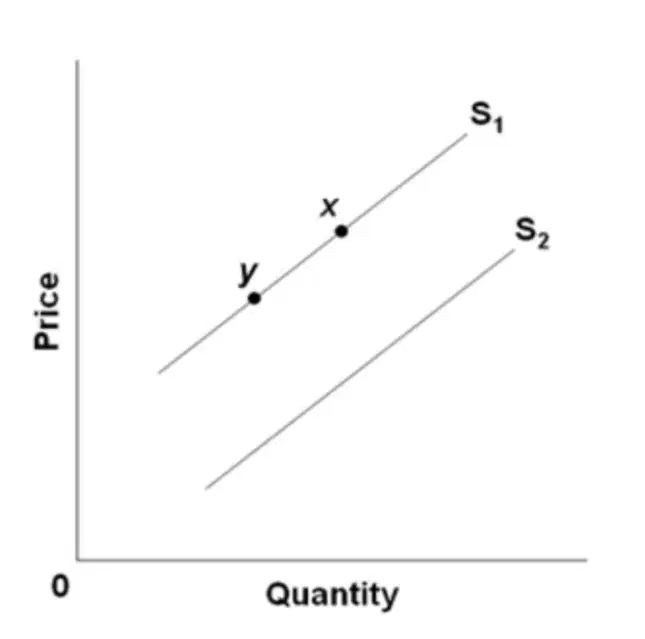
refer to the diagram. a decrease in supply is depicted by a:
move from point x to point y
shift from S1 to S2
shift from S2 to S1
move from point y to point x
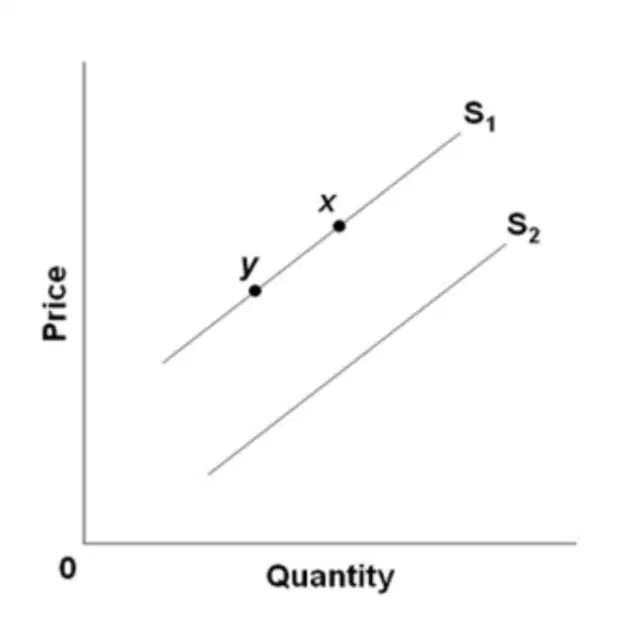
refer to the diagram above. an increase in quantity supplied is depicted by a:
move from point y to point x
shift from S1 to S2
shift from S2 to S1
move from point x to point y
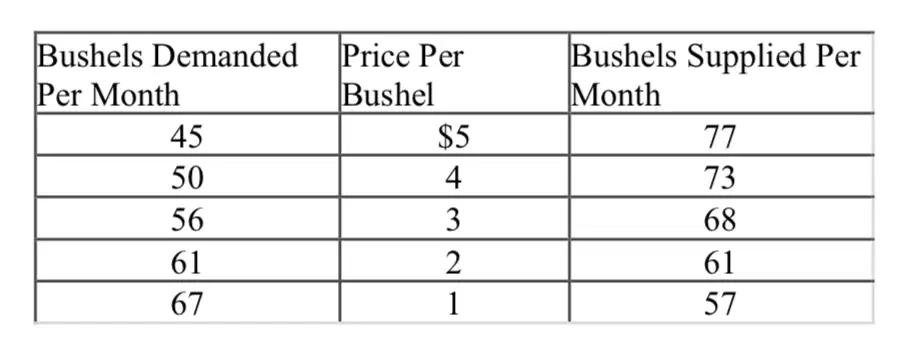
answer the question on the basis of the given supply and demand data for wheat. if the price in this market was $4,
the market would clear; quantity demanded would equal quantity supplied
buyers would want to purchase more wheat than is currently being supplied
farmers would not be able to sell all their wheat
there would be a shortage of wheat
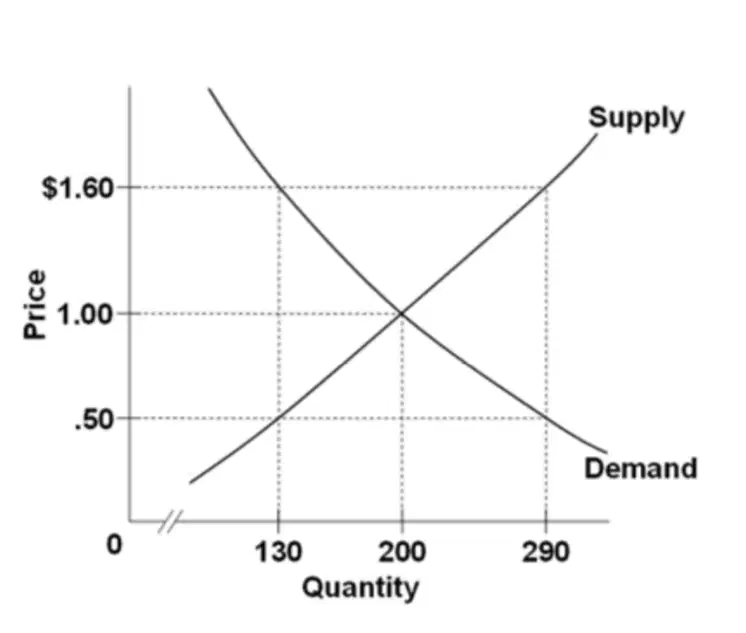
refer to the diagram above. a surplus of 160 units would be encountered if the price was:
$1.10, that is, $1.60 minus $.50
$1.60
$1.00
$0.50
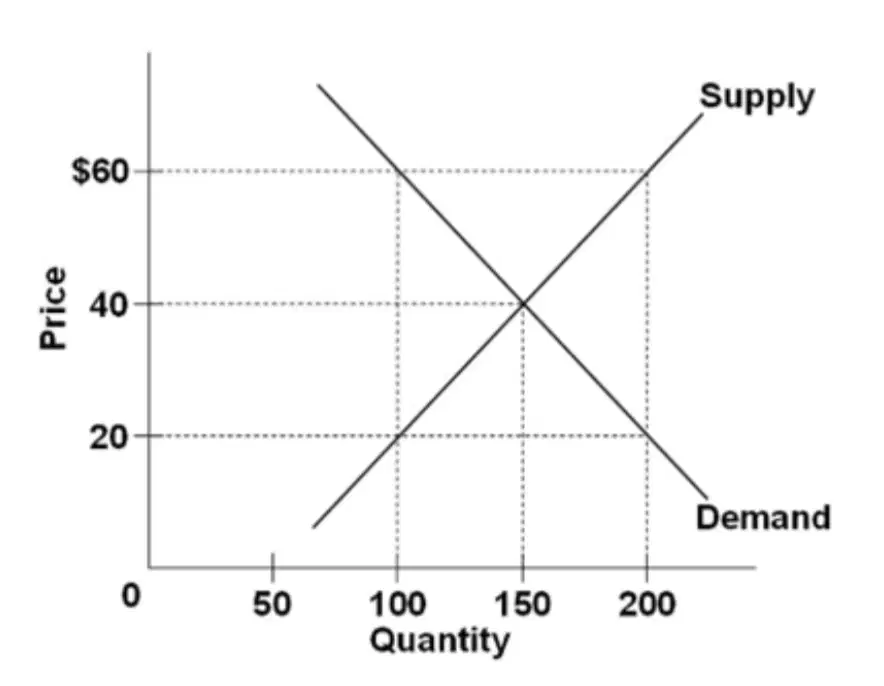
refer to the diagram above. a price of $20 in this market will result in a:
shortage of 50 units
surplus of 50 units
surplus of 100 units
shortage of 100 units
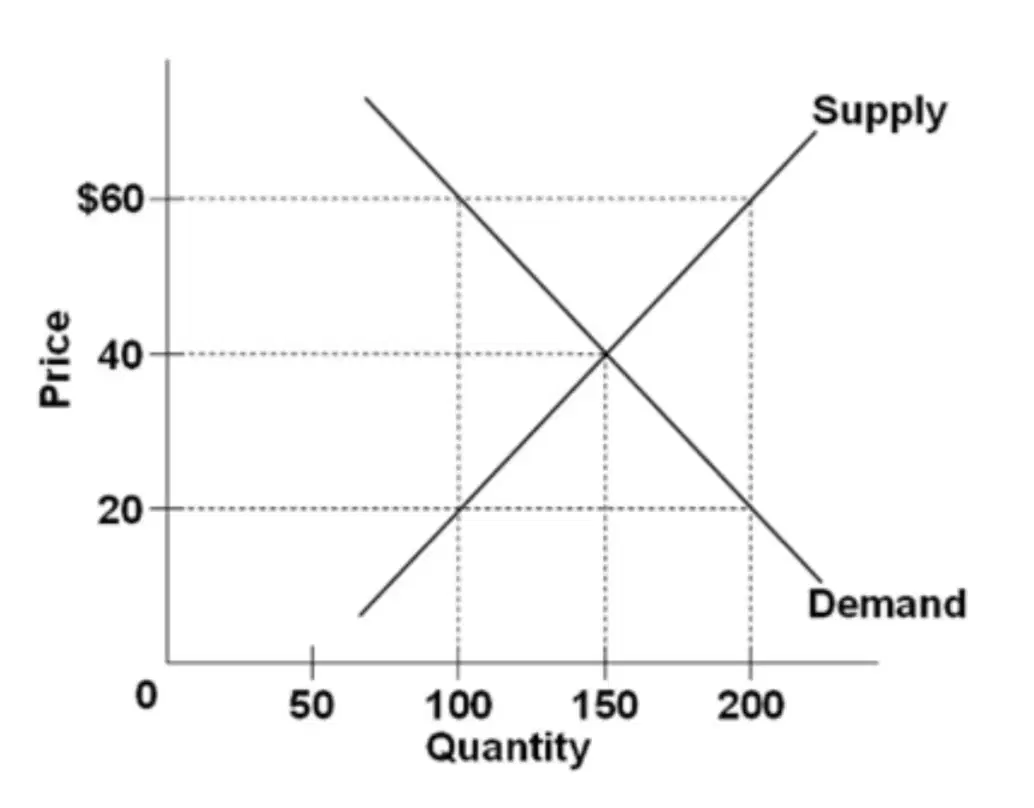
refer to the diagram above. if this is a competitive market, price and quantity will move toward:
$60 and 100, respectively
$60 and 200, respectively
$40 and 150, respectively
$20 and 150, respectively
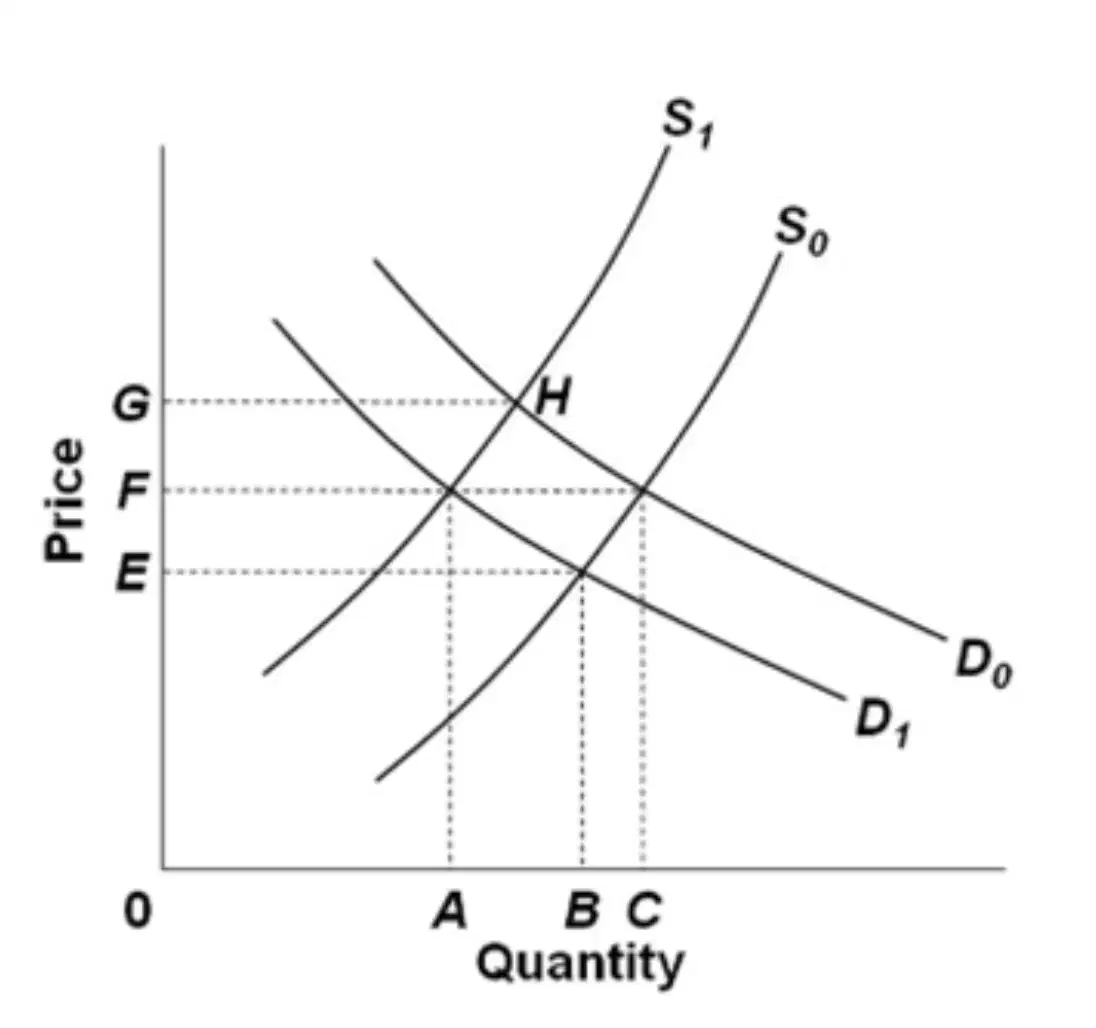
refer to the diagram above, which shows demand and supply conditions in the competitive market for product X. other things equal, a shift of the supply curve from S0 to S1 might be caused by a(n):
increase in the wage rates paid to laborers employed in the production of X
government subsidy per unit of output paid to firms producing X
decline in the price of the basic raw material used in producing X
increase in the number of firms producing X

refer to the diagram. a government price support program to aid farmers is best illustrated by:
quantity E
price C
price A
price B
a price floor means that:
inflation is severe in this particular market
sellers are artificially restricting supply to raise price
government is imposing a maximum legal price that is typically below the equilibrium price
government is imposing a minimum legal price that is typically above the equilibrium price
if a legal ceiling price is set above the equilibrium price,
a shortage of the product will occur
a surplus of the product will occur
a black market will evolve
neither the equilibrium price nor the equilibrium quantity will be affected

which of the diagrams above illustrates the effect of an increase in price of steel and energy on the market for automobiles?
A and C
B and D
C and D
D only
an "increase in the quantity supplied" suggests a:
rightward shift of the supply curve
movement down along the same supply curve
movement up along the same supply curve
leftward shift of the supply curve
market failure is said to occur whenever:
private markets do not allocate resources in the most economically desirable way
prices rise
some consumers who want a good do not obtain it because the price is higher than they are willing to pay
government intervenes in the functioning of private markets
market failures:
are only a concern when they result in prices that are too high
apply exclusively to situations where private markets do not produce any of an economically desirable good
result in overproduction or underproduction of a good
result from government interference in private markets
which of the following is the best example of a supply-side market failure?
no one provides street lights in a town because, once the lights are in operation, people don’t have to pay to use them
a firm keeps its production costs down by dumping its waste in the nearby river, adversely affecting water quality for residents in the area
government imposes taxes on the production of a socially desirable good
street performers don’t get full payment for the value of their output because people watch and enjoy the shows without paying the artist
supply-side market failures occur when:
supply curves don't reflect consumers' full willingness to pay for a good or service
supply curves don't reflect the full cost of producing a good or service
government regulates production of a good or service
a good or service is not supplied because no one wants it
consumer surplus:
is the difference between the maximum prices consumers are willing to pay for a product and the lower equilibrium price
is the difference between the maximum prices consumers are willing to pay for a product and the minimum prices producers are willing to accept
is the difference between the minimum prices producers are willing to accept for a product and the higher equilibrium price
rises as equilibrium price rises
producer surplus is the difference between:
the maximum prices consumers are willing to pay for a product and the lower equilibrium price
the quantity supplied and quantity demanded at an above equilibrium price
the minimum prices producers are willing to accept for a product and the higher equilibrium price
the maximum prices consumers are willing to pay for a product and the minimum prices producers are willing to accept
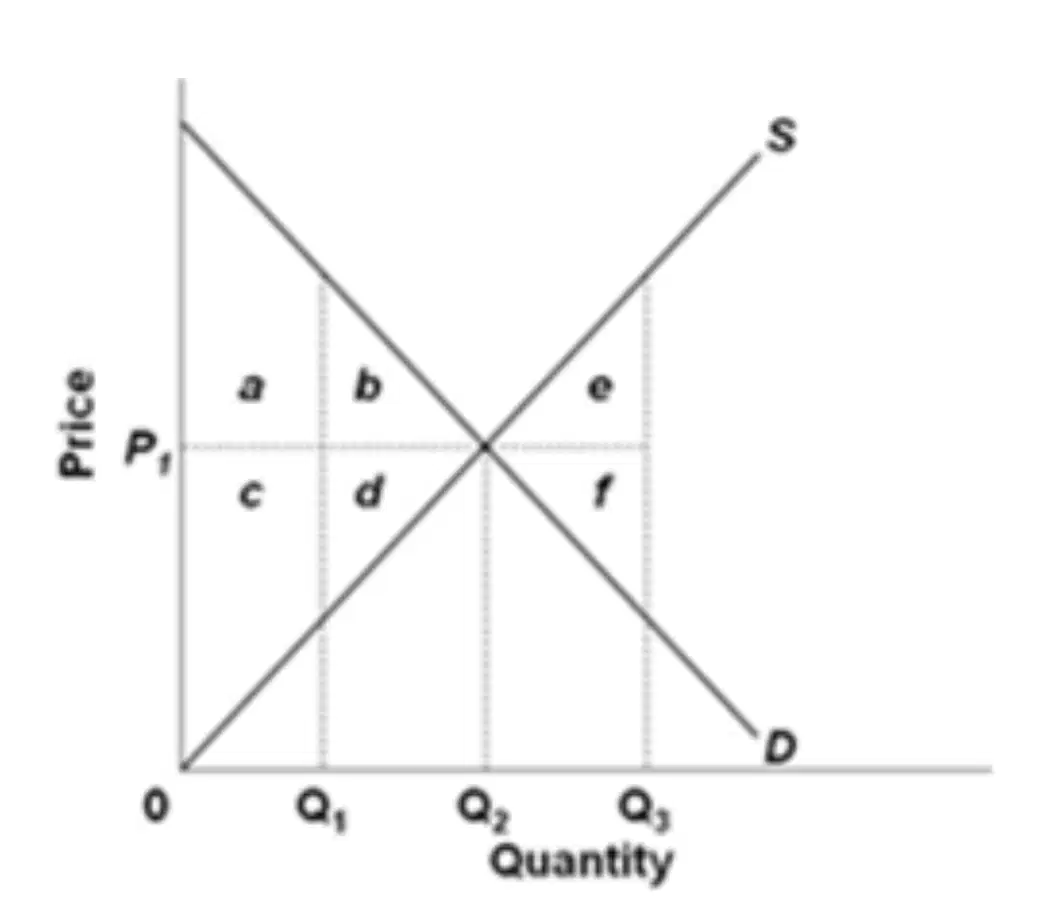
refer to the diagram above. assuming equilibrium price P1, consumer surplus is represented by areas:
a + b
a + b + c + d
c + d
a + c
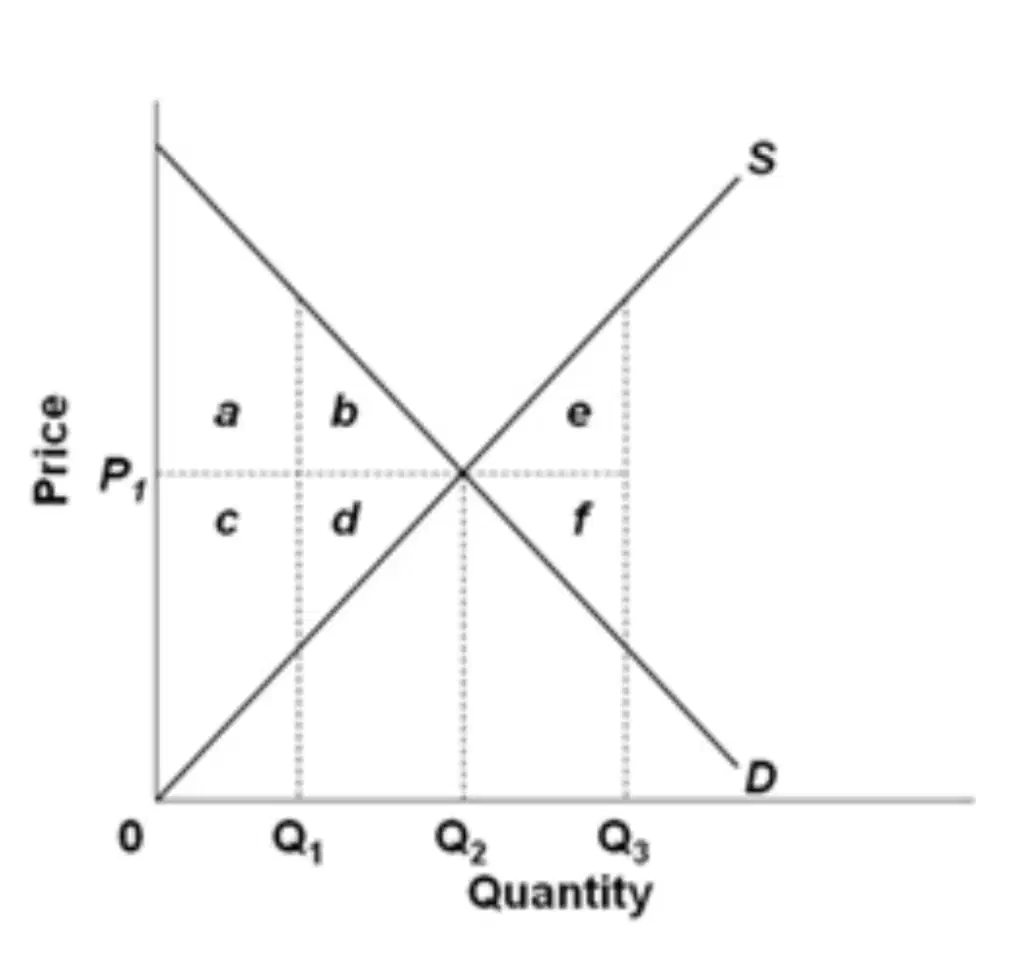
refer to the diagram. the area that identifies the maximum sum of consumer surplus and producer surplus (also called total surplus) is:
a + b + c + d + e + f
c + d + f
a + b + e
a + b + c + d
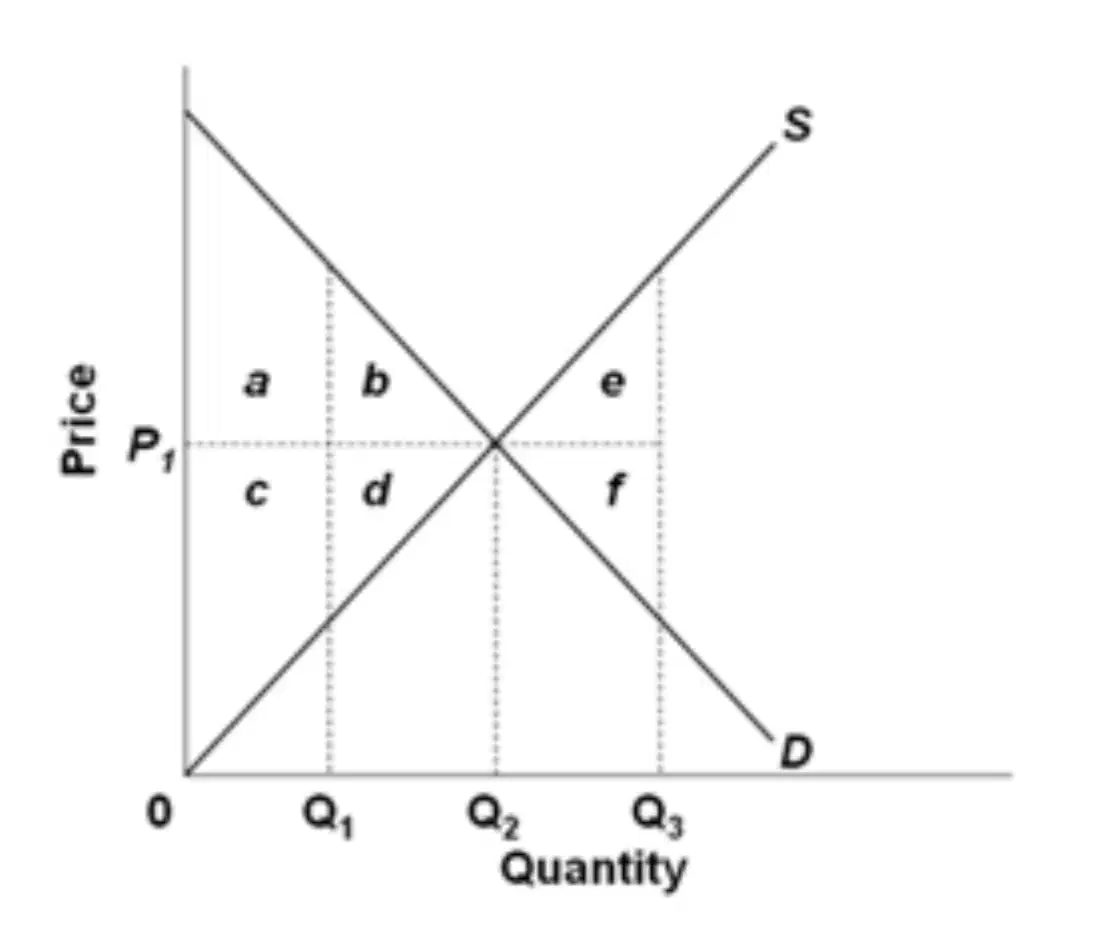
refer to the diagram. if actual production and consumption occur at Q1,
efficiency is achieved
consumer surplus is maximized
an efficiency loss (or deadweight loss) of b + d occurs
an efficiency loss (or deadweight loss) of e + d occurs
unlike a private good, a public good:
has no opportunity costs
has benefits available to all, including nonpayers
produces no positive or negative externalities
is characterized by rivalry and excludability
product reviews help to alleviate problems associated with:
asymmetric information
moral hazard
positive externalities
negative externalities
asymmetric information in a market transaction occurs when there is unequal knowledge possessed by the:
buyer and the government
seller and the government
taxpayer and the government
buyer and the seller
as a percentage of GDP, US exports are:
greater than US imports
about 70 percent
considerably lower than in several other industrially advanced nations
higher than in canada and germany
countries engaged in international trade specialize in production based on:
relative levels of GDP
comparative advantage
relative exchange rates
relative inflation rates
the ‘terms of trade’ reflect the:
rate at which gold exchanges internationally for any domestic currency
ratio at which nations will exchange two goods
fact that the gains from trade will be equally divided
cost conditions embodied in a single country's production possibilities curve
answer the question using the accompanying cost ratios for two products, fish (F) and chicken (C), in countries singsong and harmony. assume that production occurs under conditions of constant costs and that these are the only two nations in the world.
singsong: 1F = 2C harmony: 1F = 4C
if these two nations specialize based on comparative advantage,
singsong will both produce chicken and catch fish
harmony will both produce chicken and catch fish
harmony will produce chicken and singsong will catch fish
singsong will produce chicken and harmony will catch fish
the primary gain from international trade is:
increased employment in the domestic export sector
more goods than would be attainable through domestic production alone
tariff revenue
increased employment in the domestic import sector
in the real world, specialization is rarely complete because:
nations normally experience increasing opportunity costs in producing more of the product in which they are specializing
production possibilities curves are straight lines rather than curves bowed outward as viewed from the origin
customers prefer limited choices
international encourages monopolies
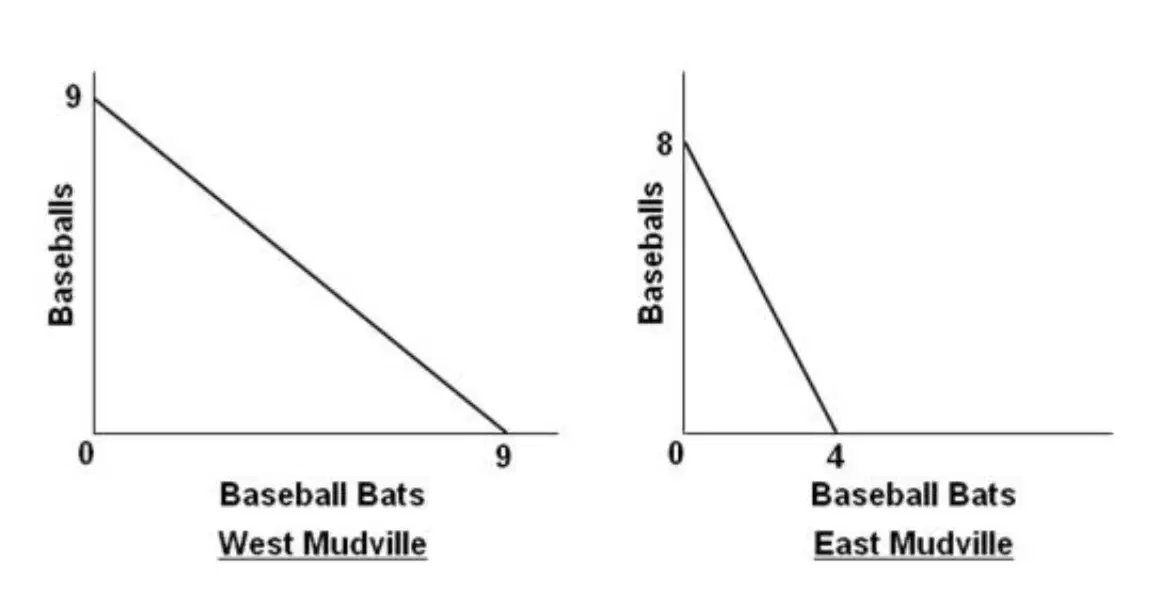
the production possibilities curves above suggest that:
west mudville should specialize in, and export, baseball bats
west mudville should specialize in, and export, both baseballs and baseball bats
east mudville should specialize in, and export, baseball bats
workers will try to immigrate from west mudville to east mudville
suppose the domestic price (no-international-trade price) of copper is $1.20 a pound in the united states while the world price is $1.00 a pound. assuming no transportation costs, the united states will:
have a domestic surplus of copper
export copper
import copper
neither export nor import copper

refer to the diagram above, which shows the domestic demand and supply curves for a specific standardized product in a particular nation. if the world price for this product is $0.50, this nation will experience a domestic:
shortage of 160 units, which it will meet with 160 units of imports
shortage of 160 units, which will increase the domestic price to $1.60
surplus of 160 units, which it will export
surplus of 160 units, which will reduce the world price to $1.00
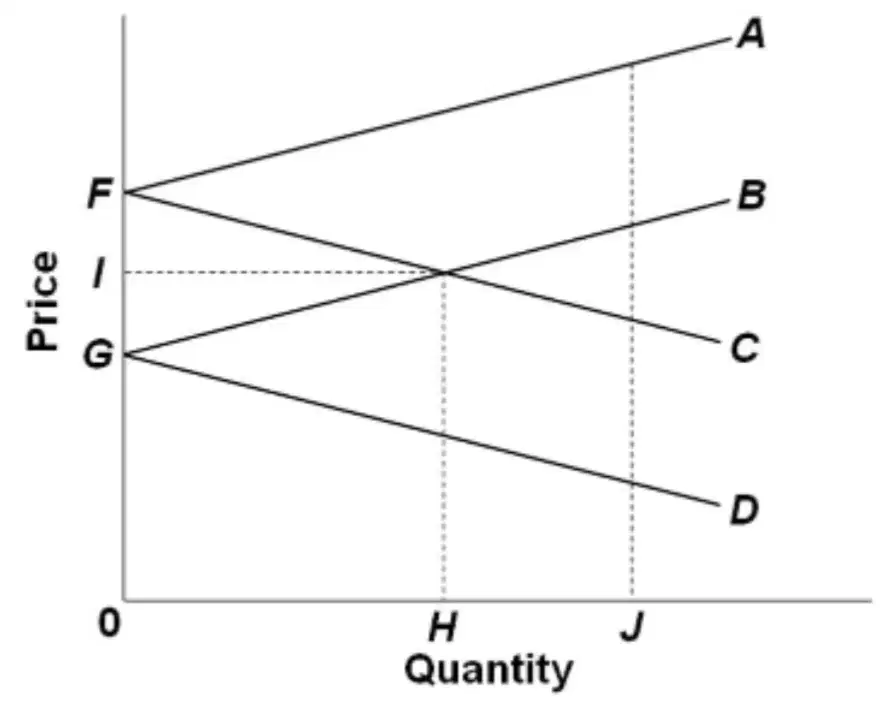
refer to the diagram, which pertains to two nations and a specific product. the new equilibrium world price occurs at:
F
I
G
J
tariffs:
may be imposed either to raise revenue (revenue tariffs) or to shield domestic producers from foreign competition (protective tariffs)
are also called import quotas
are excise taxes on goods exported abroad
are per-unit subsidies designed to promote exports
which is an example of a nontariff barrier (NTB)?
an export subsidy
an excise tax on the physical volume of imported goods
box-by-box inspection requirements for imported fruit
an excise tax on the dollar value of imported goods

