
Font size
 Worksheets
Science Vocab (1/31) Unit 1-3
Total questions: 55
Worksheet time: 48mins
Which statement is true about Earth's rotation?
spinning on an axis
takes one year
orbits around the sun
causes the seasons and year
A _____________ is the motion that one object in space takes around another object.
revolution
orbit
phase
rotation
Which statement is true about Earth's Revolution?
spinning on an axis
causes day and night
Takes 24 hours
causes the seasons

Moon's orbits the Earth at what degree of tilt?
23.5
15
5
50

Which season is taking place in the Northern Hemisphere in Position C?
Winter
Spring
Summer
Fall

Which season is taking place in the Southern Hemisphere in Position C?
Winter
Spring
Summer
Fall

Which season is taking place in the Northern Hemisphere in Position D?
Winter
Spring
Summer
Fall
New Moon
Full Moon
First Quarter
Third Quarter

24 hours

Which position is the first quarter?
5
1
7
3
A total solar eclipse is visible from
all over the Earth.
only within the moon's penumbra.
only within the moon's umbra.
only the dark side of the Earth.


Which type of tide is the fisherman experiencing in this picture.
Spring High Tide
Spring Low Tide
Neap High Tide
Neap Low Tide
During neap tides, the gravitational effects of the sun and moon ______________ .
pull in different directions causing a weaker pull
pull in the same direction causing a strong pull
pull in opposite directions causing a bulge on both sides of the Earth
pull and cancel each other out making no effect
Which process always shows light on the right side of the moon?
Gibbous
Crescent
Waning
Waxing
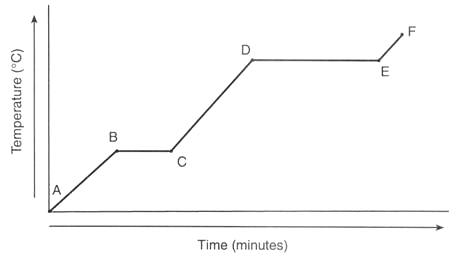
What is happening on the graph when the line is increasing or decreasing?
State of Matter
Changing Phases
Molecules are changing in number
Molecules are changing heights.
Which process requires that energy is removed from a substance for the change to occur?
melting
freezing
evaporation
Which best describes the law of conservation?
The amount of matter increases after a phase change
The amount of matter decreases after a phase change
The amount of matter stays the same after a phase change
The matter is destroyed and disappears after a phase change.
A chemical reaction that indicates if a substance is an acid or base
oxidation
insulator
reactivity
A substance produced in a chemical reaction.
solute
change
How does reactivity of non-metals increase on the periodic table.
As you move up and to the left on the table
As you move up and right on the periodic table
As you move up and to the right on the table, except for the last group
As you move down and to the right on the table

The highlighted group represents the ______________ .
Alkali Metals
Alkaline Earth Metals
Transition Metals
Halogens

This picture is a model of...
an element
a compound
a solution (homogeneous)
a mixture (heterogeneous)

This image is a model of...
an element
a compound
a solution (homogenous)
a mixture (heterogeneous)

Water (H2O), is not found on the periodic table because water is a...
atom
it is on the periodic table
mixture
compound
Name the process used to separate brewed coffee from the ground beans.
distillation
solution
filtration
boiling
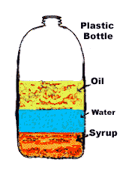
Which is method uses the property of boiling point to separate?
Filtration
Magnetic
Mechanical
Evaporation
What energy transformation occurs when a television speaker produces music?
ELECTRICAL TO SOUND
ELASTIC TO SOUND
THERMAL TO SOUND
SOUND TO ELECTRICAL


Identify the energy transfer
sound to kinetic
sound to light
mechanical to sound
chemical to sound


When you eat food, your body gains ___________ energy.
electrical
chemical
thermal
light

Identify the energy transfer
electrical to chemical to light
kinetic to potential
chemical to electrical to light
light to sound


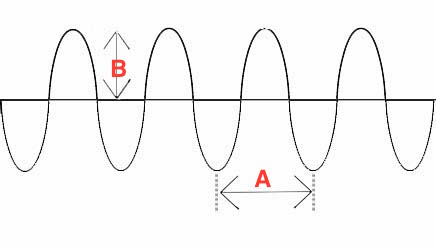

What type of wave is pictured?
Transverse wave
Longitudinal wave
Wave, what wave?
Slinky wave

Which coconut has the greatest gravitational potential energy?
What is the chemical elements of Frosty the Snowman?
Hydrogen and oxygen

What state of matter is Frosty?

