
 Worksheets
industrial revolution study guide
Total questions: 13
Worksheet time: 18mins
"The spinning men or women employ children if they can get a child to do
their business……..the child is paid one shilling or one shilling and six pence,
and they will take that (five year old) child before they take an older one
who will cost more."-George Gould, a merchant
During the Industrial Revolution, why did factory owners prefer to hire women and children to work for them?
They were less likely to form unions.
They could pay women and children more.
They were more likely to form unions.
They could pay women and children less.
It was a town of red brick, or of brick that would have been red if the
smoke and ashes had allowed it; but as matters stood it was a town of
unnatural red and black like the painted face of a savage. It was a town of
machinery and tall chimneys, out of which endless smoke trailed forever
and ever. It had a black canal in it, and a river that ran purple with
ill-smelling dye.”- Charles Dickens, Hard Times
In this excerpt, Charles Dickens was describing the effects of the
Southern Rural Migration
Industrial Revolution
Progressive Movement
Spanish-American War
“Crouched over the coal chutes, the boys sit hour after hour, picking out the pieces of
slate. I once tried to do the work a twelve-year old boy was doing day after day, for ten
hours at a stretch, for sixty cents a day. The gloom appalled me.” --John Spargo
What development did the conditions described in this quotation lead to?
Passage of child labor laws
Spread of imperialism to Africa
A migration from the countryside to cities
Ideas of the Enlightenment
All of the following were economic changes during the Industrial Revolution EXCEPT
Increased use of agriculture and less machinery
New inventions and the development of factories
Rapidly growing industries such as textiles
New business and thriving trade networks
"The spinning men or women employ children if they can get a child to
do their business……..the child is paid one shilling or one shilling and six
pence, and they will take that (five year old) child before they take an
older one who will cost more."
During the Industrial Revolution, why did factory owners prefer to hire women and children to work for them?
They could pay women and children more.
They could pay women and children less.
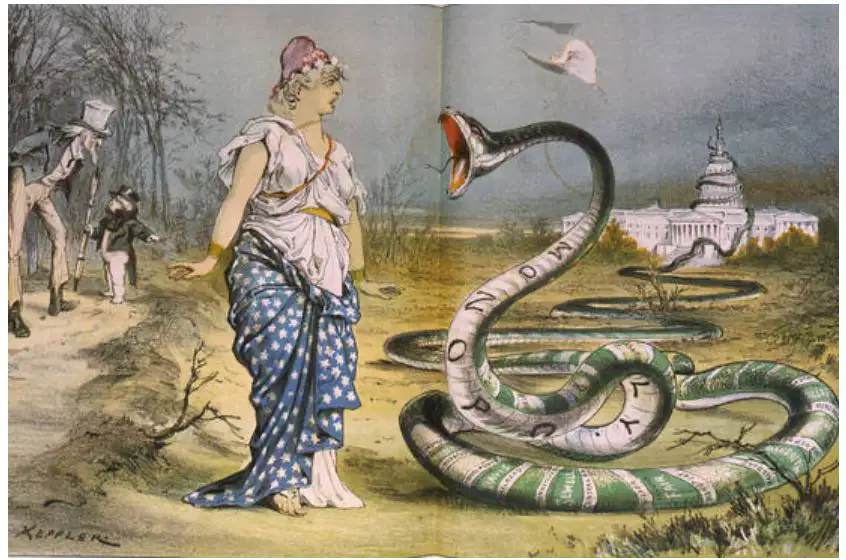
What message is this cartoon sending Americans regarding monopolies?
Monopolies can be defeated by empowered women.
Monopolies endanger America’s laws and liberty.
Monopolies are more dangerous to innocent women.
Monopolies cause confusion and fear in government.
"The business of America is business.”-President Calvin Coolidge.
By making this statement, President Coolidge was expressing his support for and the growth of:
higher taxes on corporations.
democratic socialism.
capitalism
banking regulations.

The author of this cartoon believes that the protectors of our industries…
Are big business owners.
Are struggling workers
Are natural disasters.
Are linens, lumber, and iron.
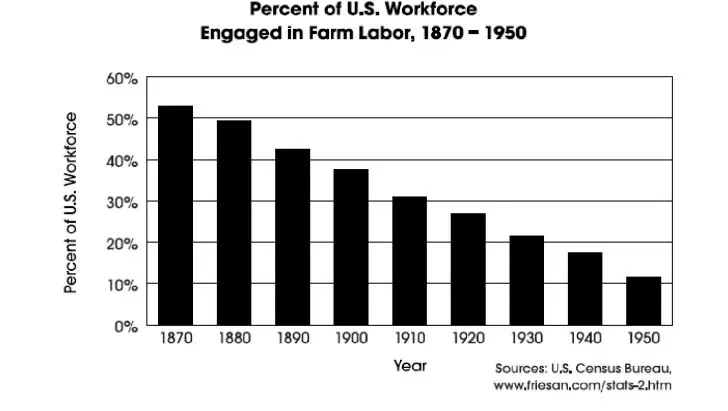
The economic development of the United States between 1870 and 1950 helped produce the results shown in the above graph. The trend shown in the graph is associated with:
Increased urbanization
Decreased immigration
Advances in communication
Reduced population growth
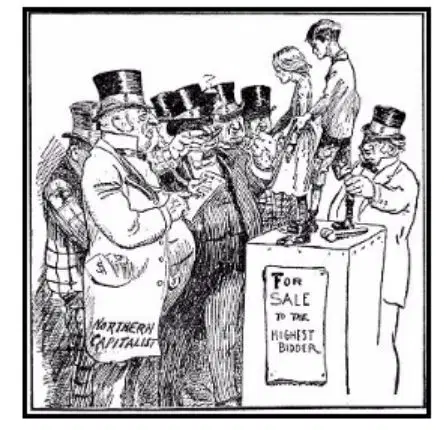
What is the message from the above cartoon?
Children were not needed to work in the factories.
Children had more power than most workers.
Capitalists cared about child welfare
Children were treated like property
Urban/ Urbanization
the increase in the proportion of people living in towns and cities.
Schicklegruber
Rural
in, relating to, or characteristic of the countryside rather than the town.
yap
Tenements
single-family buildings divided into multiple living spaces.
time period where blacks and whites were sperated

