
 Worksheets
Replication of DNA
Total questions: 25
Worksheet time: 20mins
Prokaryotic DNA has two, while eukaryotic DNA has about 100
replication forks
DNA polymerases
DNA replication
DNA helicases
Process of making copies of DNA
replication forks
DNA polymerases
DNA replication
DNA helicases
Enzymes that open the double helix by breaking hydrogen bonds between nitrogen bases
replication forks
DNA polymerases
DNA replication
DNA helicases
Which enzyme is responsible for adding bases?
Topoisomerase
DNA Polymerase
Ligase
Primase
a ______ is a section of DNA that codes for a particular protein.
Gene
Chromosome
Pedigree
Protein
ATG TGA CAG
Which of the following is not a nitrogenous base found in DNA?
Thymine
Uracil
Guanine
Adenine
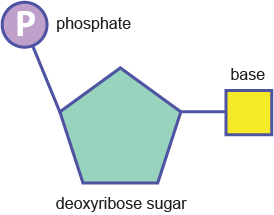
What are the three components of a nucleotide?
sugar, hydrogen, nitrogenous base
sugar, oxygen, nitrogenous base
sugar, phosphate, nitrogenous base
sugar, phosphate, protein
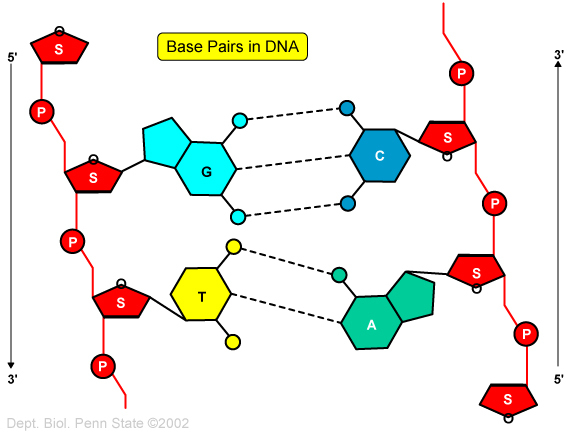
The 3' end of a DNa strand starts with a
Phosphate
Base
Deoxyribose sugar
Which type of bond can be found between the DNA base pairs?
Peptide bonds
Hydrogen bonds
Ionic bonds
Disulphide bridges
Identify the correct DNA base pairings from the list below.
A-U, C-G
C-T, A-G
A-T, C-G
G-U, A-C


With what does the synthesis of a new strand of DNA begin?
RNA primer
nucleotide unit
messenger RNA
transfer RNA
Origin of replication usually contains :
GC rich sequences
both AT and GC rich sequences
no particular stretch of sequences
AT rich sequences
In bacteria chromosomal DNA replication starts :
one specific locus
several specific loci
a single locus , randomly
from several loci , randomly
Identify the statement that best describes the structure of DNA.
Double stranded, composed of repeating units called nucleotides, held together by hydrogen bonds.
Single stranded, composed of repeating units called bases, held together by hydrogen bonds.
Double stranded, composed of repeating units called nucleotides, held together by peptide bonds.
Single stranded, composed of repeating units called nucleotides, held together by peptide bonds.

Based on the diagram, how many origins of replication are represented?
1
2
3
4
Where is DNA stored in a cell?
Nucleus
Cytoplasm
Cell membrane
Ribosome
The process of DNA replication is called semi conservative because it results in
two identical molecules, each with 1 original strand and one new.
two exact copies with new strands
Two DNA molecules. One original molecule and one with two new strands
none of these

order of replication
2, 1, 4, 3
3, 4, 1, 2
3, 4, 2, 1
3, 1, 4, 2
DNA replication results in two DNA molecules,
each one with one new strand and one original strand
one with two new strands and the other with two original strands
Show answersExplanationPreviousNext
each one with two original strands
each one with two new strands
The enzyme that unwinds the DNA to prepare for replication
polymerase
synthase
helicase
replicase

