
Font size
 Worksheets
Geologic Time, Fossils, Relative and Absolute Dating
Total questions: 31
Worksheet time: 31mins

Which of these periods is the youngest ?
Permian
Triassic
Jurassic
Cretaceous

Which two fossils would make good index fossils?
Gastropod
Ammonite
Trilobite
Crinoid

Which fossil is the oldest?
Coral
Trilobite
Crinoid
Gastropod

Which fossil is the youngest?
Trilobite
Fern
Coral
Ammonite
Radiometric dating involves measuring concentrations of ______________generated during radioactive decay.
molecules
isotopes
neutrons
sediment
Every 5,730 years, what percentage of Carbon 14 decays?
100
75
50
25
Scientists can determine the age of fossils by studying the rate of decay of radioactive elements, such as uranium, within the rocks and fossils. This type of fossil dating is called ______________________________.
absolute dating
chemical dating
relative dating
mold dating
The law of superposition allows geologists to determine exact timelines. (T or F)
True
False

Which fossil is the youngest?
A
B
C
D
A scientist finds the bones of a dinosaur. What could help the scientist determine the approximate age of the dinosaur bones?
the birds living in the area of the bones
the weather conditions in the area of the bones
the kinds of trees living in the area of the bones
the index fossils in the area of the bones
Imagine you are examining the age of a layer of volcanic ash using the decay of the element Uranium. Uranium has a half life of 4.5 billion years. When you examine your samples, you find a ratio of parent to daughter Uranium of about 12% to 88%. How many half lives had it gone through?
1
2
3
4

Determine the number of protons, electrons, and neutrons in the Carbon-14 isotope.
P=6
E=6
N=7
P=5
E=6
N=8
P=6
E=6
N=8
P=5
E=6
N=7
Radioactive isotopes ____.
are stable, and will not decay
are stable, but will decay
are unstable, but will not decay
are unstable, and will decay

What is the amount of time it takes for this radioactive element to decay? Each half life is __________years long?
1
5
10
20

How do we know that these are isotopes of the same atom?
They have the same color circles inside them.
They have the same amount of protons
They are side by side on the periodic table
They are all unstable

Which is the oldest?
A
B
C
D
Which is the youngest?
B
D
E
F
A scientist used radiometric dating to determine that the igneous rock layer "E" is 5,000 years old. How old would you infer that the sedimentary rock layer "F" is?
1,000 years old
2,000 years old
4,000 years old
6,000 years old
You find a rock that contains a fossil. What type of rock is this?
Sedimentary rocks
Igneous rocks
Metamorphic rocks


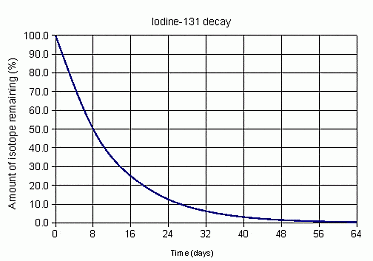
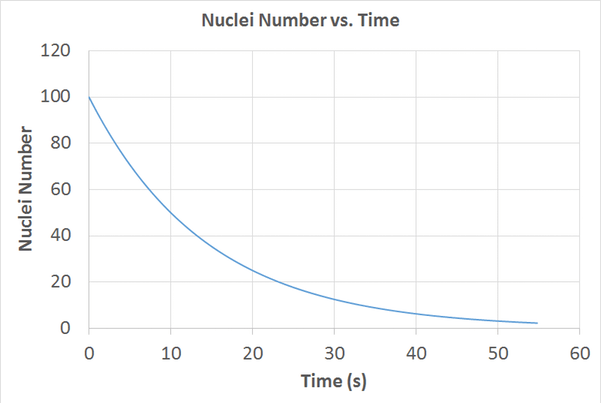
What is the Half life of this isotope?
5 seconds
10 seconds
15 seconds
20 seconds
All of the carbon in existence is continually recycled in the carbon cycle.
This reservoir of carbon is the air and gasses that surround the Earth.
Atmosphere
Biosphere
Hydrosphere
Lithosphere
Which of the following processes does NOT move carbon to the atmosphere?
Animal respiration (Breathing)
Volcanic eruption
Photosynthesis
Burning fossil fuels

