
 Worksheets
light
Total questions: 70
Worksheet time: 43mins
One of these is not a source of light


Which of the following shows the principle of light refraction? Tick the correct answers.
A
B
D
E
F

What is the object helps the customers at a salon to look the new hair style of his back of head?
periscope
hand held mirror
plane mirror
dental mirror

What is the object helps the customers at a show store to choose their favourite shoes?
periscope
hand held mirror
plane mirror
dental mirror

What is the object helps the dentist to see the patient's dental condition?
periscope
hand held mirror
plane mirror
dental mirror

What is the conclusion from your observation in this picture?
Light travels in a straight line
Light can be refracted
Light can be reflected
Light can pass through a transparent material

Diagram shows the condition of a spoon in a glass of water.
What can be observed about the spoon?
The spoon looks bent.
The water is clearer.
The water level rises.
Light is refracted.
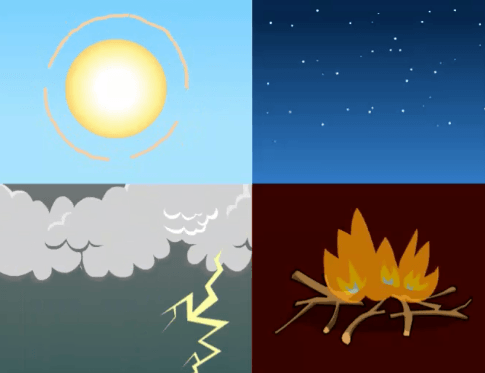

What help him to see around in the cave ?
sun
torch
Light helps us to ….
see
hear
feel
Things that make light are called...
Light sources
Sound sources
Dark sources
In which room could you see the most objects?
a room with some light
a room with low light
a room with bright light
Tick the man made sources of light.


Which picture shows NO LIGHT ?


When there is no light at all, we call it as...
total darkness
bright
natural
When there is very little or no light, we say it is...
dark
light
sound
cloudy
Moon is ...
a light source
NOT a light source
The example of man - made light source is . . . .
Thunder
Lightning
Candle
What is our main source of light?
Lightbulbs
The Moon
The Sun
Computers
Which one is a natural source of light?


Which is NOT a source of light?
firefly
ball
sun
torch
Which of this is the light source?


Refer to the image.

Refer to the image.
Proxima Centauri is the closest star to the Earth and it's take 4.3 light years to travel from the Earth to it. How long does it take light from Proxima Centauri to reach the Earth?
43 years
4.3 years
430 years
4300 years
Penumbra occurs when the edge of shadow are sharp.
True
False

Does this object give off its own light?
Yes
No

Does this object give off its own light?
Yes
No
Which of the following is opaque?
Water
Baking paper
Book
Window
Which of the following is translucent?
Key
Book
Baking paper
Wall
Opaque means....
All light can passes through it.
Some light can passes through it.
No light can passes through it.

Things make shadows because they __ the light
block
pass
What happens when light hits an object? (Multiple Answers)
Some light gets absorbed by the object.
Some light bounced off to your eye.
Some light get vibration to the object.
The object will change direction.
Light bulb is a non-luminous object.
True
False
Mirror is a luminous object.
True
False
Star is a luminous object.
True
False
All light has source.
True
False
What is light? (Multiple Answers)
It is a force.
It travels through in vacuum.
It travels in straight lines.
The most fastest thing in the world.
Tick the correct of TWO devices which use the principle of light reflection in our daily lives.


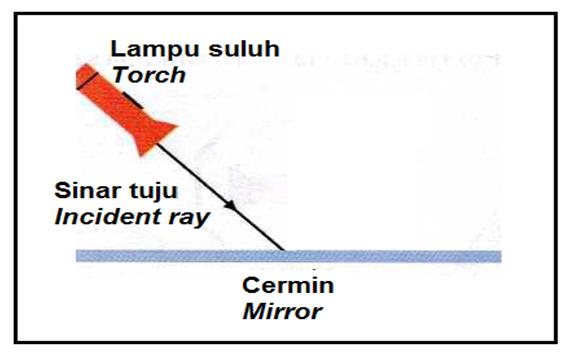
The following diagram shows the ray diagram when a torch light is torched towards a mirror. Which of the following is the correct reflected ray?
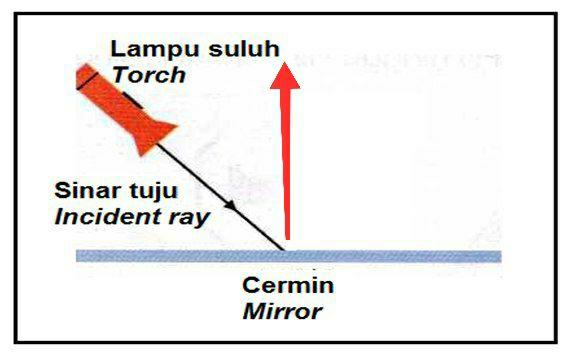
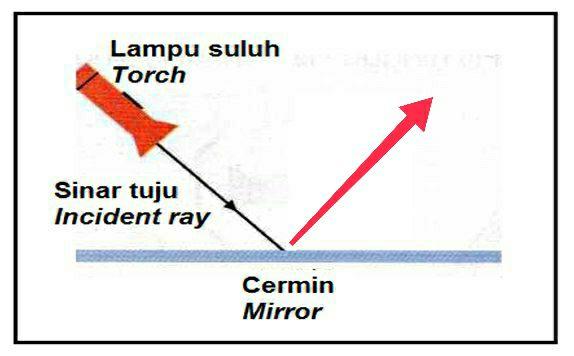
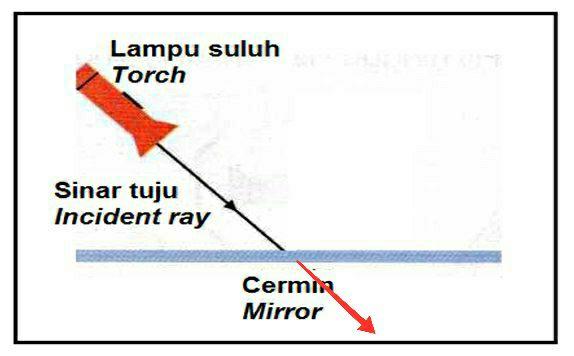
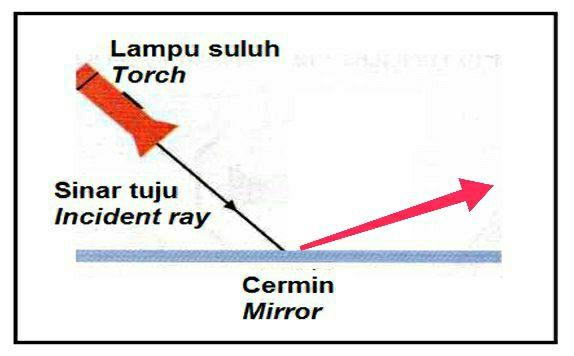

The following diagram shows a driver who could see the image of a vehicle behind him without turning his back.
Why?
Light travels in a straight line
Light is refracted
Light is reflected
Light travels in two different mediums

There is no shadow formed on the screen. Why?
The object is opaque
The light source is too dim
The object is transparent
The object is translucent

How to increase the size of the shadow on the screen?
Move the light source farther from the object
Move the object closer to the screen
Change the type of object used
Move the object closer to the light source

What conclusion can be made from this investigation?
Light travels in parallel
Light travels in a straight line
Light cannot pass through and opaque object
Light cannot bend
How does the light travels?
in parallel
in a straight line
on its own orbit
on its own path
There are two factors that affect the size of shadow. What are the factors? Tick the correct answers.
Size of the screen
Distance of object from the screen
Distance of object from the light source
Size of the light source

This investigation is carried out to show that
light travels in a straight line
light can be seen through the holes
light penetrates a transparent object
light travels in many ways
What conclusion can be made from this investigation?
Light travels in parallel
Light travels in a straight line
Light cannot pass through and opaque object
Light cannot bend

Which of the following shows that light travels in a straight line?


This situation shows that
light travels in a straight line
light is everywhere
light penetrates certain objects
light is produces by the Sun


What makes it possible to see an object when looking through a periscope?
It contains mirrors that reflect the object.
It magnifies small objects so they can be seen.
It absorbs the light rays passing through it.
It separates the light into different colors.
Light travels in straight lines until reflected by another object. Which illustration best shows the light being reflected?


Which of these provides the best explanation for why the pencil appears broken?
The pencil absorbs the light rays that hit it.
Water reflects light rays away from the pencil.
Light rays are bent by the water in the glass.
The surface of the water reflects the light rays.

