wayground logo

Free Printable Worksheets

Font size

S
M
L
XL
Worksheets

Forces and Motion Test Review 1

Total questions: 55

Worksheet time: 41mins

Name
Class
Date
1.
This type of force resists motion between two surfaces that are pressed together
a)
contact
b)
gravity
c)
friction
2.
If the net force is equal to zero the forces acting on the object are 
a)
balanced
b)
unbalanced
3.
Jupiter has about 317 times more mass than Earth. What can you infer from this fact? 
a)
That Jupiter’s gravitational force is much weaker than on Earth’s gravitational force.
b)
That Jupiter’s gravitational force is much stronger than Earth’s gravitational force.
c)
That Jupiter’s and Earth’s gravitational forces are equal.
d)
Mass has no effect on the gravitational force between two objects
4.
An _______ force must act on an object for it to CHANGE it's motion
a)
balanced
b)
unbalanced
c)
gravitational
d)
electrical
5.

How will this object move?

a)

It won't move.

b)

It will move to the right.

c)

It will move to the left.

d)

It will move up and down.

6.
What is the net force?
a)
30 N left
b)
25 N right
c)
5 N left
d)
55 N right
7.
What is the net force?
a)
400 N Up
b)
400 N Down
c)
- 400 N Down
d)
800 N Down
8.

If you dropped a bowling ball and a golf ball from the top of a building, with no air friction, which one would hit the ground first?

a)

bowling ball

b)

baseball

c)

neither

d)

both would hit at the same time

9.

___ is the pull of gravity on an object.

a)

Weight

b)

Sliding Friction

c)

Momentum

d)

Projectile Motion

10.
You push on a tree with 20 N of force. If the tree doesn't move, the tree is pushing back on you with _____of force.
a)
20 N 
b)
21 N 
c)
10 N 
d)
19 N
11.

Acceleration due to the gravitational pull of the Earth is __.

a)

3.14 in/foot

b)

29.4 m/s3

c)

9.8 m/s2

12.

An object's tendency to resist change in motion is called

a)

Friction

b)

Inertia

c)

Force

d)

Gravity

13.
Any push or pull on an object.
a)
force
b)
velocity 
c)
inertia
d)
momentum
14.

Which two factors effect gravity the most?

a)

mass & distance

b)

space and time

c)

weight and height

d)

answer not given

15.

Newtons and kg-m/s2 are units of...

a)

force

b)

inertia

c)

acceleration

d)

velocity

16.
If there are two forces going in the same direction how would you find the net force?
a)
Subtract
b)
Add
c)
Neither
d)
Multiply
17.
8 N to the left , and 4 N to the right. Find the net force. Is this balanced?
a)
12 N Right  No
b)
4 N Left  No
c)
12 N Right  Yes
d)
4 N Left  Yes
18.
With unbalanced forces, the object will move in the direction of the _______ force.
a)
larger 
b)
smaller 
c)
equal 
19.
Force pair that has a net force of zero.
a)
Balanced force
b)
Unbalanced force
20.
Which one is balanced?
a)
top
b)
bottom
c)
both
d)
neither
21.
What is the net force?
a)
5000 N right
b)
4000 N right
c)
40 N left
d)
4000 N left
22.
What is the magnitude (size) and direction of the net force?
a)
15 N to the left
b)
15 N to the right
c)
1 N to the left
d)
1 N to the right
23.
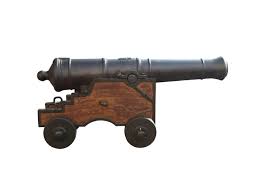
When a cannon fires a cannonball we observe Newton's third law. Which force is the reaction force?
a)
The cannon moving forward
b)
The cannonball moving forward
c)
The cannon moving backward
d)
The cannonball moving backward
24.

Matt measured a small rubber ball and made 3 other balls of the same diameter from lead, foam, and wood. Which has the greatest inertia?

a)

rubber ball

b)

lead ball

c)

foam ball

d)

wood ball

25.

What type of motion is shown here?

a)

free fall

b)

centripetal force

c)

terminal velocity

d)

projectile motion

26.

A rubber ball, lead ball, and wooden ball are all dropped from the same height. Assuming little to no air resistance, which ball would hit the ground first?

a)

rubber ball

b)

lead ball

c)

wooden ball

d)

they would all hit at the same time

27.

A push or a pull is the definiion of ______.

a)

energy

b)

inertia

c)

change

d)

force

28.

Forces is measured using which unit?

a)

grams (g)

b)

Newtons (N)

c)

pounds (lb)

d)

hertz (Hz)

29.

Which type of friction is shown here?

a)

static

b)

sliding

c)

rolling

30.

Which type of friction is shown here?

a)

static

b)

sliding

c)

rolling

31.

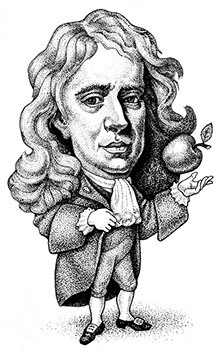
Who wrote many laws regarding gravity and how it affects motion?

a)

Albert Einstein

b)

JJ Thomson

c)

Issac Newton

d)

Madame Curie

32.

What force attracts all objects with mass toward each other?

a)

Gravity

b)

Weight

c)

Energy

33.

The strength of the force of gravity between two objects depends on two factors? (there is more than one correct answer)

a)

the masses of the objects

b)

the distance between them.

c)

the shape of the objects

d)

the density of the objects

34.

What is the measure of the force of gravity on an object?

a)

Gravity

b)

Weight

c)

Mass

d)

Density

35.

If you were to go to the moon or Mars which of these would change?

a)

Your mass

b)

Your weight

c)

Your density

36.

When objects are farther apart from each other what happens to the gravity?

a)

It increase

b)

It decreases

c)

It stays the same

37.

Which pair would have the LEAST gravitational attraction in this picture?

a)

top pair

b)

bottom pair

38.

Which statement best explains WHY even though the Sun is so large and has great gravitational pull, we humans are not that strongly attracted to it (resulting in us flying off into space towards it? (there are 2 right answers)

a)

We are closer to (standing on) the Earth. Its gravity has a greater affect on us because of that.

b)

There are small pieces of string that hold us to the surface of the Earth.

c)

The moon's gravity pushes us back down to the ground.

d)

The Sun's gravity is not strong enough to pull us because we are so far away from it as we orbit in space.
39.
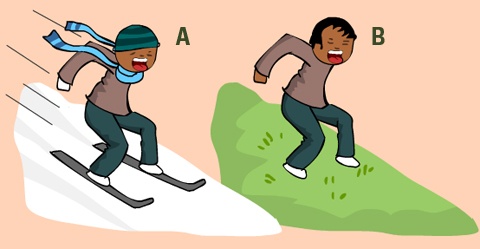
Why is it harder for the boy in Image B to get down the hill?
a)
Motion
b)
Friction
c)
Work
d)
Displacement
40.
Which force produces a change in motion?
a)
unbalanced force
b)
balanced force
c)
gravitational force
d)
frictional force
41.
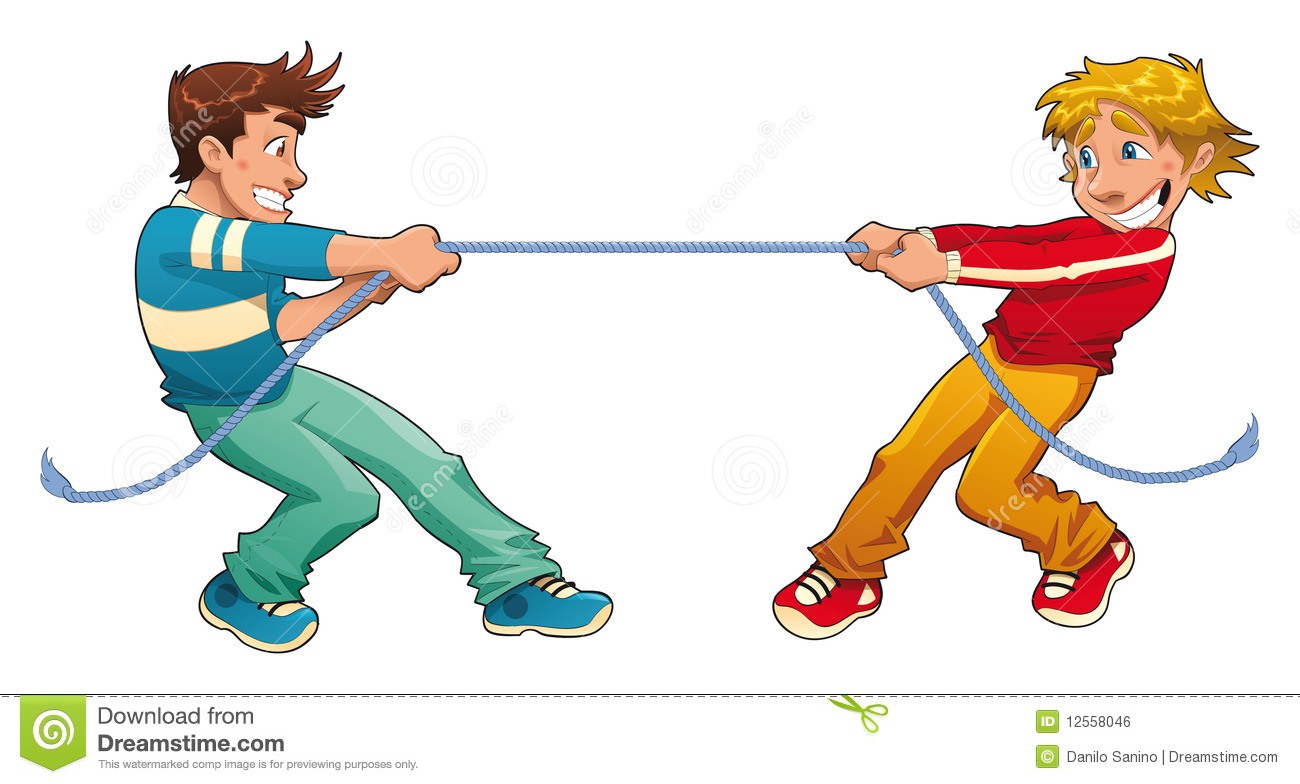
If these boys are pulling with the same amount of force.  What will happen?
a)
The boy in blue will win.
b)
They will not move at all.
c)
The boy in red will win.
d)
Both will fall down.
42.

Which object would have the greatest amount of gravitational attraction?

a)

top pair

b)

middle pair

c)

bottom pair

43.

What would the object's velocity be at 5 seconds?

a)

9.8 m/s2

b)

49 m/s2

c)

58.8 m/s2

d)

answer is not given

44.
What is the magnitude (size) and direction of the net force?
a)
15 N to the left
b)
15 N to the right
c)
1 N to the left
d)
1 N to the right
45.

Air resistance is considered to be a type of:

a)

motion

b)

speed

c)

friction

d)

weight

46.

What is the correct net force and direction of movement?

a)

0 N moving right

b)

40N moving left

c)

40N moving right

d)

O N moving left

47.
____________ is the force that slows down and eventually stops all objects on the Earth.
a)
inertia
b)
gravity
c)
momentum
d)
friction
48.
The effect of gravity depends on which of the following two things?
a)
time; length
b)
mass; distance
c)
mass; acceleration
d)
weight; height
49.
Objects moving through air experience a type of friction called _____ .
a)
terminal velocity.
b)
inertia.
c)
air resistance.
d)
rolling friction.
50.
The combination of all the forces acting on an object is called the ________ .
a)
net force
b)
cumulative force
c)
balanced force
d)
friction force
51.
All objects near the Earth's surface accelerate at a rate of _____ due to the force of gravity.
a)
4.13 mph
b)
.098 km/ms2
c)
8.9 m/s2
d)
9.8 m/s2
52.
When the main force acting on a falling object is gravity, the object is said to be _____.
a)
stationary.
b)
in free fall.
c)
decelerating.
d)
a projectile.
53.
What type of motion is shown in this picture?
a)
weightlessness
b)
centripetal force
c)
projectile motion
d)
terminal velocity
54.

The force that acts on objects moving in a circle is called a(n) _____.

a)

balanced force.

b)

gravitational force.

c)

unbalanced force.

d)

centripetal force.

55.
When air resistance is balanced with gravity, a falling object has reached _______.
a)
density
b)
buoyancy
c)
inertia
d)
terminal velocity