
 Worksheets
Hydrology Test Review
Total questions: 170
Worksheet time: 3hrs 55mins
What effect does the sun have on surface water?
It causes it to boil
It causes it to rain
It causes it to sink
It causes it to evaporate
When water vapor is cooled and forms droplets of liquid water
Condensation
Evaporation
Transpiration
Runoff

What is precipitation?
Sweat from our bodies on hot days
Warm rain but not cold snow or sleet
Gas that we use in furnaces or ovens
Any form of water that falls from the sky
The process when plants release water vapor from their leaves is called _____________.
precipitation
evaporation
transpiration
condensation

What step of the water cycle does this picture show?
Condensation
Runoff
Precipitation
Evaporation

What are formed when water vapor condenses and come together?
Clouds
Mountains
Transpiration
Valleys

Is precipitation any form of water that falls back to earth?
Yes
No
When clouds fill with water and can't hold anymore, the water falls from the clouds as -
precipitation
clouds
What does transpiration mean?
the process by which water vapor in the air cools and becomes liquid water
the process by which liquid water changes to water vapor
the evaporation of water from plants
any form of water that falls from clouds to Earth’s surface
Define condensation
the process by which water vapor in the air cools and becomes liquid water
he process by which liquid water changes to water vapor
the evaporation of water from plants
water that moves through soil or rock underground
Define infiltration
he process by which water vapor in the air cools and becomes liquid water
the evaporation of water from plants
the process by which liquid water changes to water vapor
the movement of water into the ground
Define groundwater
water that moves through soil or rock underground
liquid water that runs downhill on Earth’s surface
the movement of water into the ground
the process by which liquid water changes to water vapor
Define precipitation
water that moves through soil or rock underground
the movement of water into the ground
any form of water that falls from clouds to Earth’s surface
the process by which water vapor in the air cools and becomes liquid water
Define runoff
the process by which water vapor in the air cools and becomes liquid water
liquid water that runs downhill on Earth’s surface
the movement of water into the ground
water that moves through soil or rock underground
Define evaporation
the process by which liquid water changes to water vapor
water that moves through soil or rock underground
any form of water that falls from clouds to Earth’s surface
the process by which water vapor in the air cools and becomes liquid water

What is the correct letter for condensation
B
C
A
F

Write the correct letter that represents transpiration
F
E
C
B

Write the correct letter to represent runoff
D
B
C
E

What letter represents evaporation?
D
F
A
B

What letter represents precipitation
F
A
B
C

What letter represents infiltration
D
G
E
F

What letter represents groundwater
D
E
G
F
What energy source drives the water cycle?
the moon
gravity
the wind
the sun

Condensation takes place at ____
A
B
C
D
E

Evaporation takes places at ____
A
B
C
D
E

Run off takes place at ___
A
B
C
D
E

Infiltration takes place at ____
A
B
C
D
E

Precipitation takes place at ___
A
B
C
D
E
What is the Sun’s role in the Water Cycle?
To provide light for the cycle
To provide energy to drive the cycle
o produce precipitation during the cycle
To cause the water to condense in the cycle
When solid water changes directly from a solid to a gas is called?
Evaporation
Transpiration
Sublimation
Condensation
What is the percentage of saltwater on the Earth?
97%
71%
50%
3%
Only 3% of the water on Earth is freshwater. About 2/3 of that water is not available for man’s use. Why is this?
It is polluted
It is salty
It is in aquifers
It is frozen
What percentage of the Earth’s surface is covered by water?
97%
71%
50%
3%
The process where water soaks into soil or porous rock .
Sublimation
Transpiration
Groundwater
Infiltration
What holds approximately 96.5% - 97% of the Earth's water?
The polar caps
Glaciers
Lakes & Rivers
Oceans
Approximately what percentage of the Earth's freshwater is easily available to humans?
1%
3%
71%
97%
The water cycle begins with ______.
condensation
clouds
precipitation
has no beginning
Once the water makes it all the way through the water cycle, the water_______.
starts the cycle over again
is done with its journey
remains at the end of the cycle
can take a break for awhile

When plant leaves release water vapor into the air; "plant sweat"
evaporation
condensation
precipitation
transpiration

Approximately _____ percent of Earth's water is freshwater.
97
1
3
10
Approximately what percent of Earth's water is salt water?
3
70
79
97
The Earth is covered with about 97% salt water.
true
false
About 3% of the water on Earth is freshwater.
True
False
What is groundwater?
water that fills space between rocks of Earth
water found within a lake or pond
water that is evaporated from the surface of Earth
water that is found in the ocean
Water can exist on Earth as...
solid ice
liquid water
the gas water vapor
All of above
Humans can only consume (drink)
Freshwater
Saltwater


Approximately what percent of the Earth’s water is salt water?
97%
71%
1%
3%
Valleys cut deep into the ocean floor
Plankton
Salinity
Surface Current
Ocean Trench
Flat, deep, and smooth part of the ocean floor. Cold temperatures are found here.
Continental Shelf
Abyssal Plain
Continental Slope
Seamounts
Underwater Volcanoes and Mountains?
Seamounts
Mountain Ridge
Coastal Plains
Abyssal Plains
gently sloping shelf of land extending from the shoreline to the continental edge
Continental Slope
Continental Shelf
Continental Rise
Abyssal Plain
Sharp underwater hill connecting the continent to the ocean floor?
Ocean
Coral Reef
Plankton
Continental Slope
Sand, Mud, and rocks that are found on the ocean floor are called?
Jet Stream
Photosynthesis
Ocean Current
Sediments
The Mariana __________ is the deepest known part of the ocean floor
Volcanoe
Seamount
Ridge
Trench
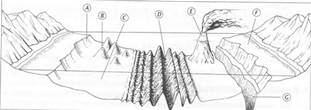
What is letter B?
Cont. Shelf
Mid-Ocean Ridge
Volcanic Island
Seamount
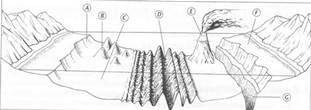
What is letter E?
Volcanic Island
Seamount
Mid-Ocean Ridge
Abyssal Plain
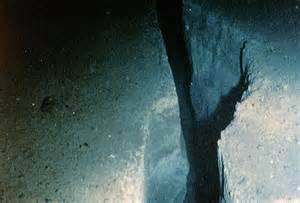
Which of these are the deepest parts of the oceans?
Continental Shelf
Abyssal Plain
Ocean Trench
Continental Rise
The descending slope which connects the seafloor to the continental shelf.
continental shelf
trench
guyot
continental slope
An underwater mountain range that is an oceanic spreading center. Responsible for the creation of new ocean floor.
trench
mid-ocean ridge
abyssal plain
continental shelf

Name feature A
trench
continental slope
guyot
mid-ocean ridge

Name feature B
guyot
seamount
abyssal plain
volcanic island
Flat or very gently sloping areas of the ocean floor.
abyssal plain
continental shelf
trench
continental floor
A mountain rising from the ocean floor that does not reach water's surface.
volcanic island
continental shelf
seamount
guyot

Name feature C
guyot
seamount
abyssal plain
continental shelf
Long, narrow topographic depressions of the ocean floor.
continental shelf
volcanic island
trench
continental wedge
The extended part of each continent that is under water.
trench
guyot
continental shelf
volcanic island
This trench is the deepest part of the world's ocean and the deepest location on the surface of the earth.
trench
guyot
Mariana Trench
seamount
Seamounts that reach the surface of the ocean.
guyot
continental slope
abyssal plain
volcanic island
Seamounts with a flat top.
seamount
volcanic island
guyot
volcanic arc
A chain of volcanic islands or mountains.
mid-ocean ridge
volcanic island
seamounts
volcanic arc

Name the feature for D
volcanic arc
volcanic island
mid-ocean ridge
continental shelf

Name the feature for E
volcanic island
volcanic arc
seamount
mid-ocean ridge

Name the feature for F
continental slope
continental shelf
abyssal plain
trench

Name the feature for G
seamount
trench
mid-ocean ridge
continental shelf
What two elements make up salt water?
Sodium Chloride
Sodium Salt
Salt Chloride
Potassium Chloride
The measurement of salinity is
the amount of salt in the water.
the amount of chloride in the water.
the amount of potassium in the water.
the amount of nutrients in the water.
What makes the surface of the ocean a different temperature from the rest?
global warming
the sun
human activities
glaciers melting


In this model of layers of water, what can you infer about the red layer of water?
It is warmer than the yellow, green, and blue layers
It is colder than the yellow, green, and blue layers
It is higher in salinity than the yellow, green, and blue layers
It is higher in salinity and warmer than the other layers
In this model, what is the order of layers from most dense to least dense?
Blue, green, yellow, red
Blue, yellow, green, red
Green, Blue, yellow, red
Red, yellow, green, blue
All of the following can generate currents within Earth's oceans except–
wind blowing over time.
differences in temperature
rivers flowing into the sea.
differences in salinity.
When do spring tides occur?
New Moon and first quarter
First quarter and third quarter
New moon and full moon
Full moon and third quarter
Salinity and temperature both have an influence on ocean currents because both the temperature of water and the amount of dissolved salt in it affect–
how quickly it evaporates.
its ability to conduct electricity
the latitude where it is found.
the density of the water.
What moon phases do neap tides occur?
New moon and full moon
First quarter and new moon
Full moon and third quarter
First quater and third quarter

Wha type of tide would this arrangement of earth-moon-sun create?
full moon tide
new moon tide
neap tide
spring tide
Which source has the strongest effect on tides?
Sun
Moon
Earth
Wind
The force by which a planet or other body draws objects toward its center
Rotation
Motion
Cycle
Gravity
Waves in the ocean can have which of the following effects?
Slowing the rotation of Earth
Reducing the salinity in water
Changing the direction of wind
Removing sand from beaches


The data table above contains information about high and low tides for a particular location. The data in this table best supports which of the following conclusions?
The difference between high and low tides is greatest during a new or full moon.
The high and low tides are always exactly the same during first and third quarter moons.
The highest high and lowest low tides usually happen a few days after we see a full moon.
High tides get gradually higher and low tides get gradually lower throughout the lunar cycle.

The data table provides information about air and water conditions in a certain location throughout the day. Which of the following statements about waves is supported by data in the table?
The warmer the water, the larger the wave.
Wave speed is influenced by wind direction.
Colder air temperatures increase wave height.
Wave height increases as wind speed increases.


How do deep ocean currents form?
The form as warm, dense water sinks and flows beneath cold ocean water.
They form as cold, dense water sinks and flows beneath warm ocean water.
They form as warm, dense water sinks and flows with other warm ocean water.
The wind blows causing the deep ocean currents.

Use the pie chart above identifying ways that Georgia could use less water from the Chattahoochee River. Which conservation methods would likely have the greatest impact on reducing the amount of water that Georgia needs to use from the Chattahoochee River?
Washing full loads of laundry and dishes
Watering plants and lawns wisely along with taking shorter showers
Installing low-flow or no-flow toilets and turning off faucets while brushing teeth
Taking shorter baths and using paper plates instead of washing dishes.

Inspect the data table above then answer the following question. Which of Georgia’s lakes along the Chattahoochee River is likely to have the least impact on the water flowing downstream?
Lake Lanier
West Point Lake
Lake Eufaula
Lake Seminole.

The graph above shows the chemicals and/or pollutants that are polluting our groundwater. Use this graph above to answer the following question. As the United States' population continues to grow, what is likely to be the greatest threat to our groundwater?
Fertilizer (nitrates)
Sewage
Chemical spills from petroleum
Salinity (salt)
Passage: Nonpoint source (NPS) pollution, unlike pollution from industrial and sewage treatment plants, comes from many diffuse sources. NPS pollution is caused by rainfall or snowmelt moving over and through the ground. As the runoff moves, it picks up and carries away natural and human-made pollutants, finally depositing them into lakes, rivers, wetlands, coastal waters and ground waters.
Which example below would not be considered Nonpoint Source Pollution?
Fertilizer from lawns is carried into a lake by runoff.
Pesticides from farmland are carried into a river by runoff.
A factory dumps raw untreated chemicals into a river.
Oil, grease, and chemicals are washed off of driveways and parking lots by snowmelt and are then carried into a lake.

Based on the pie chart above, which source of pollution listed below is responsible for adding the most pollution to the oceans?
Offshore oil
Industrial wastewater
Maritime transportation
Air pollutants
What is a body of permeable rock that can contain or transmit groundwater.
Runoff
Surface water
Groundwater
Aquifer
the process by which water on the ground surface enters the soil or another area
Infilitration
Transpiration
Precipitation
Distribution
What is the top layer of a body of water?
Groundwater
Surface water
Lake
Aquifer
What is water held underground in the soil or in pores and crevices in rock?
Aquifer
Surface water
Groundwater
Lake
A single, identifiable source of pollution, such as a pipe or a drain. Industrial wastes are commonly discharged to rivers and the sea in this way.
Point source pollution
Non-point source pollution
Water pollution that is caused by widely dispersed sources of pollutants.
Nonpoint source pollution
Point source pollution
Which of the following is NOT an example of non-point pollution
Rain runoff
Snow melt runoff
Atmospheric depostion
Factories
Which of the following in NOT an example of point source pollution?
Discharge from a treatment plant
Runoff from snow
Waste from industries

