
NEW
Font size
S
M
L
XL
 Worksheets
Unit 7/Lesson 23 Test Review
Total questions: 19
Worksheet time: 10mins
Name
Class
Date
1.
1. Based on the quotation below, which statement describes Abraham Lincoln’s approach to the South at the end of the Civil War?
"With malice [hatred] toward none, with charity for all . . . let us strive on to finish the work we are in, to bind up the nation's wounds . . ."
a)
The South should be punished for its part in the war.
b)
The South should be treated with kindness and justice.
c)
The South should ratify the Fourteenth Amendment.
d)
The South should pay for property damage caused by the war.
2.
2. All of these were included in President Johnson’s Reconstruction plan except...
a)
cancellation of war debts.
b)
new state constitutions for Confederate states.
c)
ratification of the Thirteenth Amendment.
d)
guarantee of voting rights for freedmen.
3.
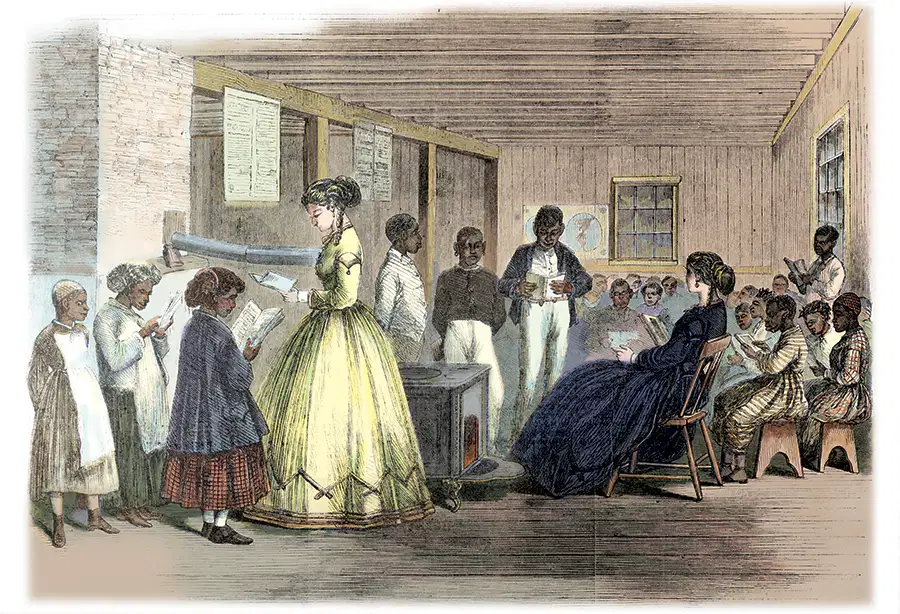
3. Which of these was a lasting effect of the Freedmen’s Bureau?
a)
educational opportunity
b)
free medical care
c)
land distribution
d)
job security
4.
4. What was the purpose of the Black Codes?
a)
to provide fair wages for freed people
b)
to control freed people
c)
to reconstruct the plantation system
d)
to teach reading skills to freed people
5.
5. What was the purpose of the 13th Amendment?
a)
to legislate fair treatment of all citizens
b)
to allow freedmen to run for office
c)
to provide citizenship to freed people
d)
to abolish slavery
6.
6. What does the 14th Amendment guarantee to all individuals in the United States?
a)
the right to vote
b)
equal protection of the law
c)
equal access to public facilities
d)
the right to medical care
7.
7. During Congressional Reconstruction, which group held political power in the South?
a)
wealthy, white landowners
b)
former Confederate leaders
c)
members of the Ku Klux Klan
d)
people who had been loyal to the United States
8.
8. As a result of the Military Reconstruction Act 1867, which of these made up the largest group of new Southern voters?
a)
African Americans
b)
white Southern Democrats
c)
former Confederate soldiers
d)
Northerners who moved to the South
9.
9. What was the purpose of the 15th Amendment?
a)
to give all citizens the right to vote
b)
to provide education for all citizens
c)
to protect the voting rights of African American men
d)
to raise taxes to repair damage to the South
10.
10. What did Congress hope the Enforcement Acts would prevent?
a)
misuse of tax money
b)
attempts to keep people from voting
c)
attacks on political leaders
d)
opposition to new state governments
11.

11. Why did some white Southerners form the Ku Klux Klan?
a)
to integrate Southern schools
b)
to end government corruption
c)
to return white Democrats to power
d)
to protect the voting rights of Southerners
12.
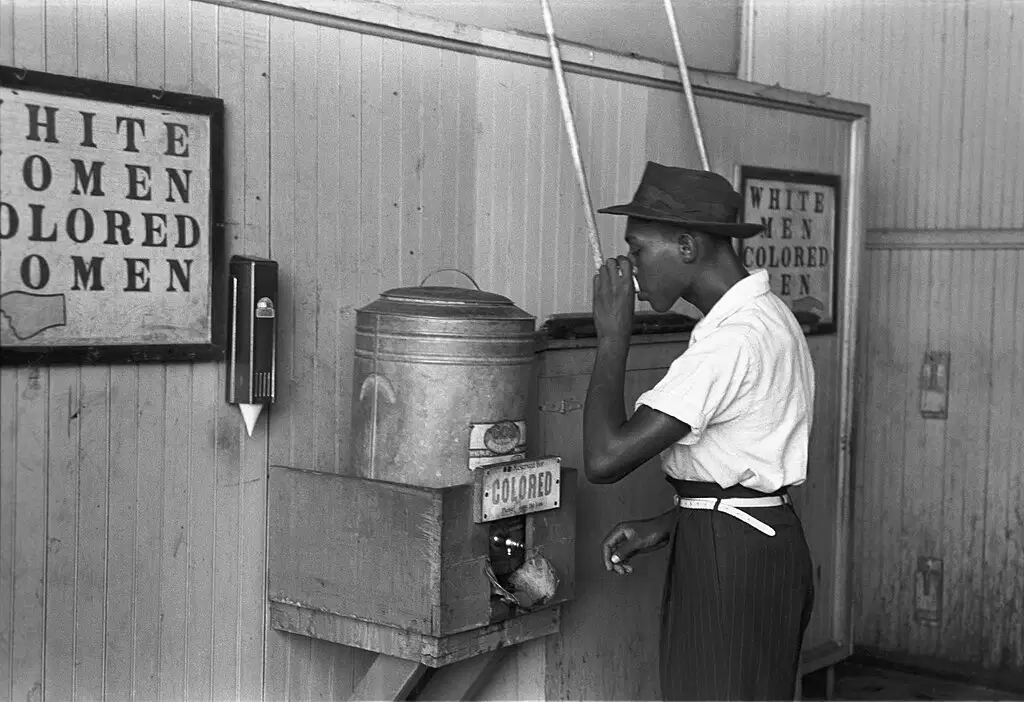
12. Why did Southern Democrats pass Jim Crow laws?
a)
to ensure equal education for all
b)
to separate African Americans and white people in public life
c)
to encourage Southerners to move to the North
d)
to prevent African Americans from voting
13.
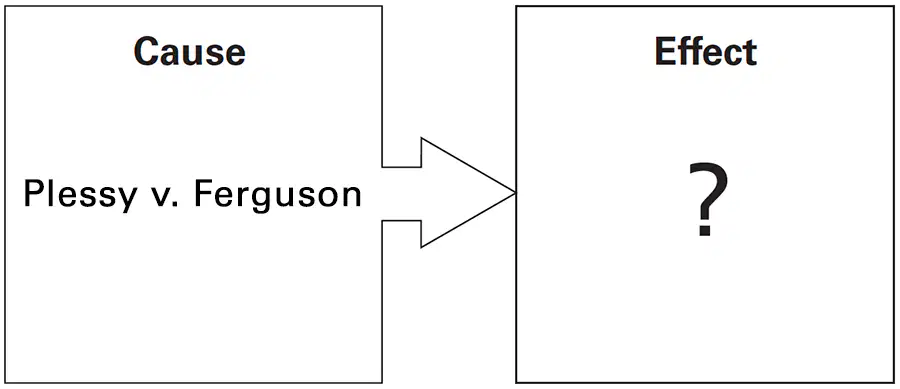
13. In this diagram, what should replace the question mark?
a)
Jim Crow laws are unconstitutional.
b)
Public facilities should be available to all races.
c)
Integration of schools is required by law.
d)
Separate but equal public facilities are constitutional.
14.
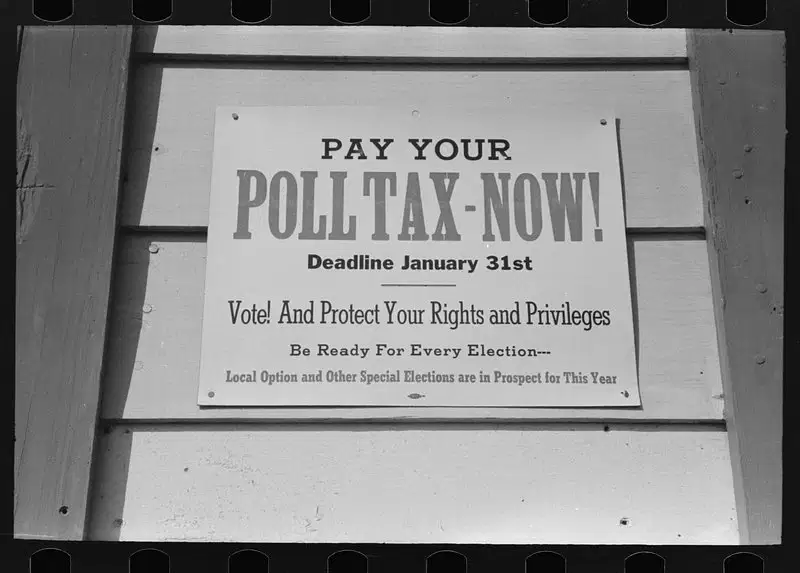
14. What was an effect of Southern poll tax laws?
a)
African Americans were denied voting rights.
b)
Money was raised to fund public education.
c)
Public funding of small businesses increased.
d)
Southern Democrats were voted out of office.
15.
15. Southern segregation pushed African Americans to move. What pulled them to other parts of the country?
a)
the promise of free land
b)
the promise of free education
c)
the hope of better opportunities
d)
the hope of political opportunities
16.
16. How did African Americans who remained in the South improve their lives?
a)
They depended upon government welfare.
b)
They worked together to build communities.
c)
They received money from relatives in the North.
d)
They conducted violent protests to obtain rights.
17.
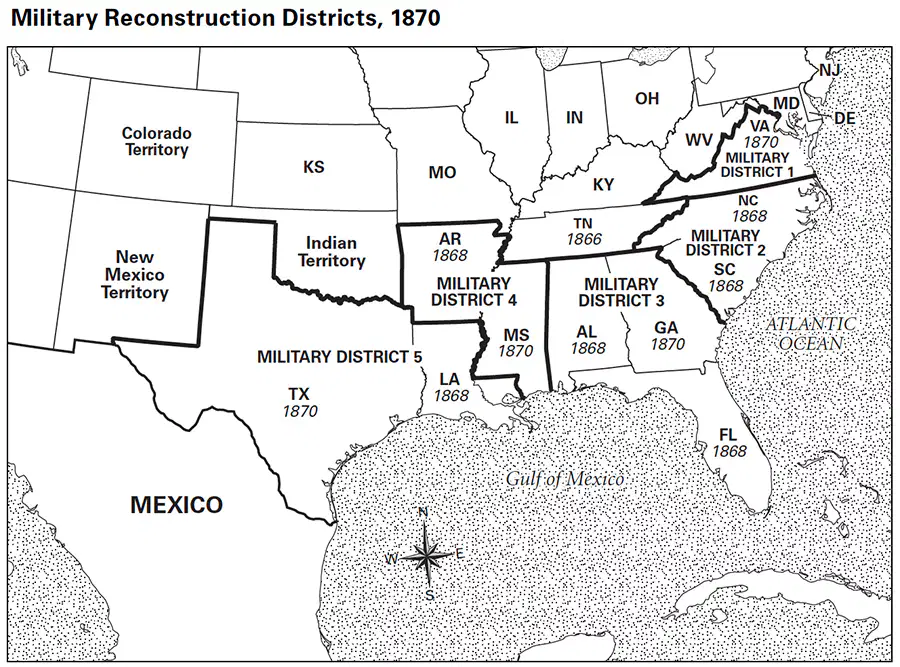
17. What do the years under the Southern states represent?
a)
The year the state joined the Confederacy.
b)
The year the state first joined the Union.
c)
The year that they first participated in national elections.
d)
The year the state rejoined the Union.
18.
18. Using the map from Question 17:
Why did Congress believe it was necessary to establish these military districts?
a)
to form legal state governments
b)
to prevent another civil war
c)
to quell violent revolts by enslaved people
d)
to provide work for soldiers
19.
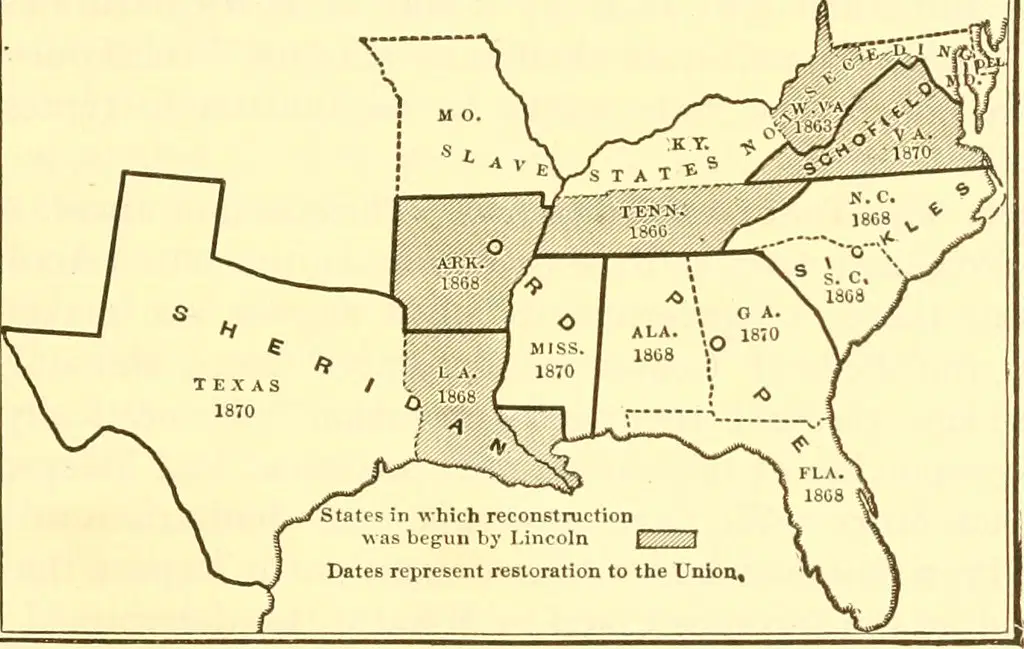
19. The Military Reconstruction Act was enacted in response to the actions of which president?
a)
Ulysses S. Grant
b)
Andrew Johnson
c)
Abraham Lincoln
d)
Rutherford B. Hayes
Reset

