wayground logo

Free Printable Worksheets

NEW

Font size

S
M
L
XL
Worksheets

Digestive ETC unit

Total questions: 18

Worksheet time: 14mins

Name
Class
Date
1.

What enzyme is found in saliva that starts digesting carbohydrates?

a)

amylase

b)

chyme

c)

pepsin

d)

bile

2.

Where does the absorption of nutrients from food take place?

a)

stomach

b)

liver

c)

small intestine

d)

large intestine

3.

What are these structures call that are found on the lining of the small intestine?

a)

Gallbladder

b)

Villi

c)

Sphincter

d)

Duodenum

4.
After dinner, you have a bad case of diarrhea. Which organ is most likely not functioning properly?
a)
stomach
b)
small intestine
c)
large intestine
d)
liver
5.
The diffusion of water through a semi-permeable membrane is called?
a)
Osmosis
b)
Cell wall
c)
Diffusion
d)
Respiration
6.
When both inside and outside of a cell have the same amount of water it is said that the cell has reached a state of
a)
Osmosis
b)
Diffusion
c)
Equilibrium
7.
A person would never have pure water put into their veins in a hospital because their cells would...
a)
Shrink/Dehydrate
b)
Expand
8.

_______ regulates what enters and leaves a cell.

a)

Cell Membrane

b)

Nucleus

c)

Mitochondria

d)

Cytoplasm

9.

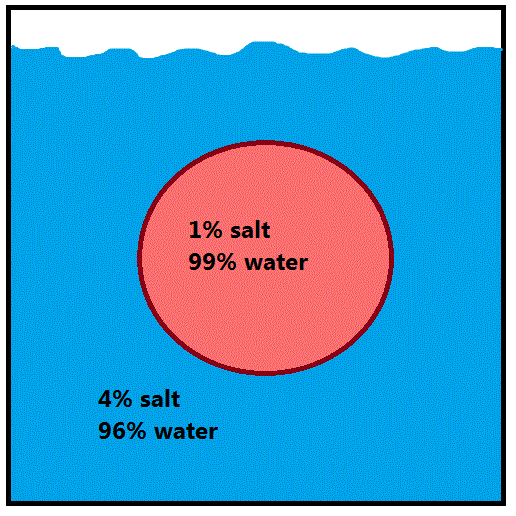
Where will the water go?

a)

Into the cell

b)

Out of the cell

c)

Equally in & out - it's isotonic

d)

There is no water

10.

Which organic molecule would a long-distance runner most likely choose to eat two hours before a race?

a)

A protein, because it builds muscle mass.

b)

A lipid because it provides long term energy storage.

c)

A carbohydrate because it releases energy quickly.

d)

A protein, because it transports oxygen into the blood stream.

11.

Monosaccharides are the building blocks of which group of biomolecules?

a)

protein

b)

lipid

c)

carbohydrate

d)

nucleic acid

12.

Which biomolecules contains your genetic information?

a)

Proteins

b)

Lipids

c)

Carbohydrates

d)

Nucleic Acids

13.

Which of the following contains the most lipid?

a)
b)
c)
d)
14.

Which of the following is represented in the image?

a)

Nucleotide

b)

Carbohydrate

c)

Lipid

d)

Protein

15.
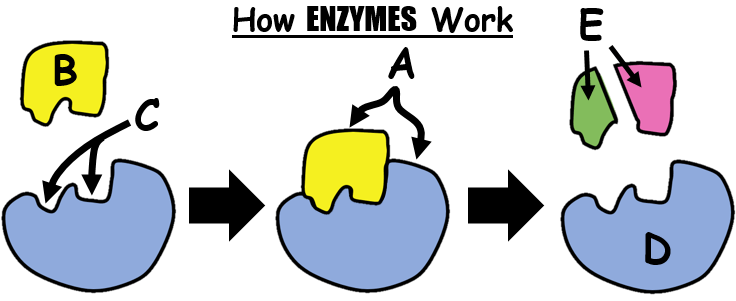
Letter C...
a)
active site
b)
enzymes
c)
substrate
d)
products
16.
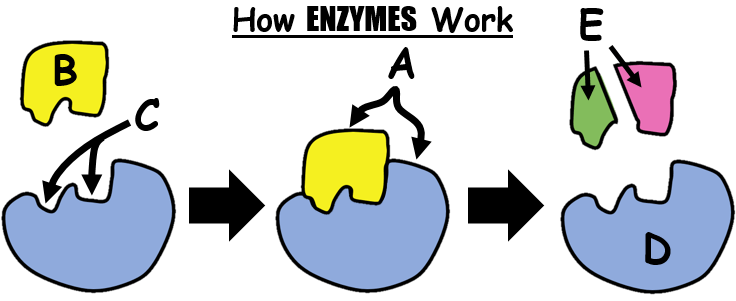
Letter B...
a)
active site
b)
enzyme
c)
substrate
d)
products
17.
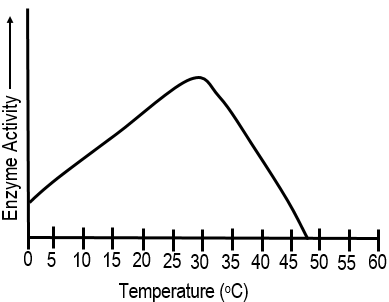
Based on the graph, what is the optimal temperature for this enzyme? 
a)
15oC
b)
40oC
c)
30oC
d)
35oC
18.
Which of the following conclusions can be drawn from this graph?
a)
The optimum pH of the enzyme is 6.6.
b)
The optimum pH of the enzyme is 5.8
c)
The enzyme’s activity increases as pH increases 5.0 to 9.0
d)
The enzyme’s activity is greater around pH of 8.0 .