
NEW
Font size
 Worksheets
DRRR Q1
Total questions: 10
Worksheet time: 6mins
Which term refers to the serious disruption of the functioning of a community or a society involving widespread human, material, economic, or environmental, losses and impacts which exceeds the ability of the affected community or society to cope using its own resources?
Hazard
Disaster
Risk
Exposure
Which term refers to the dangerous phenomenon, substance, human activity or condition that may cause loss of life, injury or other health impacts, property damage, loss of livelihoods and services, social and economic disruption, or environmental damage.
Hazard
Disaster
Risk
Exposure
Describe the term “hazard”.
Is an extreme and often sudden event causing widespread destruction, distress, and significant negative impacts on communities, ecosystems, or societies.
An overwhelming crisis that exceeds the affected community or society's ability to cope, leading to extensive human, material, economic, or environmental losses.
Implies severe consequences, encompassing a range of adverse effects such as loss of life, infrastructure damage, economic setbacks, and environmental degradation on a scale that challenges the affected entity's resilience and recovery capabilities.
Refers to a potential source of danger or harm, introducing an element of risk that may lead to adverse consequences.
Describe the term “disaster”.
Describing a hazardous situation involves recognizing a condition or factor that poses a threat to safety, well-being, or the environment.
Refers to a situation characterized by extensive disruption to the normal functioning of a community or society, resulting in a state of emergency and requiring coordinated efforts for recovery.
Characterizes something with an intrinsic danger, highlighting the precarious or unsafe qualities that may result in harm.
It denotes the capacity of a substance, condition, or activity to cause damage, injury, or negative impacts, emphasizing the potential for adverse outcomes.
Choose a situation that can be associated with hazard.
A sudden and powerful earthquake strikes a densely populated urban area, causing widespread structural damage, collapse of buildings, and triggering a humanitarian crisis as emergency services struggle to respond to the extensive casualties and displacement.
A massive tropical cyclone makes landfall in a coastal city, leading to severe flooding, storm surges, and wind damage. The disaster results in the evacuation of residents, destruction of infrastructure, and long-term challenges in recovery and rebuilding.
With heavy rainfall and a storm surge forecasted, a coastal area receives a flood warning. Residents and businesses in low-lying areas are at risk of flooding, prompting the need for evacuation plans, sandbagging, and other preventive measures to minimize potential damage and ensure safety.
A highly contagious and deadly virus outbreak occurs, leading to a pandemic with significant health, economic, and societal impacts. Hospitals are overwhelmed, public services are disrupted, and communities face widespread illness and loss of life.
Risk refers to the likelihood of an unfavorable or undesirable event, such as injury or loss, taking place. Various factors contribute to either increasing or decreasing the probability of such adverse events occurring. Show the equation that describe the relationship of Risk, Exposure, Vulnerability, and Capacity.
Vulnerability=(Hazard×Exposure)/Capacity
Exposure=(Rick×CapacitytoCope)/Vulnerabilty
Disaster=(Risk×CopingCapacity)/(Capacity to Cope)
Risk=(Hazard×Vulnerability)/(Coping Capacity)
Disaster risk factors are variables that either aggravate or mitigate the effects of hazards, affecting the degree or scope of a disaster. Analyze which statements below refer to the physical factors of disaster risk.
Pertains to the mental and emotional aspects that influence disaster risk, where it includes the perception of risk, individual and collective preparedness, coping mechanisms, and the psychological impact of previous disasters on a community's resilience.
Influencing a community's ability to prepare for, respond to, and recover from disasters which involves economic development levels, poverty rates, access to resources, and the availability of infrastructure that can either enhance or hinder resilience
Involves the role of living organisms in influencing disaster risk, such as spreading of diseases, vector-borne illnesses, and the impact of biological hazards such as pandemics.
Encompass tangible and natural elements and conditions such as availability of emergency exits, sturdiness of the building, or geographical location, topography, climate, and environmental characteristics.
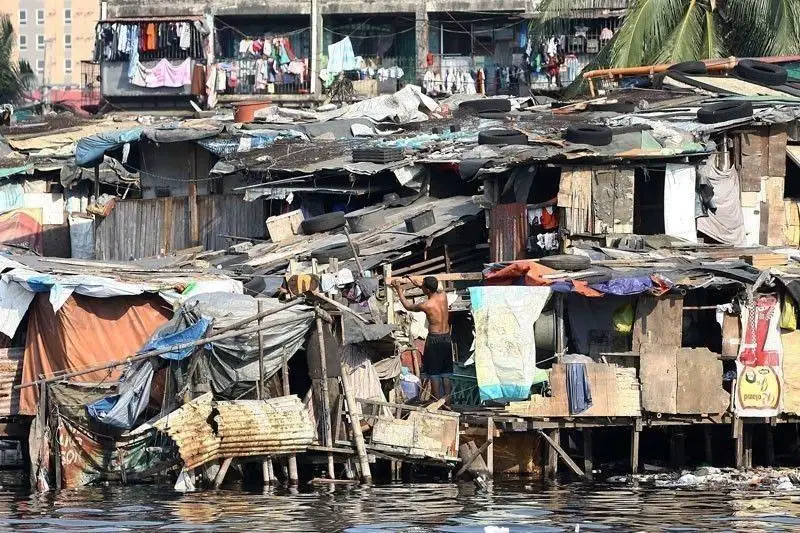
What disaster risk factors observed from the picture shown?
Physical
Biological
Psychological
Socio-cultural
A group of SHS students conducted a survey on areas where poverty is present and on areas where rich people are residing. They noticed that in times of disaster, many residents in poor communities are severely affected and displaced compared to the rich communities. What conclusion can be drawn based on the observation of the students?
The impacts of disaster are equal.
Disaster does not determine what community will be mostly affected.
The effect of disaster is greater in rich communities than in the poor communities.
The impact of disasters on poor communities is greater than rich communities.
Student A has discovered that burning fossil fuels increases the amount of greenhouse gases in the atmosphere, which can lead to climate change. Is it true that burning fossil fuels raises the chances of a disaster?
No, because it can be stopped through deforestation.
No, because it only affects the environment and not humans.
Yes, because the greenhouse gases can directly harm humans.
Yes, because it can lead to global warming that increases the sea level, flooding low lying areas.

