
 Worksheets
Polynomial Graphing
Total questions: 103
Worksheet time: 3hrs 49mins
Write the question and your answer choice.
What is the relationship between the x-intercepts and zeros?
The x-intercepts are always greater than the zeros of the polynomial function
The x-intercepts are unrelated to the zeros of the polynomial function
The x-intercepts of a polynomial function are the same as its zeros.
The x-intercepts are always less than the zeros of the polynomial function
Write this ENTIRE question and SHOW ALL WORK
Find the x-intercepts of the polynomial function f(x) = x^2 - 4x + 3.
Step 1 Factor this quadratic trinomial. It is easy because for ax^2 + bx + c the "a" value is 1
Step 2 Use Zero Product Property (ZPP) to find x-intercepts
Step 3 Substitute zero for x to find the y intercept
Step 4 Determine the End Behavior
Step 5 Sketch the graph and write the End Behavior using pos/neg INFINITY symbols.
x = 2, x = 5
x = -1, x = -3
x = 1, x = 3
x = 0, x = 4.
READ THE ENTIRE QUETSTION BEFORE VEIWING THE VIDEO.
Use Desmos.com and SKETCH the graph. Label all (x,y) points on the x axis AND y axis
Write this ENTIRE question and answer for this polynomial x^3 - 6x^2 + 11x - 6 = 0
Desmos will give the X-Int and Y-Int and End Behavior
Write the End Behavior on the graph using INFINITY notation
Write the Increase/Decrease in Interval Notation using hard and soft brackets. See video at 2:02
How we locate the Intervals of Increase and Decrease? See video at 3:19
Search Google: Fundamental Theorem of Algebra (FTA) how many RSZX-Int will a polynomial have?
x = 1, x = 2, x = 3
x = 4, x = 5, x = 6
x = 0, x = 1, x = 2
x = -1, x = -2, x = -3
READ THE ENTIRE QUETSTION BEFORE VEIWING THE VIDEO.
Write this ENTIRE question and answer for this polynomial g(x) = x^3 - 2x^2 - 5x + 6
Use Desmos.com and SKETCH the graph. Label all (x,y) points on the x axis AND y axis
SHOW ALL WORK (SAW): Get the y-intercept by substituting zero for "x"
Write the End Behavior on the graph using INFINITY notation
By the Fundamental Theorem of Algebra (FTA) how many RSZX-Int will this polynomial have?
Write Increase/Decrease in Interval Notation using hard/soft brackets. See video at 2:02
On which axis do we locate Intervals of Increase and Decrease? See video at 3:19
How many times will the graph turn? See video at 5:38
Ask a friend to guess the solutions and plot the points based on their guesses.
Use a graphing calculator or software to plot the points and identify the solutions.
Use a protractor to measure the angles and identify the solutions.
Look for the solutions in a book about famous mathematicians and their work.
READ ALL/WRITE ALL/SHOW ALL WORK
For polynomial h(x) = x^3 - 3x^2 - 4x + 12.
Step 1 Factor using the GROUPING method. See video at 1:20
Step 2 Use ZPP to find x-intercepts
Step 3 Substitute zero for x to find the y intercept
Step 4 Determine the End Behavior
Step 5 Sketch the graph and write the End Behavior using INFINITY symbols.
The roots are x = 2, x = -2, and x = -3.
The roots are x = 0, x = 3, and x = 6.
The roots are x = -1, x = -2, and x = -4.
The roots are x = 1, x = -4, and x = 5.
VIEW THE VIDEO. DO NOT WRITE THE VIDEO NOTES
Determine the x-intercepts of the polynomial function p(x) = x^4 - 16x^2.
Write this ENTIRE question and SHOW ALL WORK
Step 1 Factor using "U" substitution
Step 2 Use ZPP to find x-intercepts
Step 3 Substitute zero for x to find the y intercept
Step 4 Determine the End Behavior
Step 5 Sketch the graph and write the End Behavior using INFINITY symbols.
x = 3, x = -3
x = 0, x = 4, x = -4
x = 1, x = -1
x = 2, x = -2
Write the question and your answer choice.
What is importance of the (RSZX) Roots/Solutions/Zeros/X-Int to the graph?
The solutions of a polynomial function have no relation to its graph.
The solutions of a polynomial function are the turning points of its graph.
The solutions of a polynomial function are the x-intercepts of its graph.
The solutions of a polynomial function are the y-intercepts of its graph.
READ THE ENTIRE QUETSTION BEFORE VEIWING THE VIDEO.
Write this ENTIRE question and answer for this polynomial g(x) = 2x^3 - 5x^2 - 3x + 2 = 0
Use Desmos.com and SKETCH the graph. Label all (x,y) points on the x axis AND y axis
SHOW ALL WORK (SAW): Get the y-intercept by substituting zero for "x"
Write the End Behavior on the graph using INFINITY notation
By the Fundamental Theorem of Algebra (FTA) how many RSZX-Int will this polynomial have?
Write the Increase/Decrease in Interval Notation using hard and soft brackets. See video at 2:02
How we locate the Intervals of Increase and Decrease? See video at 3:19
How many times will the graph turn? See video at 5:38
The roots are x = -1, x = 1, and x = 2
The roots are x = -4, x = 1, and x = 3
The roots are x = -2, x = 0, and x = 3
The roots are x = -3, x = 0, and x = 5
READ THE ENTIRE QUETSTION BEFORE VEIWING THE VIDEO.
Write this ENTIRE question and answer.
VIEW the video to SKETCH this polynomial q(x) = x^4 - 4x^3 - 7x^2 + 10x + 12
Use Desmos.com and SKETCH the graph. Label all (x,y) points on the x axis AND y axis
SHOW ALL WORK (SAW): Get the y-intercept by substituting zero for "x"
Write the End Behavior on the graph using INFINITY notation
By the Fundamental Theorem of Algebra (FTA) how many RSZX-Int will this polynomial have?
Write the Increase/Decrease in Interval Notation using hard and soft brackets. See video at 2:02
How we locate the Intervals of Increase and Decrease? See video at 3:19
How many times will the graph turn? See video at 5:38
(2, 0), (3, 0), (5, 0)
(-1, 0), (3, 0), (4, 0)
(-2, 0), (1, 0), (2, 0)
(0, -2), (0, 1), (0, 2)
Write the question and your answer choice.
What is the relationship between the degree (highest exponent) and the NUMBER of RSZX?
The number of roots of a polynomial is always less than its degree.
The number of roots of a polynomial is always greater than its degree.
The number of roots of a polynomial is at most equal to its degree.
The number of roots of a polynomial is unrelated to its degree.
Write the question and your answer choice.
How does the leading coefficient (term with highest exponent) affect the graph?
It affects the symmetry of the graph.
It affects the x-intercepts of the graph.
It affects the end behavior of the graph.
It affects the color of the graph.
Write the question and your answer choice.
What is the degree (highest exponent) of the polynomial function p(x) = 2x^5 - 7x^3 + 4x - 1.
7
3
5
2
Write the question and your answer choice.
What is the end behavior of the polynomial function q(x) = 4x^2 - 2x^4 + 3x^3 - 5?
The end behavior is that the graph falls to the left and rises to the right.
The end behavior is that the graph rises to the left and rises to the right.
The end behavior is that the graph rises to the left and falls to the right.
The end behavior is that the graph falls to the left and falls to the right.
Write the question and your answer choice.
Use Desmos.com to get the the x-intercepts of the polynomial function r(x) = x^4 - 6x^2 + 8?
x = -3, 3
x = -2, 2
x = -4, 4
x = -1, 1
Write the question and your answer choice.
What is the relationship between the degree (highest exponent) and the number of RSZX?
The number of roots of is unrelated to its degree.
The number of roots is equal to its degree.
The number of roots of is always less than its degree.
The number of roots is always greater than its degree.
Write the question and your answer choice.
How does the leading coefficient (term with highest exponent) affect the graph?
The leading coefficient affects the symmetry of the graph
The leading coefficient determines the x-intercepts of the graph
The leading coefficient has no effect on the graph
The leading coefficient affects the end behavior of the graph.

On paper... rough sketch the graph and your answer choice.

On paper...rough sketch the graph.
Write the question and your answer choice.
What are the RSZX?

On paper...rough sketch the graph.
Write the question and your answer choice.
What is the degree (highest exponent) of the function?

On paper...rough sketch the graph.
Write the question and your answer choice.
Based on the 4 cases of End Behavior... is the leading coefficient positive or negative?

On paper...rough sketch the graph.
Write the question and your answer choice.
Which Linear Binomial FACTORS match the graph?
On paper... use Desmos.com to rough sketch the graph P(x)=3x4-7x2-2x7-x+4
Write the question and answer choice.
What is the degree (highest exponent) of the polynomial function?

On paper...rough sketch the graph and your answer choice.
The polynomial is...?

Write the question and your answer choice.
On paper...copy the End Behavior in the pic.
Which function has this end behavior?
Why??? use the vocabulary positive infinity and negative infinity.
Write the question and your answer choice.
When p(x) = 9x4- 45x3 + 37x2 + x +2 is divided by x - 2, the remainder is p(2).
NOTICE the sign of positive 2 is the INVERSE!!!
What is the value of p(2) when you substitute in the function?

Write the question and your answer choice.
What is the end behavior of the graph using INFINITY symbols.

On paper...rough sketch the graph and your answer choice.
f(x) = ⅕ (x+3) (x+4) (x-8)
g(x) = ½ (x-4) (x+3) (x-6)
h(x) = ⅕ (x-3) (x-4) (x+8)
p(x) = ½ (x+4) (x-3) (x+6)

Write the question and your answer choice.
What is the possible degree (highest exponent) of the function?
Write the question and your answer choice.
What is the DEGREE (highest exponent)?
4x3 - 5x2 + 2x - 1
1
2
3
4
Write the question and your answer choice.
What is the DEGREE (highest exponent)?
(x - 2)3(x+1)
1
2
3
4
Write the question and your answer choice.
f(x)=(x+4)(x-3)(x-2)
What are the RSZX for this function?
NOTE: the sign is the inverse!!!
x= -4, x=3, x= -2
x= -4, x=3, x=2
x= -4, x=-3, x=-2
x=4, x= -3, x= -2

Rough sketch the graph.
Write the question and your answer choice.
What is the degree (highest exponent) for the End Behavior?

Rough sketch the graph.
Write the question and your answer choice.
What is the degree (highest exponent) for the End Behavior?

Rough sketch the graph.
Write the "cubic" polynomial function and your answer choice.
You can use Desmos.com!!!
Write the question and your answer choice.
If the degree (highest exponent) of the function is EVEN, the graph starts and ends in the ____________ direction.
Write the question and your answer choice.
If the degree (highest exponent) of the function is ODD, the graph starts and ends in the ____________ direction.
Write the question and your answer choice.
What is another way to say "where a function crosses the x-axis"?
all of these...
Root/Zero/X-Int

On paper...rough sketch the graph.
Write the question and your answer choice.
Which is true about the equation of the graph shown?

On paper... write the question and rough sketch your answer choice.
Write the question and your answer choice.
Use Desmos.com to help.
What is the end-behavior of the function
y = -x3 + 6x2 + 7x?
as x-> ∞ f(x) -> -∞
as x-> ∞ f(x) -> ∞
as x-> ∞ f(x) -> ∞
as x-> ∞ f(x) -> -∞
Write the question and your answer choice.
Use Desmos.com to help.
What is the end-behavior of the function
y = x6 - 7x5 + 7x - 9?
as x-> -∞ f(x) -> ∞ as x-> ∞ f(x) -> -∞
as x-> -∞ f(x) -> ∞ as x-> ∞ f(x) -> ∞
as x->-∞ f(x) -> -∞ as x-> ∞ f(x) -> ∞
as x-> -∞ f(x) -> -∞ as x-> ∞ f(x) -> -∞
Write the question and your answer choice.
Use Desmos.com to help.
What is the degree of the leading term (based on the EXPONENTS of EACH "x")
y = x2 (x - 5)(x + 4)
2
3
4
5
Write the question and your answer choice.
Use Desmos.com to help.
What are the RSZX Roots Solutions Zeros X-int of the function
y = x2 (x - 5)(x + 4)?
Select all that apply
0
4
5
-5
-4
Write the question and your answer choice.
Use Desmos.com to help.
What are the zeros of the function
y = -(x - 1)2 (x - 2)2(x + 5)3
Select ALL that apply!
0
1
2
-5
5
Write the question, rough sketch the graph, and your answer choice.
Use Desmos.com to help.
Hint: Add the exponents
What is the degree?
y = -(x - 1)2 (x - 2)2(x + 5)3
4
5
6
7
8
Write the question, rough sketch the graph, and your answer choice.
Use Desmos.com to help.
Does this graph bounce? If so, where does it bounce?
y = -(x - 1)2 (x - 2)2(x + 5)3
0
1
2
-2
-5

Write the question, rough sketch the graph, and your answer choice.
Which equation matches the graph?
y = x(x + 3)(x - 4)
y = (x + 3)(x - 4)
y = -x(x + 3)(x - 4)
y = x(x - 3)(x + 4)

Write the question, rough sketch the graph, and your answer choice.
Which equation matches the graph?
y = x(x + 3)2
y = -x(x + 3)2
y = x(x - 3)2
y = -x(x - 3)2

Write the question, rough sketch the graph, and your answer choice.
Which equation matches the graph?
y = 3x(x - 1)3
y = -2x(x + 1)(x - 1)2
y = 2x(x + 1)(x - 1)2
y = -3x(x - 1)3

Write the question, rough sketch the graph, and your answer choice.
Mark all the possible equations for this graph.
y = (x + 2)(x - 3)(x - 1)
y = 5(x + 2)(x - 3)(x - 1)
y = 2(x + 2)(x - 1)(x - 3)
y = 3(x + 2)(x - 1)(x - 3)
y = 20(x + 2)(x - 3)(x - 1)
Write the question, rough sketch the graph, and your answer choice.
Which equation matches the graph?
y = x(x + 3)(x - 4)
y = (x + 3)(x - 4)
y = -x(x + 3)(x - 4)
y = x(x - 3)(x + 4)
Write the question, rough sketch the graph, and your answer choice.
Use Desmos.com to help.
What are the zeros of the function:
y = -(x - 1)2 (x - 2)2(x + 5)3
0
1
2
-5
5
Write the question, rough sketch the graph, and your answer choice.
Use Desmos.com to help.
What are the zeros of the function:
y = x2 (x - 5)(x + 4)
0
4
5
-5
-4
Write the question, rough sketch the graph, and your answer choice.
Use Desmos.com to help
Hint: Add the exponents
What is the degree?
y = x2 (x - 5)(x + 4)
2
3
4
5
Write the question, rough sketch the graph, and your answer choice.
Use Desmos.com to help.
Hint: What is the HIGHEST exponent
How many zeros does the polynomial function
P(x) = 3x4+4x-8 have?

Write the question, rough sketch the graph, and your answer choice.

Write the question, rough sketch the graph, and your answer choice.
Over the interval for the x axis values (−1, 2), the graph of the polynomial shown could be described as...

Write the question, rough sketch the graph, and your answer choice.
Select all the even degree functions.
A
B
C
D
Write the question, rough sketch the graph, and your answer choice.
Which functions have a negative leading coefficient?
A
B
C
D

Write the question, rough sketch the graph, and your answer choice.
Use Desmos.com to help.
Which equation MOST LIKELY matches the graph?
Write the question, rough sketch the graph, and your answer choice.
Use Desmos.com to help.
Which of the following could be the equation of the graph in factored form?
(x-4)3
(x-4)
(x-1)2
Write the question, rough sketch the graph, and your answer choice.
What is another way to say "where a function crosses the x-axis"?
Write the question, rough sketch the graph, and your answer choice.
Use Desmos.com to help.
y=20x3−59x2+43x−22
End Behavior As x→∞, f(x)→
∞
−∞

Write the question, rough sketch the graph, and your answer choice.
Use Desmos.com to help.
What equation fits the graph?
−2x3+x +2
−2x2+2

Write the question, rough sketch the graph, and your answer choice.
Hint: the graph shows the (x,y) maximum point
What is the relative maximum?
(2,0)
(4.67, -9.48)
Write the question, rough sketch the graph, and your answer choice.
Hint: the graph shows the (x,y) point
What is the relative minimum?
(2,0)
(4.67, -9.48)

Write the question, rough sketch the graph, and your answer choice.
Hint: the graph shows the (x,y) point
What is the relative maximum?
(5, -4)
(3, 0)
Write the question, rough sketch the graph, and your answer choice.
Hint: the graph shows the (x,y) point
What is the relative minimum?
(5, -4)
(3, 0)

Write the question, rough sketch the graph, and your answer choice.
Hint: the roots (RSZX) are on the x axis
What are the roots of the polynomial?
-3, 0, and 3
0
-2, 10, and -10
11, 0 and -11

Write the question, rough sketch the graph, and your answer choice.
Hint: the roots (RSZX) are on the x axis.
How many roots does the polynomial have?
4
3
2
1
Write the question, rough sketch the graph using Desmos.com, and your answer choice.
HINT: rough sketch the graph using Desmos.com.
HINT: Add the exponents on the variable.
What is the degree (highest exponent) of the polynomial 17x + 4
Write the question and your answer choice.
Hint: Order Exponents from highest to lowest
Which of the following polynomials is written in standard form?
y = 7x3 − 5x2 + 2x + 7
y = 8 − 4x2 + 3x + 2x3
y = 10x2 − 5x5 + 2x + 20
y = 1 + 2x2 − 3x3 + 4x4
Write the question and your answer choice.
Hint: What is the highest exponent
The degree of the polynomial given by
y = 3x2 + 9x5 − 4 + 10x8 + 2x9 is:
8
9
5
-4
VIEW the video before you start... Notice how he solved for "x". He SUB 1 from both sides then DIV by the "understood negative 1" in FRONT of "x"
Write the question, show your work for Synthetic Division and your answer choice.
HInt: Use Synthetic Division. IF REMAINDER IS ZERO, x+3 IS A FACTOR of x4 - 5
What is the remainder when x4 - 5 is divided by x + 3?
76
81
7
0
Write the question, complete the problem to show your work for Synthetic Division and your answer choice.
HInt: Use Synthetic Division. IF REMAINDER IS ZERO, x-3 IS A FACTOR of 4x3 - 3x2 - 4x +2
What is the remainder of (4x3 - 3x2 - 4x +2) ÷ (x - 3)?
-71
71
145
Write the question, show your work for SYNTHETIC SUBSTITUTION and your answer choice.
HInt: BECASUE the exponent is LARGE, use Synthetic Substitution. If the remainder is ZERO then (x+1) is a factor of x13 + 10.
What is the remainder when (x13 + 10) is divided by (x + 1)?
9
10
11
CAHLLENGE: Use Synthetic Division for the expression x3 ─ kx2 +2x +5. It leaves a remainder of 2 when divided by x ─ 3. Find the value of k.
4
-4
8

Write the question, copy the picture and write your answer choice
According to this work, is x-3 a factor of p(x)=5x3−2x2+x−120 ?
Yes, x-3 is a factor of p(x) since the remainder is 0.
No, x-3 is not a factor of p(x) since the remainder is 0.

Write the question, copy the picture and write your answer choice
This work shows x2−3x+5÷x−2 . What information does this reveal?
x-2 is not a factor of x2−3x+5 since the remainder is 3.
x-2 is a factor of x2−3x+5 since the remainder is 3.
Write the question and answer and complete the process of Synthetic Division.
What should you add to this problem to perform Synthetic Division?
(2x3 + 5x2 + 9) ÷ (x + 3)
0x4
0x3
0x2
0x

Write the question, copy the picture and write your answer choice
What is the proper way to write the answer for the following problem?
2x3-x2-25x+12
2x4-x3-25x2-12x+0
2x3-x2-25x-12
2x4-x3-25x2-12x-0
Write the question, copy the picture and write your answer choice
What is the root of the polynomial?
4
- 4
0
2
Write the question, picture of SAW and answer choice
What is the factor of the polynomial?
Write a statement to justify your answer.
(x+4)
(x- 4)
(X+0)
(x+2)

Write the question, rough sketch the graph, and your answer choice.
Describe the end behavior of the graph. Then write the name FAMILY of FUNCTIONS it belongs to and the PARENT FUNCTION f(x) = ?

Write the question, rough sketch the graph, and your answer choice.
Describe the end behavior of the graph. Then write the name FAMILY of FUNCTIONS it belongs to and the PARENT FUNCTION f(x) = ?
x→ ∞, y→⁻∞
x→⁻∞, y→∞
x→∞, y→⁻∞

Write the question, rough sketch the graph, and your answer choice.
Describe the end behavior of the graph. Then write the name FAMILY of FUNCTIONS it belongs to and the PARENT FUNCTION f(x) = ?

Write the question, rough sketch the graph, and your answer choice.
Describe the end behavior of the graph. Then write the name FAMILY of FUNCTIONS it belongs to and the PARENT FUNCTION f(x) = ?
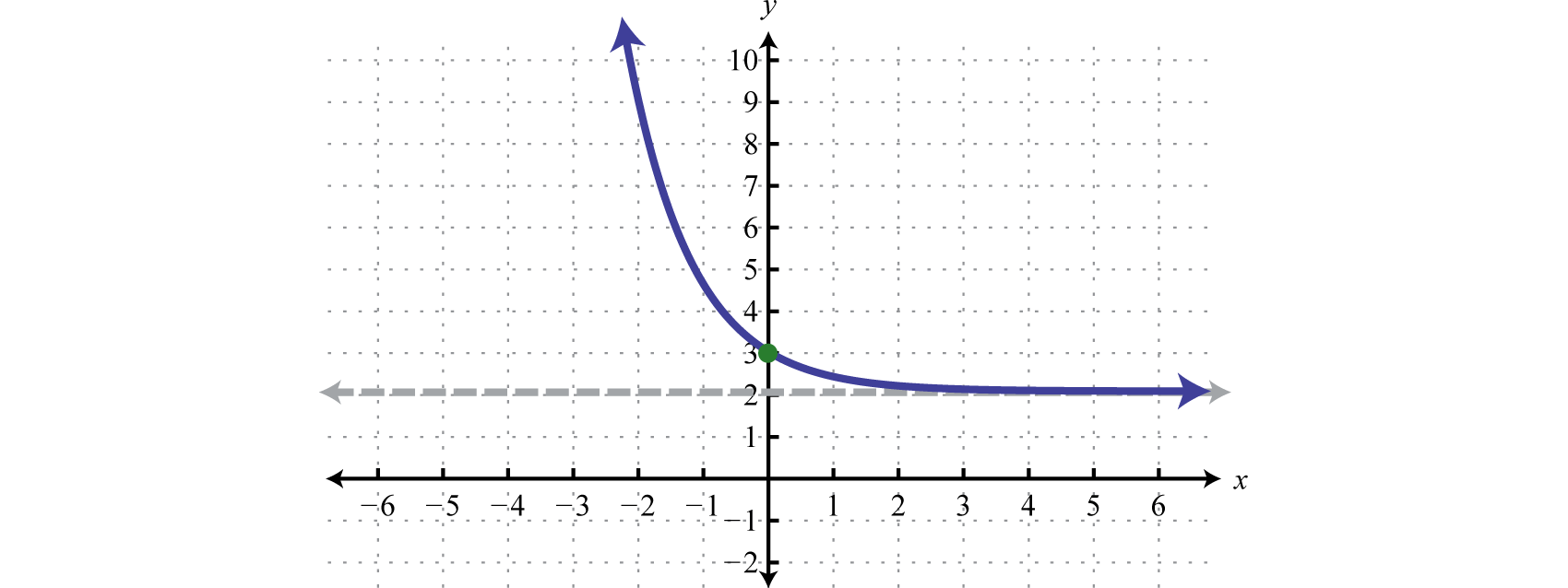
Write the question, rough sketch the graph, and your answer choice.
Describe the end behavior of the graph. Then write the name FAMILY of FUNCTIONS it belongs to and the PARENT FUNCTION f(x) = ?

Write the question, rough sketch the graph, and your answer choice.
The end behavior of a polynomial function is determined by the degree (odd/even of highest exponent) and the sign (positive/negative) of the leading coefficient.
What is the degree of the polynomial and the sign of the leading coefficient?
Degree - Even
Degree - Odd
Degree - Even
Degree - Odd

Write the question, rough sketch the graph, and your answer choice.
The end behavior of a polynomial function is determined by the degree (odd/even of highest exponent) and the sign (positive/negative) of the leading coefficient.
What is the degree of the polynomial and the sign of the leading coefficient?
Degree - Even
Degree - Odd
Degree - Even
Degree - Odd

Write the question, rough sketch the graph, and your answer choice.
The end behavior of a polynomial function is determined by the degree (odd/even of highest exponent) and the sign (positive/negative) of the leading coefficient.
What is the degree of the polynomial and the sign of the leading coefficient?
Degree - Even
Degree - Odd
Degree - Even
Degree - Odd

Write the question, rough sketch the graph, and your answer choice.
The end behavior of a polynomial function is determined by the degree (odd/even of highest exponent) and the sign (positive/negative) of the leading coefficient.
What is the degree of the polynomial and the sign of the leading coefficient?
Degree - Even
Degree - Odd
Degree - Even
Degree - Odd

Write the question, rough sketch the graph, and your answer choice.
In the above graph complete the following end behavior?
As x --> -∞, f(x) --> ____
As x --> +∞, f(x) --> ____
-∞
-∞
+∞
+∞

Write the question, rough sketch the graph, and your answer choice.
In the above graph complete the following end behavior: (f(x)=y)?
As x --> -∞, f(x) --> ____
As x --> +∞, f(x) --> ____
-∞
-∞
+∞
+∞

Write the question, rough sketch the graph, and your answer choice.
Using the above graph what is the sign of the leading coefficient?
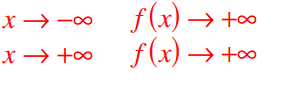
Write the question and your answer choice.
The end behavior of a polynomial function is determined by the degree (odd/even of highest exponent) and the sign (positive/negative) of the leading coefficient.
Which function has this end behavior?
Note: f(x)=y

Write the question and your answer choice.
The end behavior of a polynomial function is determined by the degree (odd/even of highest exponent) and the sign (positive/negative) of the leading coefficient.
Which function has this end behavior?
Note: f(x)=y
Write the question and your answer choice.
The end behavior of a polynomial function is determined by the degree (odd/even of highest exponent) and the sign (positive/negative) of the leading coefficient.
Determine the end behavior of the graph of
f(x) = 3x4 + 2x - 5
Note: f(x)=y
As x→-∞, f(x) →-∞.
As x→-∞, f(x) →∞.
As x→-∞, f(x) →∞.
As x→-∞, f(x) →-∞.

Write the question and your answer choice.
The end behavior of a polynomial function is determined by the degree (odd/even of highest exponent) and the sign (positive/negative) of the leading coefficient.
(Note: quartic means 4th degree, cubic means 3rd degree polynomials)
What is the degree of this polynomial function? Is the leading coefficient positive or negative?
Write the question and your answer choice.
Which one means left (of the y axis where numbers are negative)?
Write the question and your answer choice.
Which one means up (above the a axis where numbers are positive)?
Write the question and your answer choice.
Which one means the function goes up on the left?
Write the question and your answer choice.
Which one means the function goes down on the left?

