
 Worksheets
CHEM 122 Exam 1 Review
Total questions: 21
Worksheet time: 22mins
Light of a given wavelength is used to illuminate the surface of a metal. However, no photoelectrons are emitted. In order to cause electrons to be ejected, light of __________ should be used.
lower energy
higher intensity
shorter frequency
higher frequency
The energy of a photon is directly proportional to its _____ and inversely proportional to its ______.
intensity - speed
wavelength - frequency
frequency - wavelength
intensity - wavelength
The only way to increase the number of photoelectrons emitted is by increasing the _________ of the light
Intensity
Wavelength
Frequency
Energy
What is the energy of a photon with a frequency of 5x10¹⁴ Hz? (you need to do calculation. You have enough time) h=6.6x10⁻³⁴ J/Hz
2.5x10⁻¹⁹ J
3.0x10⁻¹⁹ J
3.3x10⁻¹⁹ J
4.5x10⁻¹⁹ J
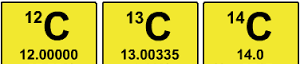
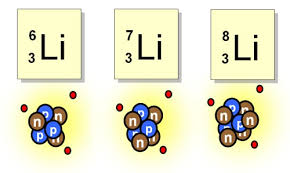
If an atom loses electrons, the charge will be positive.
true
false
An atom with 2 protons, 3 neutrons, and 4 electrons has a charge of ____.
+2
-2
+3
0
Atom


Convert: 0 K to °C
-273 °C
-273 K
273 °C
273 K
Convert 15°C to Fahrenheit (1.8 x 0C) + 32
63.8°F
84.6°F
-9.4°F
59°F
Which of the following is an example of a physical change? Select all that apply.
mixing baking soda and vinegar causing bubbles to form
dissolving sugar into sweet tea
heating sugar until it turns black
water melting on a hot summer day
Check all the examples of a chemical change.
Formation of a solid (a new product) from a liquid
fizzing and bubbling after two liquids are mixed
Salt Dissolving in Hot water
Food broken down in by saliva in the mouth and acid in the stomach
Leaves turning brown
103.45 + 2 =
Convert 62 miles/hour to feet/second
5,456 feet/second
.003 feet/second
90.9 feet/second
909 feet/second
A child weighs 40.0 lb and is to receive 0.10 mg of an antibiotic for each kg of body weight. How many milligrams of the antibiotic shall the child receive? 1 kg = 2.2 lbs
18.1 mg
181 mg
0.181 mg
1.81 mg

