
 Worksheets
Source Credibility, Bias, and the Scientific Method
Total questions: 67
Worksheet time: 50mins
What should we look for to figure out the reliability of an article, video, journal entry? (Pick Three)
The author
The date it was written
If we like the author
The Sources and Citations

Wikipedia can be trusted as a reliable source on its own
Yes
No
In your own words, why do you think the date of the source matters?
Which of these websites would you consider reliable? (Pick three)
Walmart.com
cia.gov
MrJonesIsLit.net
osu.edu
If something in a text is arguable, that means it is...
Evidence
A claim
Bias
Limitation
"The French Revolution would indirectly cause the Haitian Revolution." This is an example of...
Claim
Evidence
Bias
Limitation
"Toussaint L'Ouverture was a former Haitian slave who rose up to become the military leader of Haiti in their fight for independence." This is an example of...
Claim
Evidence
Limitation
Bias
If the author is an expert on the topic, that would make them...
More credible
Less credible
Completely reliable
Completely unreliable
If the author is financially affiliated with the topic they are talking about, it's likely that they are...
Completely biased
Less biased
More biased
Completely unbiased
What is a source?
a person who can tell me about the fight at lunch
a search engine like google
a webpage with information about a particular topic
a newspaper
technology devices
When identifying the author of a source,
ask yourself about his / her reputation
look at his / her qualifications
if he / she is a child, don't use this source
look at the circumstances of the source's creation
look for signs of bias, or stereotyping
A secondary source is
what you encounter second
not credible
created by someone who didn't live through the event or time period in question
written by someone who was a witness
a newspaper
An example of a primary source is
a diary
reference material
someone's personal memoirs
a photograph
a History textbook
A primary source is
always created some time after the event
created by a witness to the event described
the best way to examine the bigger picture
always the best type of source to use
written by someone who was not there
When a source is credible, it means that the information is ...
High quality but not true
High quality and trustworthy
Fake and questionable
Made up but sounds like it could be true
Fact checking means
to check your facts by asking an adult if its true
to ask your peers if the information on a site is true.
to check the facts on one site and compare them with other sites
The websites that you need to be the most careful with are websites with ______________ domain name
.edu
.com
.gov
.org
Which of the following is not used to determine the reliability of a resource:
objectivity
fact-based
credibility
creativity
Objectivity is defined as:
stating only one side of an argument
presenting just the facts without opinion or emotion
presenting a fair and balanced viewpoint
exrpessing the opinion of the author
When determining if an author is credible, you should try to learn if he or she has enough:
education
experience
respect from colleagues
nation of origin
To see if an author is credible you might:
research their credentials
see how many likes the article got
look at the sources that he or she cited
look at the author's picture to see if they look intelligent
Which of the following sources could one assume were biased?
an advertisement
a political campaign
a statistical report
a source containing stereotypes
Web sites you should NOT consider credible sources would be
individual blogs
chat rooms
online forums
educational websites
Which of the following is NOT a characteristics of a hypothesis?
Must be made with background knowledge
Must be testable
Must organizes the IV and DV
Must always be correct
True/False: Conspiracy theories are a recent phenomenon, first gaining popularity in the 20th Century.
True
False
Are conspiracy theories the same as "fake" news?
Yes
No
What is epistemic responsibility?
Responsibility we have regarding our beliefs
Responsibility we have regarding our actions
Responsibility we have regarding our emotions
Responsibility we have regarding our relationships

What does it mean to be skeptical?
To feel nervous in an online setting
To be gullible on the internet
To question information before blindly believing it.
To ignore signs of bias.
use of humor or exaggeration to critique or mock a person, organization or policy
Satire
False context
Imposter content
Manipulated content
Fabricated content
misinformation that takes an image, quote or other piece of content and puts it into a new, false context to change its meaning.
Satire
False context
Imposter content
Manipulated content
Fabricated content
uses a well known name, brand or logo to fool people into believing that it is authentic content.
Satire
False context
Imposter content
Manipulated content
Fabricated content
type of misinformation in which something is altered from the original.
Satire
False context
Imposter content
Manipulated content
Fabricated content
misinformation that is entirely made up and designed to deceive you into thinking that it's real
Satire
False context
Imposter content
Manipulated content
Fabricated content
An outrageous, crazy exaggeration used for effect and not meant to be taken seriously
hoax
false claim
cherry pick
hyperbole
Taking complex information and breaking it down to the point that it is no longer accurate
oversimplify
hyperbole
skepticism
triangulate
select misleading details from complex studies and reports that support a certain position
convey a neutral stance
oversimplify
fact checking
cherry pick
when a reader questions information they agree with and accepts accurate information they may disagree with
healthy skepticism
fact checking
cherry pick
manipulated content
ways to combat misinformation -choose all that apply
using common sense
doing some fact checking
insert into your feed to expose the misinformation
"lateral reading" internet searches
How to tell if a news item might be fake? (may have more than one answer)
It leads with a conspiracy theory
when it contains confusing content
Which of these would make you think a source is not trustworthy?
You don't recognize the author's name
You disagree with the content of the article
There are no links to sources or evidence
there aren't any images
What is the difference between misinformation and disinformation?
Misinformation may be true or accurate, while disinformation is a total lie.
Misinformation is false information that is not intended to harm while disinformation is false information that is intended to harm.
Disinformation is true information while misinformation is widely beileved but may not be accurate.
There is almost no difference between the two.
Where is a good place to go to check if something is true?
Fact-checker sites like snopes.com or politifact.com
Facebook or other respected social media site
An opinion article on the internet
a media outlet home page
Which of the following would be considered clickbait: (select all that apply)
"Stranger does act of kindness. You won't believe what happens next."
"How to get a gym body without going to the gym!"
"You won't believe what Lebron James just said!"
"CDC reports that proper handwashing is the key to remaining healthy."
What is a question that is phrased in a way so it guides the responder towards a particular answer?
Loaded question
Misguided question
Leading question
Lost question
Selecting certain people to be interviewed is
Bias through selection and omission
Bias through placement
Bias through source control
Bias through crowd counts
What is bias in the media?
Showing two sides of the argument
News reported in a partial/prejudiced manner
Only providing facts
An editor can express bias by choosing some or none of a story what is this?
Bias through selection and omission
Bias through placement
Bias through source control
Bias through crowd counts
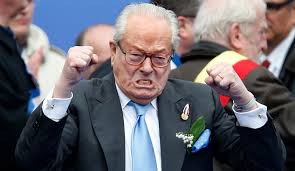
Do pictures show the subject in a flattering/unflattering way?
Bias through Source Control
Bias through Photo's, Captions and Camera Angles
Bias through Placement
Bias through Headline

