
 Worksheets
Punnett Square Quiz Study Guide
Total questions: 24
Worksheet time: 12mins
Define Heterozygous (Hybrid)
When an organism has two different alleles for a trait
When an organism has two identical alleles for a trait
Strands of DNA that carry information that determine our traits
Physical appearance of an organism (Tall, Short, red, white)
Define Homozygous (Purebred)
When an organism has two different alleles for a trait
When an organism has two identical alleles for a trait
Strands of DNA that carry information that determine our traits
Physical appearance of an organism (Tall, Short, red, white)
Define Genotype
When an organism has two different alleles for a trait
The different forms of a gene. ex. blue eyes vs. brown eyes
The genetic make-up (GG, Gg, gg) of an organism
The physical appearance of an organism (tall, short, red, white)
Define Phenotype
When an organism has two different alleles for a trait
The different forms of a gene. ex. blue eyes vs. brown eyes
The genetic make-up (GG, Gg, gg) of an organism
The physical appearance of an organism (tall, short, red, white)
Define Genes
Strands of DNA that carry information that determine our traits
The different forms of a gene. ex. blue eyes vs. brown eyes
The genetic make-up (GG, Gg, gg) of an organism
The physical appearance of an organism (tall, short, red, white)
Define Alleles
Strands of DNA that carry information that determine our traits
The different forms of a gene. ex. blue eyes vs. brown eyes
The genetic make-up (GG, Gg, gg) of an organism
The physical appearance of an organism (tall, short, red, white)
In genetics, we use capital letters to demonstrate...
Dominant traits
Recessive traits
In genetics, we use lowercase letters to demonstrate...
Dominant traits
Recessive traits

Who was the "Father of Genetics" that studied pea plants in an Austrian monastery?
Albert Einstein
Rudolf Virchow
Carolus Linneaus
Gregor Mendel
When setting up a Punnett Square, where should you put the parent genotypes?
On the Top and on the Right of the square
On the Top and on the Left of the square
On the Bottom and on the Right of the square
On the Bottom and on the Left of the square

Simple inheritance (Dominant > Recessive): Complete the Punnett Square to identify the Phenotype ratio for the following cross. B= Black, b= White
BB x Bb
3 Black : 1 white
4 black : 0 White
2 Black : 2 White
1 Black : 3 White

Simple inheritance (Dominant > Recessive): Complete the Punnett Square to identify the Phenotype ratio for the following cross. B= Black, b= White
Bb x Bb
3 Black : 1 white
4 black : 0 White
2 Black : 2 White
1 Black : 3 White

Simple inheritance (Dominant > Recessive): Complete the Punnett Square to identify the Phenotype ratio for the following cross. B= Black, b= White
Bb x bb
3 Black : 1 white
4 black : 0 White
2 Black : 2 White
1 Black : 3 White
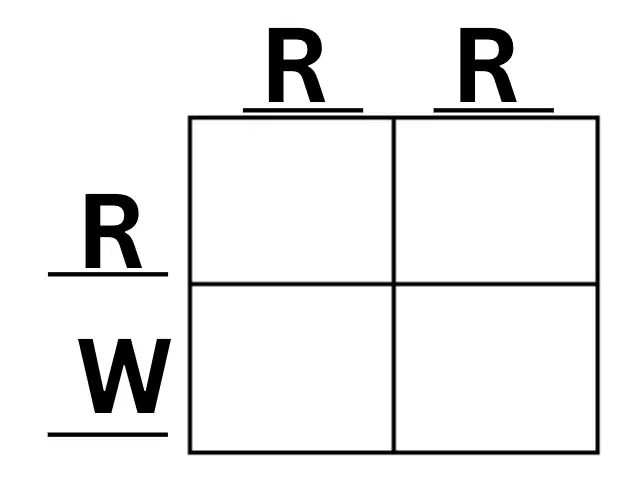
Incomplete Dominance inheritance (blending): Complete the Punnett Square to identify the Phenotype ratio for the following cross. RR= Red, WW= White, RW= Pink
RR x RW
3 Red : 1 White : 0 Pink
4 Red : 0 White : 0 Pink
2 Red : 0 White : 2 Pink
1 Red : 1 White : 2 Pink
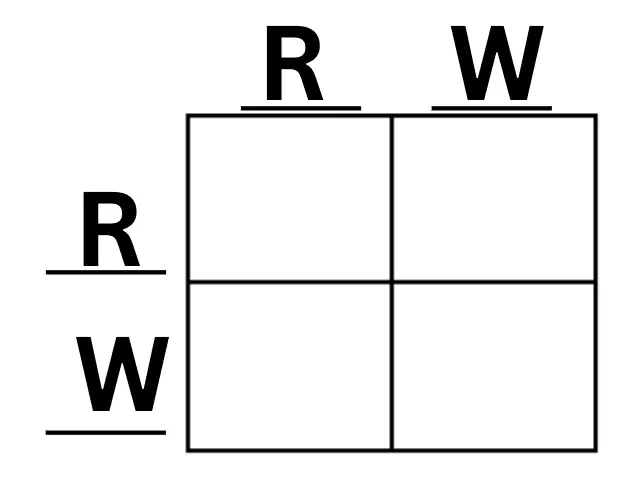
Incomplete Dominance inheritance (blending): Complete the Punnett Square to identify the Phenotype ratio for the following cross. RR= Red, WW= White, RW= Pink
RW x RW
3 Red : 1 White : 0 Pink
4 Red : 0 White : 0 Pink
2 Red : 0 White : 2 Pink
1 Red : 1 White : 2 Pink

Incomplete Dominance inheritance (blending): Complete the Punnett Square to identify the Phenotype ratio for the following cross. RR= Red, WW= White, RW= Pink
RR x WW
3 Red : 1 White : 0 Pink
0 Red : 0 White : 4 Pink
2 Red : 0 White : 2 Pink
1 Red : 1 White : 2 Pink
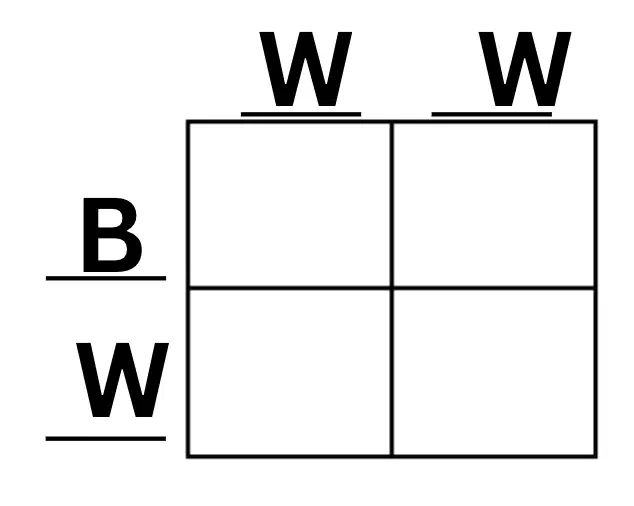
Codominance inheritance (both dominant traits are present): Complete the Punnett Square to identify the Phenotype ratio for the following cross. BB= Black, WW= White, BW= Speckled
WW x BW
3 Black : 1 White : 0 Speckled
0 Black : 0 White : 4 Speckled
0 Black : 2 White : 2 Speckled
1 Black : 1 White : 2 Speckled
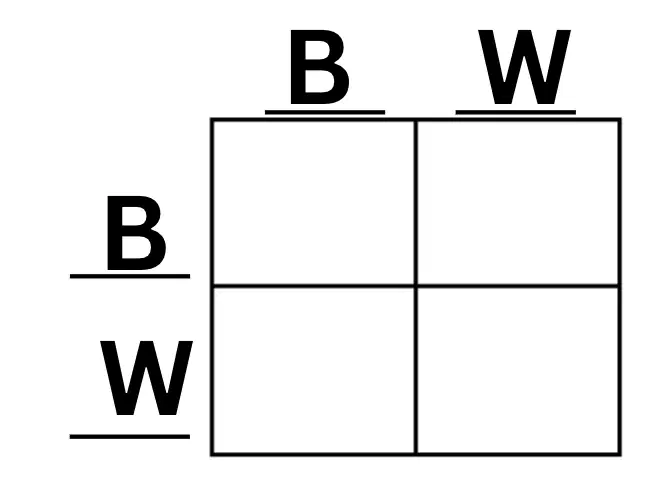
Codominance inheritance (both dominant traits are present): Complete the Punnett Square to identify the Phenotype ratio for the following cross. BB= Black, WW= White, BW= Speckled
BW x BW
3 Black : 1 White : 0 Speckled
0 Black : 0 White : 4 Speckled
0 Black : 2 White : 2 Speckled
1 Black : 1 White : 2 Speckled
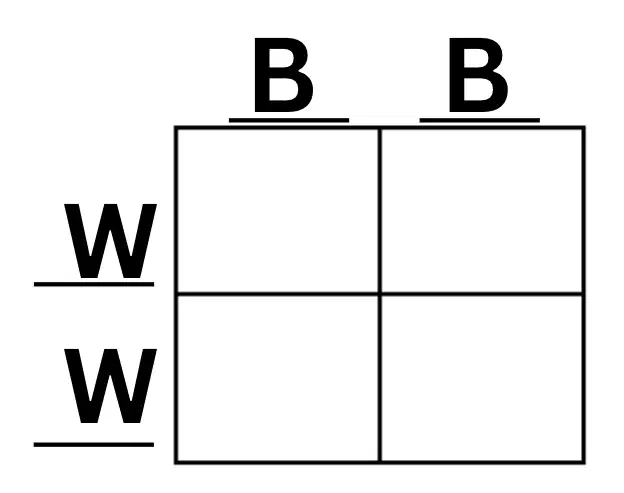
Codominance inheritance (both dominant traits are present): Complete the Punnett Square to identify the Phenotype ratio for the following cross. BB= Black, WW= White, BW= Speckled
BB x WW
3 Black : 1 White : 0 Speckled
0 Black : 0 White : 4 Speckled
0 Black : 2 White : 2 Speckled
1 Black : 1 White : 2 Speckled

Take a look at the attached karyotype. Is this person male or female?
Male
Female

Take a look at the attached karyotype. Is this person male or female?
Male
Female
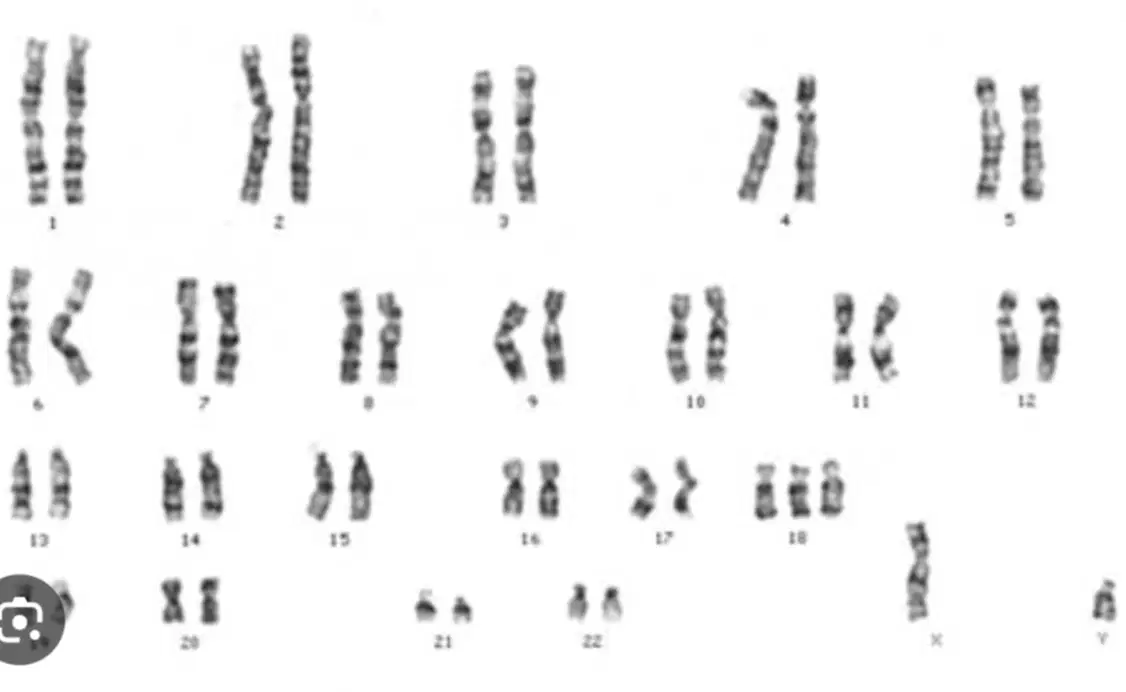
Take a look at the attached karyotype. Does this person have a genetic disorder?
No
Trisomy 18 (Edward's syndrome)
Trisomy 21 (Down Syndrome)
Missing X chromosome (Turner's Syndrome)
Take a look at the attached karyotype. Does this person have a genetic disorder?
No
Trisomy 18 (Edward's Syndrome)
Trisomy 21 (Down Syndrome)
Missing X chromosome (Turner's Syndrome)
Take a look at the attached karyotype. Does this person have a genetic disorder?
No
Trisomy 18 (Edward's Syndrome)
Trisomy 21 (Down Syndrome)
Missing X chromosome (Turners Syndrome)

