
Font size
 Worksheets
AP Environmental Science Climate Unit
Total questions: 35
Worksheet time: 46mins

The gases that make up Earth’s atmosphere are commonly referred to as air. What are the two most abundant gases in the atmosphere?
nitrogen and carbon dioxide
nitrogen and oxygen
water vapor and argon
oxygen and carbon dioxide

Living vegetation and the ocean are known as "carbon sinks" because
they are made of carbon.
they create carbon.
they destroy carbon.
they store carbon.
What is it called when CO2 is absorbed by the ocean and reacts with seawater to produce acid.
water pollution
ocean acidification
seaweed salad vinegar
hydrochloric acid
Fossil fuels
Coal, oil, or gas formed in the geological past from the remains of living organisms.
Use of fossils to make power

The remains or impression of a prehistoric organism preserved in petrified form.
Coral bleaching
Education and public awareness campaigns to preserve the health of coral reefs.
The process to clean coral before it is sold.
The process by which corals lose their algae and color under stressful conditions like high water temperature and light intensity.


Which in the atmosphere protects us from harmful UV radiation?
Ozone
Water Vapor
Methane
Sulfur Dioxide
Carbon Dioxide
What results from livestock and other agricultural practices and by the decay of organic waste in municipal solid waste landfills?
Carbon Dioxide
Methane
Water Vapor
Fluorinated Gases
Nitrous Oxide
The primary source of CH4 emissions is _______.
Industry
Agriculture
Carbon Sinks
Fossil Fuels
Electricity
Chlorofluorocarbons and HCFCs are being phased out under an international agreement, called the __________.
Paris Agreement
Kyoto Protocol
Montreal Protocol
Endangered Species Act


The side of a mountain range that faces the oncoming wind and receives precipitation:
Climate
Windward
Leeward
Monsoon
The side of a mountain range that faces away from the wind and receives little to no precipitation:
Windward
Leeward
Monsoon
Climate


What latitude degree is the desert and why is this true?
20 degrees and air is descending
30 degrees and air is descending
15 degrees and air is ascending
30 degrees and air is ascending

Which layer of the atmosphere contains the good ozone layer?
Stratosphere
Mesosphere
Thermosphere
Troposphere

Which describes the situation that any resource open to everyone will eventually be overused and depleted because everyone can use the resource but no one is responsible for it?
“Tragedy of the Commons”
Sustainability
Industrial Revolution
Agricultural Revolution

In which biome would you expect to find an area with an average temperature of 10oC and 200 cm of precipitation annually?
Temperate seasonal forest
Temperate rainforest
Woodland/shrubland
Tropical seasonal forest
Which biome is characterized by the presence of permafrost?
temperate seasonal forest
woodland/shrubland
tundra
boreal forest
Which of the following is true about island biodiversity?
Small islands are more likely to have more immigrated species
Small islands have more biodiversity
Small islands have more species
Small islands have less resources
What is the difference between primary and secondary succcession?
Primary succession already has soil
Lichen and moss come in for secondary succession
Secondary succession already has soil
Climax community is achieved quickly in primary succession

If global temperature warmed for any reason, atmospheric water vapor would increase due to evaporation. This would increase the greenhouse effect and thereby further rise the temperature. As a result, the ice caps would melt back, making the planet less reflective so that it would warm further. This process is an example of
synergistic feedback
positive-feedback loop
negative-feedback loop
negative coupling
The release of products of combustion into the air often causes the formation of ozone near the surface of Earth. This ground-level ozone in the troposphere damages plants and affects their ability to absorb carbon dioxide. What most likely caused the doubling of ground-level ozone since 1850?
greater use of nuclear fuel
Emissions from vehicles & industrial processes
extinction of certain animal species
composition of the upper atmosphere

According to this graph, what can scientists determine about the relationship between atmospheric CO2 and temperature?
as CO2 increases, the temperature increases
as CO2 decreases, the temperature increases
as CO2 increases, the temperature decreases
none of these

Look at the following climatograph to determine biome
Rainforests (pick two)
Commonly have fire during the dry season
Are one of the most biologically diverse ecosystems on Earth ("Diverse" means different)
Have poor soils because nutrients are washed away by rains and/or absorbed by the many plants and trees
______________ causes more rainfall in the Northwest United States and poor fishing off the coast of South America (Peru).
La Nina
El NIno
El Baby Yoda
La Chancla
Why do the fisherman of Peru and South America not welcome a strong El Nino?
El Nino poisons the fish
El Nino causes strong winds and currents which move fish westward
El Nino bring cold water to the surface which kills the base of the food chain
El Nino shuts off upwelling and nutrients needed for the marine food chain do not rise to the surface

The largest terrestrial biome in the world
Chaparral
Taiga
Tundra
Desert
Which of the following international treaties bans the hunting, capture, and sale of threatened or endangered species in 181 countries?
Endangered Species Act (ESA)
The Convention on International Trade in Endangered Species (CITIES)
National Enviornmental Policy Act (NEPA)

What organisms in this Tundra food web are primary consumers?
Snowy owl, snowshoe hare, and lemming
Snowshoe hare, ermine and lemming
Lemming, snowshoe hare and caribou
snowshoe hare only
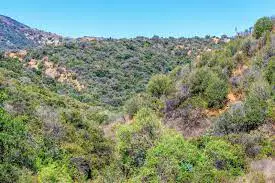
Fires are important in this biome it helps many plant seeds to germinate and clears the area of overgrowth.
Temperate deciduous forest
Desert
Chaparral
Taiga

