
 Worksheets
Term III Benchmark
Total questions: 25
Worksheet time: 13mins
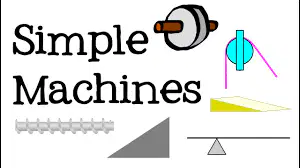
Before engines and motors were invented, people had to do things like lifting or pushing heavy loads by hand. Ancient people invented simple machines that would help them overcome resistive forces and allow them to do the desired work against those forces. Match each of the simple machines with their corresponding definition. Which is the correct definition for a lever?
a rigid bar that rotates around a fixed point called the fulcrum.
The bar may be either straight or curved.
a simple machine consisting of a large wheel rigidly secured to a smaller wheel or shaft, called an axle.
A grooved wheel that turns freely in a frame called a block.
Used to simply change the direction of a force or to gain a mechanical advantage, depending on how it is arranged.
an even sloping surface and makes it easier to move a weight from a lower to higher elevation.
a modification of the inclined plane is are used as either separating or holding devices.
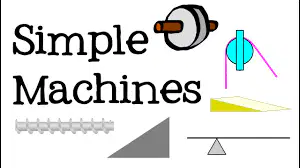
Before engines and motors were invented, people had to do things like lifting or pushing heavy loads by hand. Ancient people invented simple machines that would help them overcome resistive forces and allow them to do the desired work against those forces. Match each of the simple machines with their corresponding definition. Which is the correct definition for a wedge?
a rigid bar that rotates around a fixed point called the fulcrum.
The bar may be either straight or curved.
a simple machine consisting of a large wheel rigidly secured to a smaller wheel or shaft, called an axle.
A grooved wheel that turns freely in a frame called a block.
Used to simply change the direction of a force or to gain a mechanical advantage, depending on how it is arranged.
an even sloping surface and makes it easier to move a weight from a lower to higher elevation.
a modification of the inclined plane is are used as either separating or holding devices.
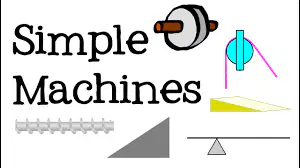
Before engines and motors were invented, people had to do things like lifting or pushing heavy loads by hand. Ancient people invented simple machines that would help them overcome resistive forces and allow them to do the desired work against those forces. Match each of the simple machines with their corresponding definition. Which is the correct definition for a pulley?
a rigid bar that rotates around a fixed point called the fulcrum.
The bar may be either straight or curved.
a simple machine consisting of a large wheel rigidly secured to a smaller wheel or shaft, called an axle.
A grooved wheel that turns freely in a frame called a block.
Used to simply change the direction of a force or to gain a mechanical advantage, depending on how it is arranged.
an even sloping surface and makes it easier to move a weight from a lower to higher elevation.
a modification of the inclined plane is are used as either separating or holding devices.
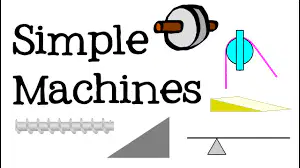
A simple machine machine is a device that helps make work easier to perform by accomplishing one or more of which functions?
CHOOSE MORE THAN ONE!
transferring a force from one place to another
removing the distance or speed of a force
changing the direction of a force
increasing the distance or speed of a force
increasing the magnitude of a force
When a lever is used to lift a heavy rock by applying a small force on one end, what has been produced?
Input Force
Output Force
Power
Mechanical Advantage
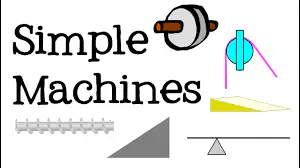
In a pulley system designed to lift heavy objects, no machine can increase both the ________________________________ and the _________________________________of a force at the same time.
magnitude, distance
distance, time
magnitude,time
power,distance
The ________________________________ is also a modified version of the inclined plane.
While this may be somewhat difficult to visualize, imagine a simple household screw. Think of its threads as a type of circular ramp (or inclined plane) that helps it to penetrate into materials.
screw
wedge
lever
axle
Decide whether each is work or not work by selecting the examples of work.
CHOOSE MORE THAN ONE!
A scientist delivers a speech to an audience of his peers.
A body builder lifts 350 pounds above his head.
A father pushes a baby in a carriage.
A mother carries her baby from room to room.
a mouse pushing a piece of cheese with its nose across the floor

If a man pushes a concrete block 35 meters with a force of 15 N, how much work has he done?
2.33 Joules
50 Joules
200 Joules
525 Joules

In science, the word work has a different meaning than you may be familiar with.
Which is the scientific definition of work is:
using a force to move an object a distance (when only the force and the motion of the object are in the same direction.)
using a force to move an object a distance (when both the force and the motion of the object are in the same direction.)
using a force to move an object a distance (when neither the force and the motion of the object are not in the same direction.)
using a force to move an object a distance (when both the force and the distance the object are in the same direction.)

John is pushing a cart for 10 meters using a force of 50 Newtons. Identify the formula he would use to calculate the work done.
Work = Distance / Force
Work = Force + Distance
Work = Force / Distance
Work=Force x Distance

When lifting a box off the ground, the correct SI unit to measure the work done is which of the following?
Joules
Newtons
Newton-Meters
Meters
___________________________ is the rate at which work is done by an engine.
Work
Power
Force
Time
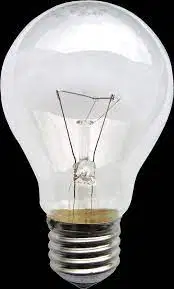
When measuring the output of a lightbulb, which SI Unit is used?
Joules
Newtons
Watt
Meters
When calculating the power consumed by an appliance, which formula should be used?
Force x Time
Work x Distance
Force x Distance
Work/Time
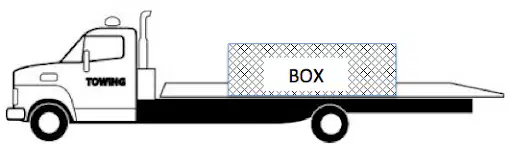
A truck needs to transport a 20 kg package to a warehouse 20 meters away. If the truck accelerates at 4 m/s/s and must complete the delivery in 10 seconds, how much power is required to accomplish this task? This problem requires you to use the formulas for force, work, and power all in the correct order.
1600 Watts
160 Watts
16 Watts
40 Watts
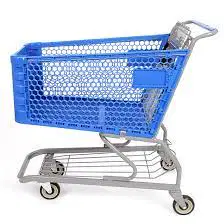
John uses a force of 15 Newtons to push his shopping cart 3 meters. How much work is done?
45 Joules
18 Joules
5 Joules
153 Joules
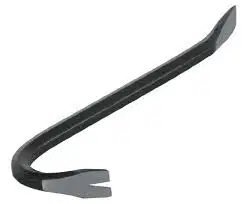
Common examples of _______________________________________________ include crowbars, scissors, pliers, tin snips and seesaws.
First Class Levers
Second Class Levers
Third Class Levers
Non-bound Levers

A boy exerted a force of 9000 Newtons on a stalled car but was unable to move it. How much work was done?
9000 Joules
90 Joules
900 Joules
0 Joules
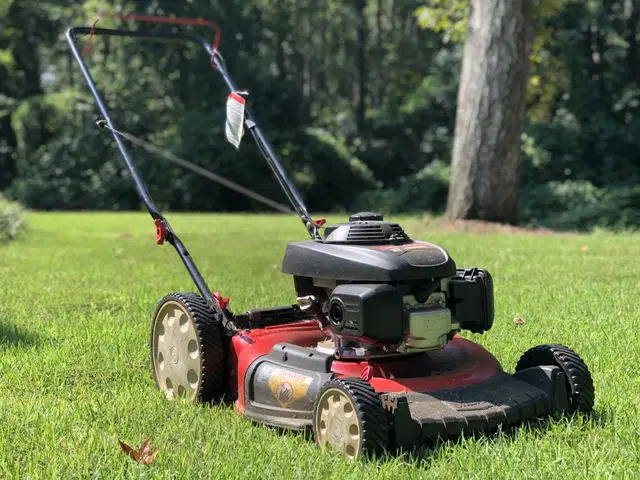
Amy uses 20N of force to push a lawn mower 10 meters. How much work does she do?
2 Joules
30 Joules
200 Joules
2010 Joules

Tommy does 45 Joules of work to push a box across the floor over a distance of 5 meters. How much force did he apply?
225 Newtons
9 Newtons
50 Newtons
455 Newtons
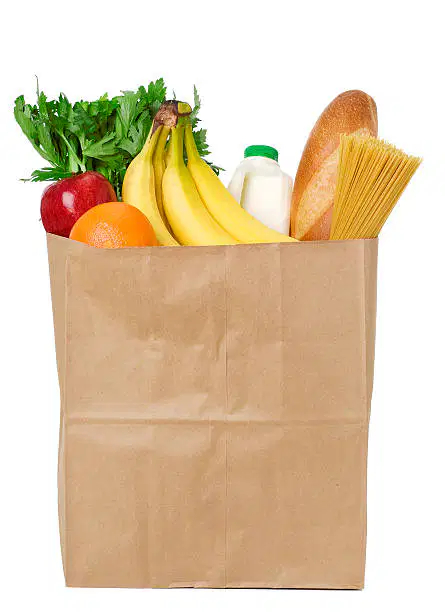
Angela uses a force of 25 Newtons to lift her grocery bag while doing 50 Joules of work. How far did she lift the grocery bags?
2 meters
1250 Meters
25 Meters
2550 Meters
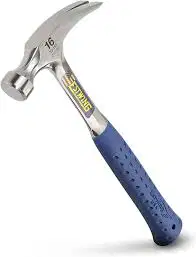
Examples of ___________________________________________include tweezers, hammers, and shovels.
First Class Levers
Second Class Levers
Third Class Levers
Non-bound Levers
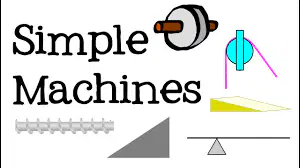
During a science fair project, a student demonstrates how simple machines can make work easier. The six simple machines they focus on are:
Lever, Wheel and Axle, Pulley, Inclined Wedge, Plane, Screw
Level, Wheel and Axle, Pulley, Inclined Plane, Wedge, Screw
Lever, Wheel and Handle, Pulley, Inclined Plane, Wedge, Screw
Lever, Wheel and Axle, Pulley, Inclined Plane, Wedge, Screw
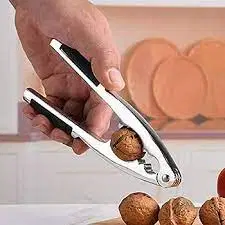
Common examples of _________________________________ include nut crackers, wheel barrows, doors, and bottle openers.
First Class Levers
Second Class Levers
Third Class Levers
Non-bound Levers

