
 Worksheets
CA #2 (Biology 1)
Total questions: 18
Worksheet time: 9mins
Name
Class
Date
1.
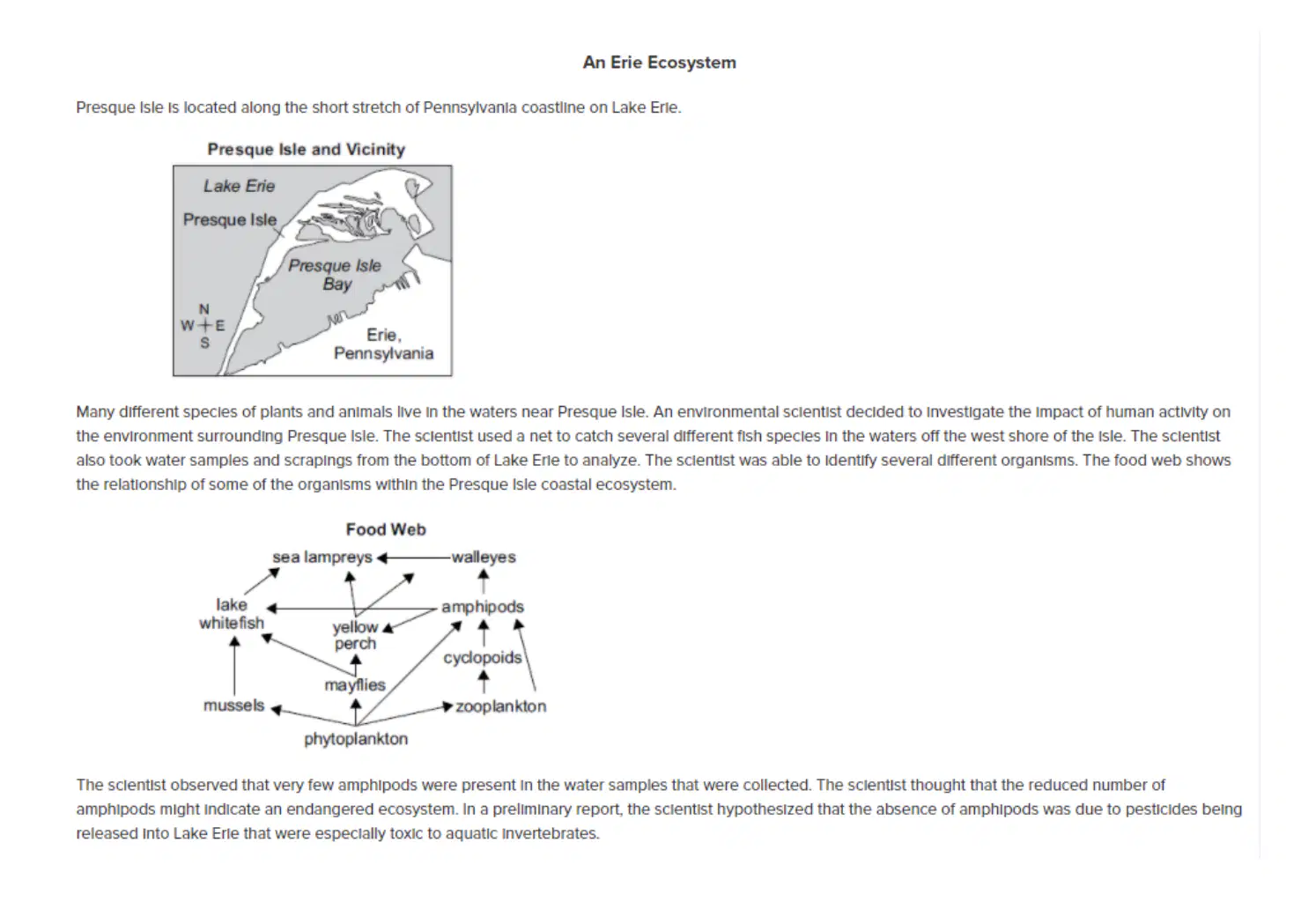
1. Asian carp are an invasive species of fish. These large fish eat up to 40% of their body weight per day by feeding on phytoplankton. The carp also reproduce quickly. If these fish were to enter Lake Erie, how would the Presque Isle coastal ecosystem MOST LIKELY be affected?
a)
A. Producers in the ecosystem would grow at a faster rate, and smaller fish such as yellow perch would thrive.
b)
B. The invasive fish would prey on mollusks such as mussels, but native fish species would quickly eat the invasive fish.
c)
C. Consumers in the higher trophic levels would suffer stress, but crustaceans such as amphipods would be unaffected.
d)
D. Most consumers in the ecosystem would face a shortage of food, and larger fish, such as walleye, would be unable to thrive.
2.
2. A farmer observed that an increase in a field’s soil nitrogen content was followed by an increase in producer productivity. What does this observation most likely indicate about the relationship between nitrogen and the producers in the field?
a)
A. Nitrogen was a biotic factor.
b)
B. Nitrogen was a limiting factor.
c)
C. Nitrogen became a surplus resource.
d)
D. Nitrogen became a selection pressure.
3.
3. Most of the water on Earth is located in the oceans and has a salinity of about 3.5%. Which statement best explains why rain is fresh water and has a very low salinity?
a)
A. When water precipitates from oceans, most of the salt remains in the oceans.
b)
B. When water evaporates from oceans, most of the salt remains in the oceans.
c)
C. When water precipitates from clouds, most of the salt remains in the clouds.
d)
D. When water evaporates from clouds, most of the salt remains in the clouds.
4.
4. Agricultural runoff can carry fertilizers into lakes and streams. This runoff can cause algae populations to greatly increase. Which effect does this change in the algae population sizes MOST LIKELY have on affected lakes and streams?
a)
A. An increase in water level
b)
B. An increase in water clarity
c)
C. A reduction in dissolved oxygen needed by fish and shellfish
d)
D. a reduction in temperature variations near the water’s surface
5.
5. Which statement correctly describes how nitrogen in the soil returns to the atmosphere?
a)
A. Soil bacteria convert nitrates into nitrogen gas.
b)
Decomposers directly convert ammonium into nitrogen gas.
c)
Plants assimilate nitrites and convert them into nitrogen gas.
d)
Nitrogen-fixing bacteria in plant roots convert nitrates into nitrogen gas.
6.
6. Ash from a volcanic eruption decreases the amount of available solar energy for a region. Which statement describes how a decrease in available sunlight will most likely affect ecosystems of this region?
a)
A. Producer populations will decrease, causing a decrease in consumer populations.
b)
B. Producer populations will decrease, causing an increase in consumer populations.
c)
C. Decomposer populations will increase, causing a decrease in consumer populations.
d)
D. Decomposer populations will increase, causing an increase in consumer populations.
7.
7. Which of the following is the best definition of pollution
a)
A. A natural resource that humans overuse
b)
B. A human activity that destroys habitats
c)
C. A harmful substance released into the environment
d)
D. A species that humans introduce into an ecosystem
8.
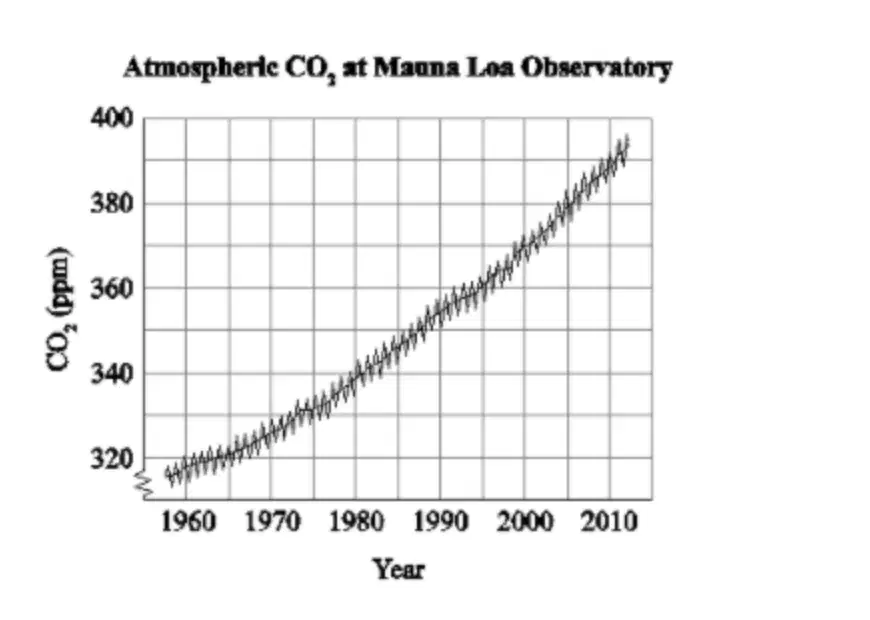
8. The graph shows the concentrations of atmospheric carbon dioxide measured over 50 years at an observatory in Hawaii. The graphed line indicates an overall upward trend with fluctuations occurring yearly. Which BEST explains these yearly fluctuations in carbon dioxide concentration?
a)
A. More carbon dioxide is dissolved into oceans during warm summer months.
b)
B. More carbon dioxide is released from oceans to the atmosphere during cold winter months.
c)
C. The process of photosynthesis removes more carbon dioxide from the atmosphere as more vegetation grows during the summer.
d)
D. Algal photosynthesis removes more carbon dioxide from the atmosphere as lack of foliage during winter allows more light to reach lakes and rivers.
9.
9. Increases in which of the following can increase population size?
a)
A. Emigration and birth rate
b)
B. Emigration and death rate
c)
C. Immigration and birth rate
d)
D. Immigration and death rate
10.
10. In some parts of the world rain forests are being cut down to make land available for farms. How does this loss of these trees affect carbon dioxide and oxygen in the atmosphere?
a)
A. It increases both carbon dioxide and oxygen
b)
B. It decreases both carbon dioxide and oxygen
c)
C. It increases carbon dioxide and decreases oxygen
d)
D. It decreases carbon dioxide and increases oxygen
11.
11. Which of these would most likely contribute to the extinction of a species.
a)
A. An increase in its genetic variablity
b)
B. A decrease in the number of it's competitors
c)
C. The extinction of species at higher trophic levels
d)
D. The extinction of species at lower trophic levels
12.
12. In Pennsylvania, a nonnative plant called stiltgrass out-competes native plants in many forest ecosystems. Which statement best describes how the spread of stiltgrass negatively affects native herbivores?
a)
A. Stiltgrass stops the life cycles of native herbivores.
b)
B. Stiltgrass reduces the size of the native plant populations.
c)
C. Stiltgrass increases the flow of energy through the ecosystem.
d)
D. Stiltgrass attracts other nonnative plants to the forest ecosystem.
13.
13. Environmental changes do not affect all organisms in the same way. Give examples of events that would change an ecosystem's carrying capacity for all or most of the populations that live there. Give examples of events that would change the carrying capacity for only a few kinds of organisms or that would increase it for one organism and decrease it for another.
4 lines
14.
14. White-tailed deer from North America were brought to the islands of New Zealand around the year 1900. This species of deer has survived in several regions in New Zealand. Describe one possible effect that a nonnative species can have on a native ecosystem and explain why this effect might occur.
4 lines
15.
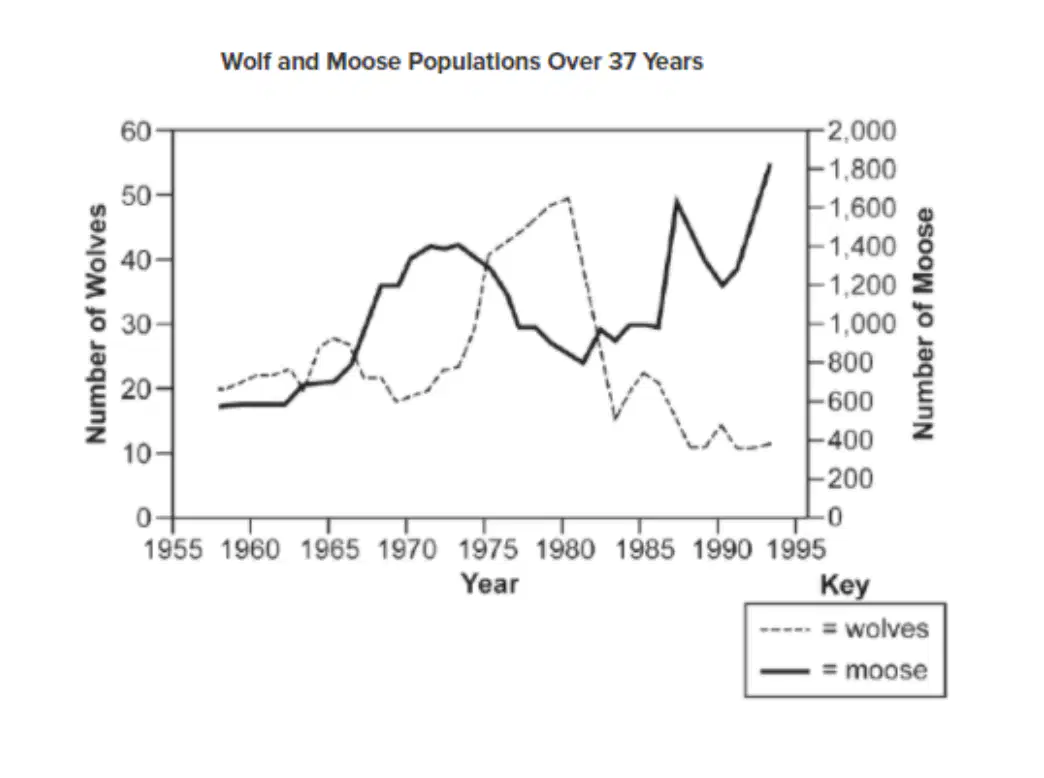
15. Isle Royale is located in Lake Superior. Isle Royale is home to populations of wolves and moose. The interactions between the wolves and moose, as well as the individual population sizes, have been studied since 1958. The graph shows the population sizes over time for both wolves and moose. Predict what will happen to the moose population’s size after 1994 by describing the shape of the curve. In your answer, be sure to explain the reasoning behind your prediction.
4 lines
16.
16. How would each of these changes affect the carbon cycle and the oxygen cycle
A. An increase in respiration
B. A decrease in photosynthesis
C. An increase in the amount of fossil fuels burned
4 lines
17.
17. All organisms affect the ecosystems in which they live. Why do human activities have a greater impact than those of other organisms? Justify your response.
4 lines
18.

18. Refer to the diagram below to answer the following questions. Be sure to look closely at the diagram, the stages listed, and where the arrows are going.
A. Name the process of returning nitrogen to the atmosphere.
B. In what two ways can animals contribute nitrogen back into the soil?
C. If bacteria weren’t present, how would their absence specifically affect plants?
4 lines
100 %

