
Font size
 Worksheets
Pre-Master PTL Knowledge
Total questions: 32
Worksheet time: 19mins
What are you most interested in learning about?
Away from or furthest from the trunk or origin of a part
Medial
Lateral
Proximal
Distal
Toward or nearest the trunk or the origin of a part
Medial
Lateral
Proximal
Distal
To be further away from the midline (middle) of the body or a structure
Medial
Lateral
Proximal
Distal
To be closer to the midline (middle) of the body or structure
Medial
Lateral
Proximal
Distal
To be situated toward the back of the body
Anterior
Posterior
Superior
Inferior
To be situated near or toward the front of the body
Anterior
Posterior
Superior
Inferior

Intensity
Number of sessions per week
Duration of exercise session
Level of effort/energy expended
Specific Exercise Modality

Frequency
How hard the workout is
What kind of workout you do
How long do you workout
How many times you workout in a week
The ability to move joints and use muscles through their full range of motion.
Muscular Endurance
Muscular Strength
Flexibility
Cardiovascular Endurance
The ability of the heart, lungs and blood vessels to deliver oxygen to working muscles and tissues during
physical activity for a long period of time
Muscular Strength
Muscular Endurance
Cardiorespiratory Endurance
Body Composition
Stretching a muscle to a point and then holding the position for 15-30 seconds is called:
Static Stretching
Ballistic Stretching
Dynamic Stretching
Torture Stretching
What is muscular endurance?
the ability of heart, lungs and muscles to perform activity for a sustained period of time
the ability of a muscle or muscle group to exert maximal force against a resistance one time through a full range of motion
the ability of a muscle or muscle group to exert a sub maximal force repeatedly over time
What is muscular strength?
The ability of a muscle or group of muscles to exert maximal force against a resistance one time through a full range of motion
the amount of lean mass compared to the amount of body fat
the ability to bend stretch, and twist the body with ease through a full range of motion
Gradually increasing the demands on your body from workout to workout refers to which of the following terms
Overload
Progression
Physical Fitness
Aerobic exercise
Planned structured, and repetitive bodily movement to improve or maintain a component of physical fitness
Physical Activity
Exercise
Fitness
Health
What does anaerobic mean?
Without oxygen
With oxygen
What does aerobic mean?
Without oxygen
With oxygen
__________________ heart rate is number of heartbeats per minute that you should aim for during moderate-to-vigorous aerobic activity to help your circulatory system the most.
Resting
Target
Recovery
Perform prolonged (longer than 3 min), large muscle, dynamic exercise at low-moderate intensity, energy generated from Carbohydrates/Fats
Aerobic Exercise
Anaerobic Exercise
Exercise consisting of short duration or slow rhythmic movements against a force, Moderate-High intensity activity, energy generated from ATP stores in muscles
Aerobic Exercise
Anaerobic Exercise
Ability to maintain static and dynamic equilibrium or ability to maintain the body’s center of gravity over its base of support
Flexibility
Agility
Balance
Plyometric

Ability to move and change direction/position of body quickly/effectively while under control
Flexibility
Agility
Balance
Plyometric
exercises in which muscles exert maximum force in short intervals of time, with goal of increasing power
Flexibility
Agility
Power
Plyometric
speed at which you can apply maximal force strength
Strength
Agility
Power
Plyometric
Muscle remains same length during contraction (static)
i.e. planks, wall sits
Isometric
Isotonic
Isokinetic
muscle has same tension through contraction (dynamic)
Two types concentric and eccentric
i.e. bicep curl, squats, etc.
Isometric
Isotonic
Isokinetic
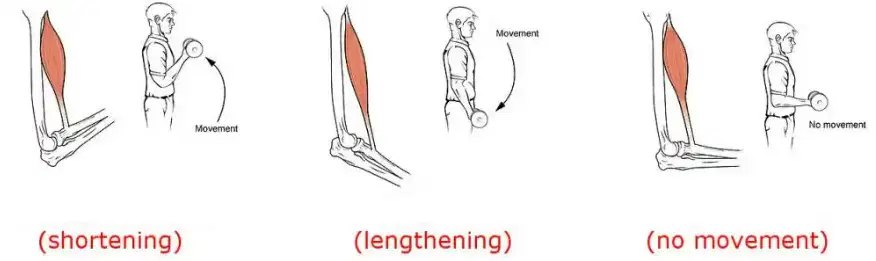
Phase of lift where the muscle shortens as it contracts
Concentric
Eccentric
Amortisation
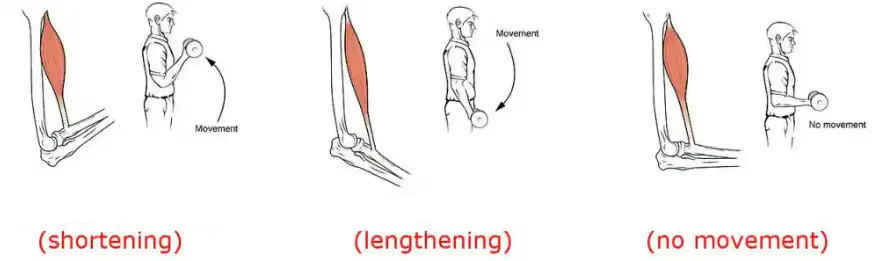
Phase of lift where the muscle lengthens as it contracts
Concentric
Eccentric
Amortisation

Divides the body into right and left; any linear forward or backward movement
Sagittal
Frontal
Transverse
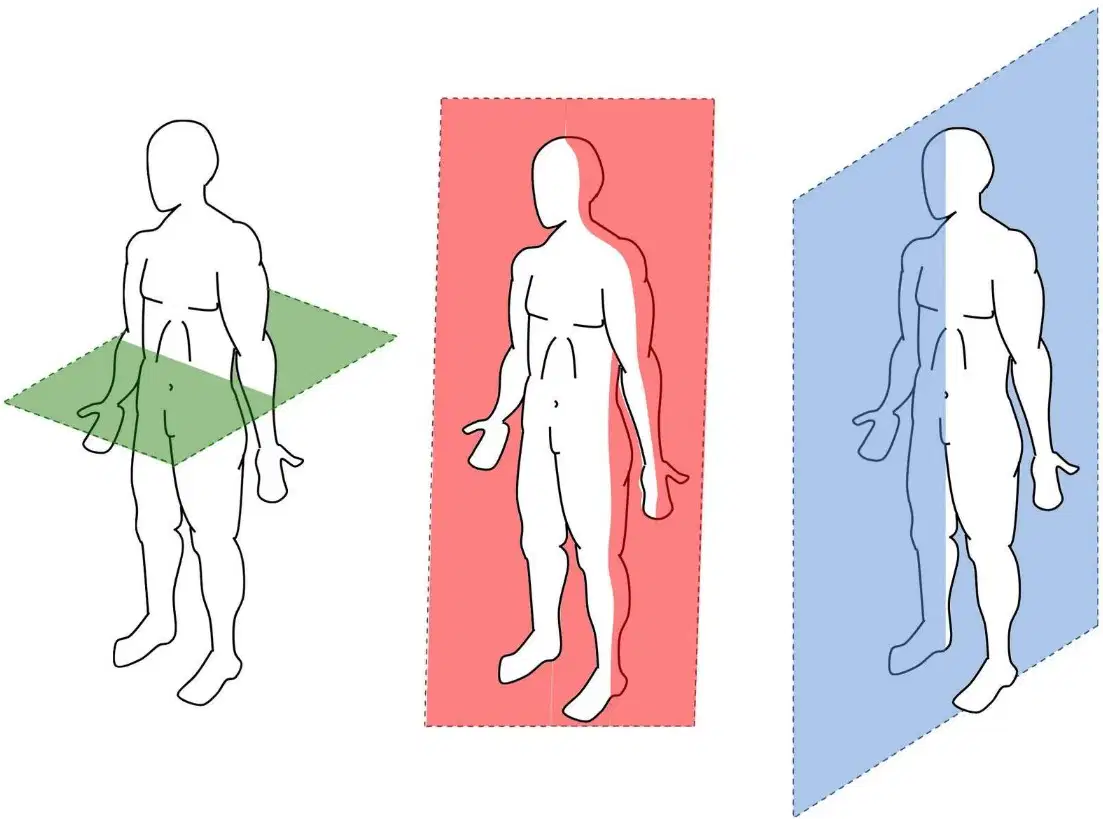
Divides the body into front and back; any lateral side to side movement
Sagittal
Frontal
Transverse
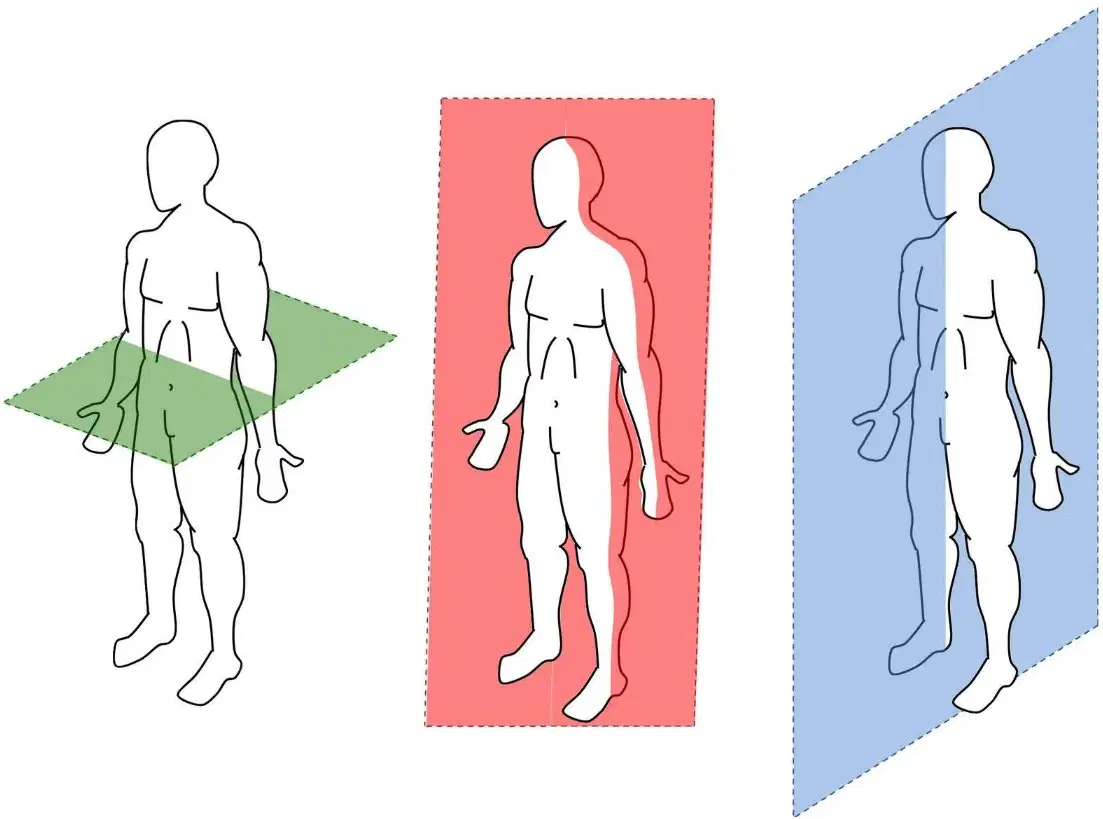
Divides the body into top and bottom, any rotational movement
Sagittal
Frontal
Transverse

