
NEW
Font size
 Worksheets
WC: Ch 12 Review - Empires in East Asia
Total questions: 22
Worksheet time: 11mins

Who was the founder of the Tang Dynasty and is often considered one of its greatest emperors?

Which female ruler, known for her political acumen, briefly held the throne during the Tang Dynasty?
Wu Zhao

Who was the Mongol leader responsible for establishing the vast Mongol Empire in the 13th century?

Which grandson of Genghis Khan ruled over the Yuan Dynasty in China and attempted to conquer Japan?

The European explorer __________ is known for his travels to the court of Kublai Khan and his detailed accounts of East Asian civilizations.

Which religion, indigenous to Japan, centers around the veneration of kami (spirits or gods) and is closely tied to the cultural identity of the Japanese people?

The magnificent temple complex __________ is a symbol of Khmer architecture and Hindu-Buddhist fusion, located in present-day Cambodia.

The medieval Japanese code of honor and ethics followed by the samurai warriors is known as:

Which dynasty ruled over Korea for several centuries and played a crucial role in the cultural exchange between China and Korea?
Koryu Dynasty

The term "Pax Mongolica" refers to:
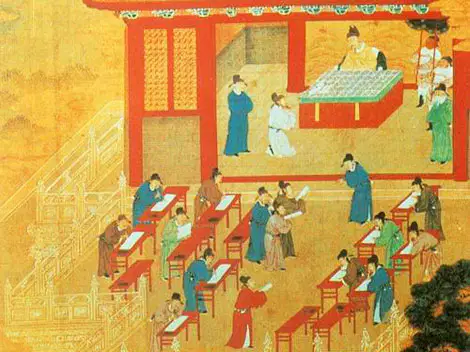
(Ch 12.1) Why was the reform of the civil service under the Tang so significant?
It favored the wealthy, allowing them to dominate the government.
It excluded commoners from participating in the civil service exams.
It diminished the importance of talent and education in gaining political power.
It shifted the focus from noble birth to meritocracy in government positions.
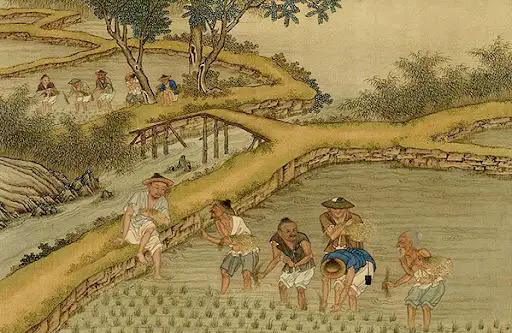
(Ch 12.1) How did changes in agriculture support other developments during the Song Dynasty?
By introducing a new type of livestock for farmers
By encouraging farmers to switch to a different crop
By distributing seedlings of fast-ripening rice to increase rice cultivation
By imposing restrictions on agricultural practices

(Ch 12.2) Why were nomads and settled peoples sometimes in conflict?
Due to a lack of resources and the need for peaceful trade
Because settled peoples often invaded nomadic territories
The nomads were envious of the settled peoples' toughness
They were tempted by the rich land and relative wealth of townspeople

(Ch 12.2) Why was terror an important weapon for Genghis Khan?
To inspire fear and force enemy cities to surrender
To establish diplomatic alliances with other empires
To gain the support of local populations
To showcase his cruelty and gain notoriety

(Ch 12.2) What happened to the Mongol Empire in the years after Genghis Khan’s death?
The Mongols expanded their conquests, reaching as far as Venice and Vienna.
The Mongols divided their empire into four khanates.
The Mongols focused their attention on conquering Japan and Southeast Asia.
The Mongols established a single, centralized empire with a new capital in Persia.

(Ch 12.3) How did Kublai Khan treat his Chinese subjects?
Kublai Khan treated his Chinese subjects with equality, integrating them into Mongol society and government.
Kublai Khan embraced Chinese customs and laws, encouraging cultural exchange between the Mongols and the Chinese.
Kublai Khan maintained a strict separation between Mongols and Chinese, with most high government posts going to Mongols or foreigners.
Kublai Khan appointed only Chinese officials to high government offices, fostering unity and collaboration.

(Ch 12.3) How did Kublai Khan encourage trade during his reign?
By imposing strict trade restrictions on foreign merchants
By establishing trade monopolies for Chinese merchants
By creating a system of tolls and tariffs on the Silk Roads
By promoting the Mongol Peace, making Central Asian caravan routes safe for trade and travel, and inviting foreign merchants

(Ch 12.4) What impact did Chinese culture have on Japan?
Japanese adopted Chinese writing, artistic styles, and government models, but eventually severed all ties with China.
Japanese rejected all aspects of Chinese culture and maintained their traditional practices.
Chinese culture had minimal influence on Japan, as they were determined to preserve their unique identity.
Chinese culture had no impact on Japan, as the Japanese imperial court decided to discontinue formal missions to the Tang Empire.

(Ch 12.4) How did feudalism develop in Japan?
The Fujiwara family strengthened the central government
Private armies set up by landowners and clan chiefs contributed to the decline of central authority
Large landowners and clan chiefs formed a coalition to resist the central government
Armed soldiers on horseback, with the support of the central government unified the region
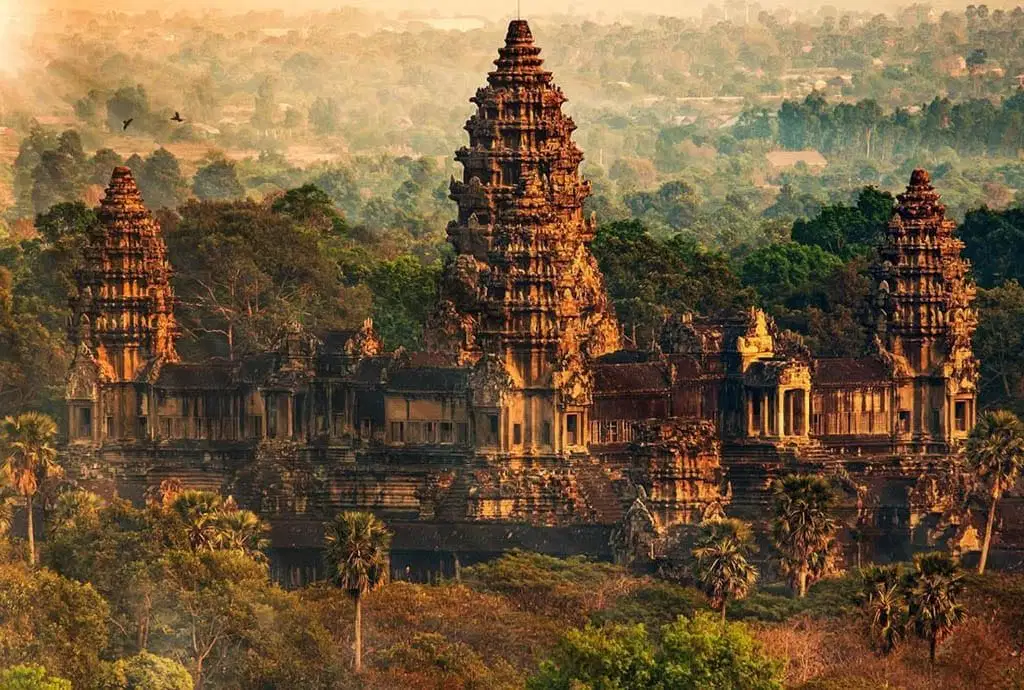
(Ch 12.5) On what was Khmer prosperity based?
Improved rice cultivation
Military conquests
Trade and commerce
Mining resources

(Ch 12.5) How did Srivijaya become wealthy and powerful?
Through agricultural innovations on the island of Java.
By constructing the Buddhist temple at Borobudur.
By dominating trade routes and taxing maritime trade.
Through military conquests in Southeast Asia.

(Ch 12.5) What was the primary reason for the overthrow of the Koryu Dynasty in 1392?
Internal power struggle among the nobility
Economic instability caused by the civil service system
Social unrest due to the lack of hereditary positions
Mongol invasion and occupation

