
NEW
Font size
 Worksheets
Enlightenment Thinkers POP Quiz
Total questions: 26
Worksheet time: 13mins
What did John Locke believe were the natural rights of every person?
life, liberty, and property
life, safety, and prosperity
happiness, liberty, and prosperity
happiness, safety, and prosperity
Who championed for civil rights and religious freedom in France, and was a notable philosopher?
Voltaire
John Locke
Marquis de Sade
Jean Jacques Rousseau
What was the Enlightenment view on women's rights according to Jean-Jacques Rousseau?
The exclusion of women from the social contract was unjust.
Women should be educated and participate equally with men in public life.
The natural rights of women were limited to the area of the home and family life.
Women should decide what is in their own interests without relying on their husbands.
Montesquieu and Rousseau had a famous disagreement. What was it about?
the role of nature in art
whether people can be truly happy
separation of church and state
how society and people are shaped
Why would people agree to give up some freedoms for law and order? What concept is this?
Method of government
Enlightenment agreement
Social Contract
US Constitution
How did the Enlightenment era transform politics and society?
It brokered a peace deal between the Catholic Church and scientists.
It initiated the scientific revolution.
It encouraged questioning rulers and demanding accountability.
It gave rulers absolute power.
What did philosophers in the Enlightenment era sprinkle into every slice of life?
government
economics
politics
reason
Who was the better monarch in transforming their country into a powerhouse: Louis XIV or Peter the Great?
Both led their countries to the brink of collapse.
Both elevated their nations to major powers.
While Louis XIV saw France's decline, Peter the Great propelled Russia into the spotlight.
Under Peter the Great, Russia faced downfall, whereas Louis XIV marked the rise of France.
How did Louis XIV and Peter the Great secure their thrones in similar ways?
Both modernized their nations.
Both focused on building formidable navies.
Both dealt with civil unrest.
Both had conflicts with the Church.
How were the absolute monarchs of Russia and France alike in their rule?
They claimed to rule by divine right, believing they were chosen by the gods!
They allowed nobles to wield significant power.
They were members of the Roman Catholic Church.
They were fans of legislative bodies making the laws.
Why did Peter the Great embark on a journey to Western Europe?
To forge alliances against a potential Chinese Empire invasion
To spread Orthodox Christianity and gain control over the Boyars
To flaunt Russia's burgeoning wealth and step onto the world stage as a major power
To soak up Western customs and industrial secrets to turbocharge Russia's economy
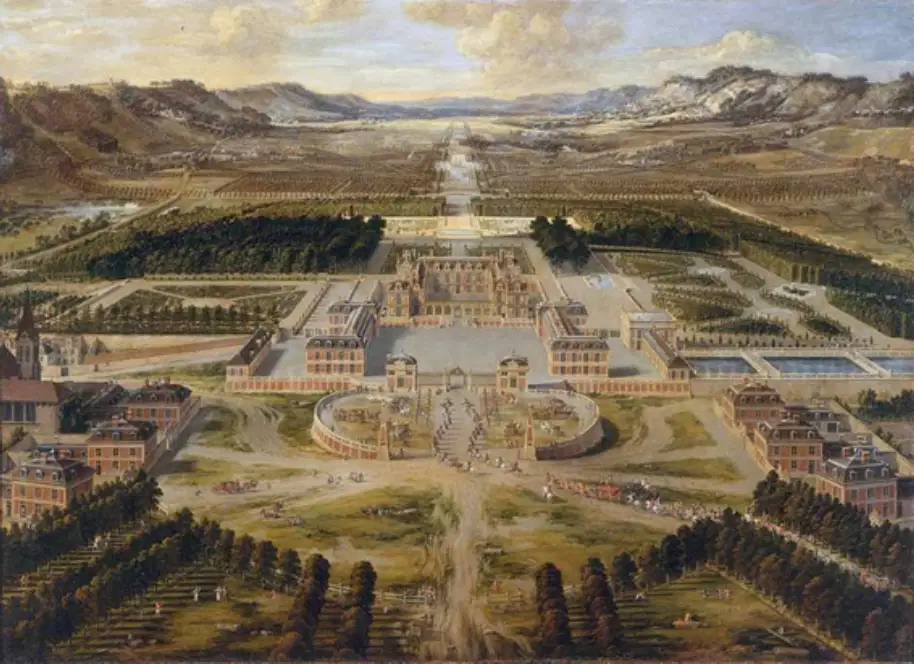
What was a result of the Palace of Versailles?
Weakened the power of the nobility in France
Helped solidify Louis XIV's absolute authority over France
Greatly increased France's national debt
All the above
Which action led to the French Revolution?
Nobles demanded higher taxes on the clergy.
Peasants and workers demanded a constitution.
The king demanded the passage of progressive laws.
The clergy demanded a greater voice in government.
How did the American Revolution influence France?
It showed that Enlightenment ideas could build a new government.
It suggested starting from scratch was necessary for a democratic government.
It reminded that monarchy was essential against revolution.
It inspired the French elite to incorporate democratic elements into their government.
What change occurred after the French Revolution and the American Revolution?
increased involvement of religious leaders in political affairs
the restoration of civil rights to all marginalized groups
increased political influence of the middle class
the restoration of the previous monarchies
What monumental change occurred in Great Britain after the Glorious Revolution and the adoption of the English Bill of Rights in 1689?
Great Britain transformed into a socialist republic
Great Britain embraced the era of a limited monarchy
Great Britain shifted gears to a direct democracy
Great Britain was ruled under an autocratic theocracy
What sparked the flames of the French Revolution?
Was it the unfair tax system, where the burden didn't fall equally on all?
Or perhaps the French government's mercantilist strategies were too successful?
Could Napoleon Bonaparte's Continental System in Europe be the culprit?
Maybe the Congress of Vienna just couldn't fix France's social woes?
Which event sparked independence movements across Latin America in the 1800s?
the Boer Wars
the Balkan Wars
the French Revolution
the Glorious Revolution
What monumental decision was made at the Tennis Court during the Estates-General meeting that changed French history?
It proclaimed France as a republic, ending the monarchy
It laid down the foundation for a new constitution for France
It paved the way for a coup d'état, starting the era of Napoleon
It marked the end of the Reign of Terror, bringing peace
Who led the first major successful slave revolt against European colonizers, making Haiti the second independent nation in the Americas?
Toussaint L'Ouverture
Jose de San Martin
Simon Bolivar
Giuseppe Garibaldi
Why is Simon Bolivar known as the Great Liberator?
He built public schools across Latin America.
He dreamed of uniting South and Central America into one nation.
He led Latin American countries to independence.
He achieved Brazil's independence without violence.
What was the main goal of the Congress of Vienna?
to establish a single union of European states
to negotiate a peace deal between Prussia and France
to create a model democratic constitution for European states to follow
to create a balance of power in Europe to forge a lasting peace
Which geographic hiccup contributed to Napoleon's downfall?
The winter campaign in Russia was a nightmare for Napoleon's army
The French army struggled with guerrilla warfare in the Peninsular War
France couldn't trade with Britain because of a blockade by the Spanish Armada
Napoleon stretched his resources trying to take Britain's territory in North America
How did Napoleon attempt to weaken England with his Continental System?
By increasing Europe's gold deposits & reducing its debts, outmaneuvering England's financial dominance
By launching secret missions to destroy English naval ports, against England's naval supremacy
By establishing new trade markets in Russia and the U.S., to outsmart England's trade networks
By blocking England’s exports to other European nations, to isolate and weaken England economically
Which was NOT a reason for Napoleon's popularity in France?
He introduced a fair tax system.
He made education accessible to all.
He promoted 'Freedom of speech and democracy for Europe!'... or did he?
His legal code valued merit over birthright.
Who was the Jacobin politician that led France during the Reign of Terror?
Napoleon Bonaparte
Maximilien Robespierre
Georges Danton
Paul Barras

