
 Worksheets
YEAR 11 MOCK REVISION SUPER QUIZ FOR 26/02/2024
Total questions: 131
Worksheet time: 1hrs 18mins


Answer as a byte
Answer as a byte
Answer as a byte
Answer as a byte
Answer as a byte
Answer as a byte

0000 0111
0000 1111
0000 1111
0100 0111
0000 1111
0001 1111
0011 1100
0011 1111
0001 0001
Bandwidth is measured by ...
megabyte rate
byte rate
bit rate
gygabyte rate
What does TCP stand for?
Transfer Control Protocol
Transmission Control Protocol
Transfer Character Protocol
Transmission Character Protocol
Which protocol is used to send packets
IP
FTP
SMTP
TCP
Which is not a layer in the TCP/IP model?
Application
Transmission
Internet
Network

To secure your intellectual property of your software you could:
a) Make sure the source code closed b) copyright protect it by making it licenced
a) Make sure the source code open b) copyright protect it by making it licenced
a) Make sure the source code closed b) copyright protect it by making it free to use


Which is more secure?
wireless networks
wired networks
SMTP is the general email protocol for sending emails between servers
True
False

Select every email protocol
IMAP
SMTP
POP3
TCP/IP
Which protocol would be most suitable if you needed to access your emails from multiple devices?
IMAP
POP3
SMTP
FTP
Defines how a system can be secured through specific rules or requirements
Access Levels
Passwords
Network Policy
Network Access Log
Select all of the physical methods of security from the list below:
Biometrics to access the computer
Biometrics to access the room the computers are stored in
Security Cameras
Account locking
Select all of the software methods of security from the list below:
Passcode to log in to the computer
Key card to access the room
Access Levels
Firewall
Which type of security measure is: Pin code to access a computer room
Software
Physical
What is Packet Switching?
Sending packets over different routes on the internet
exchanging packets from one user to another
stealing one packet and swapping another one to replace it
What is an advantage of IMAP over POP
It is quicker
It can cope with more email messages
It will synchronise all devices with the users mailbox
It has more space to store old messages
In packet switching each packet will follow the same route
True
False

Who might use a Trace-table?
A computer programmer
IT Technician
Hardware engineer
An artist
What is the purpose of using a Trace table?
Planning before writing a program
To help debug a program
Check for spelling mistakes
Understand the program more
A collection of fields, possibly of different data types, typically in a fixed number and sequence
Array
Variable
Record
Input
An array which contains further arrays. Arrays within array. This is called....
1D Array
2D Array
3D Array
List
What is a linear search algorithm?
A linear search algorithm is a sorting algorithm that arranges elements in a list or array in ascending order.
A linear search algorithm is a search algorithm that randomly selects elements from a list or array to find a match.
A linear search algorithm is a search algorithm that uses a binary tree to find a specific element in a list or array.
A linear search algorithm is a simple search algorithm that sequentially checks each element in a list or array until a match is found or the end of the list is reached.
What is a binary search algorithm?
A binary search algorithm is a search algorithm that finds the position of a target value within a sorted array by repeatedly dividing the search interval in half.
A binary search algorithm is a search algorithm that finds the position of a target value within a sorted array by starting from the middle and moving towards the ends.
A binary search algorithm is a search algorithm that finds the position of a target value within a sorted array by comparing each element one by one.
A binary search algorithm is a search algorithm that finds the position of a target value within an unsorted array by comparing each element one by one.
Decomposition
looking for similarities among and within problems
Mental processes and strategies that include: decomposition, pattern matching, abstraction, algorithms
creating step-by-step algorithms
Reducing information and detail to focus on essential characteristics.
Breaking problems into smaller, more manageable problems.
Abstraction
looking for similarities among and within problems
Mental processes and strategies that include: decomposition, pattern matching, abstraction, algorithms
creating step-by-step algorithms
Reducing information and detail to focus on essential characteristics.
Breaking problems into smaller, more manageable problems.
Spyware is best defined as software that...
Causes adverts to appear on screen.
Deletes your files
Slows your pc down.
Collects information from you and transfers it across the internet.
A trojan would typically...
hide on USB memory sticks.
be disguised as an email attachments.
be disguised as legitimate software.
spread through dodgy web links
Malware is the term used to describe mail that is phishing for personal data.
True
False
Malware is the term used to refer to a variety of hostile or intrusive software
True
False
Select ALL the malware
Worm
Trojan Horse
WAN
Virus
Which of the following is most likely to open a “back door” into your computer system through which your personal information can be harvested.
Virus
Trojan Horse
WAN
Worm
Spyware is software that gathers information about a person or organisation without their knowledge?
True
False
Which is NOT illegal
Virus
DDos
Trojan Horse
Adware
Which of the following may be created by legitimate companies such as Google and Amazon?
Virus
DDos
Trojan Horse
Adware
What most defines a computer virus?
It crashes computers
It can copy itself and spread to other computers
It can spy on what you do
It cannot be fixed

What is a Trojan?
Software that sends scam emails
Software that copies itself
Software that you think is good software but isn't
Software that hides your data and demands payment to release it

Which of these could protect your computer data? (more than one answer!)
Locking your computer away
Installing anti-virus software
Only using computers during the day
Updating your operating system software
Which of the following things can protect against malware
Regular software updates
Educating users
Firewalls
Recording keystrokes
Only using the back door
What doesn’t affect the performance of the computer
Clock Speed
Number of Cores
The number of instructions in the program
Cache Size
Firmware in which software and hardware are integrated on a circuit board is often used in what type of system?
Point of Sales System
Desktop System
Embedded System
Operating System
Which is an example of an Embedded System:
PCs
Washing Machine
Laptops
Tablets
Allows the user to compress the size of large files for easier storage sending data.
Compression Software
Antivirus Software
Computer games
presentation apllications
Secondary storage gets its name because...
It is secondary to main memory
It is mostly used in secondary schools
It is fast - things load in a second
Which one is NOT secondary storage
Hard disk
Floppy Disk
Cache
CD
Why do computers have secondary storage
Primary Storage might be full
To give another option where to save files
Main memory is volatile
Traditional hard drives and old floppy disks use magnetic storage.
True
False
CDs and SSD's (solid state drives) use optical storage
True
False
What type of software converts high level programming language code into machine code?
(a)
Which of these is not an advantage of using an IDE to write code instead of a text-editing program?
Code can be compiled/ interpreted when it is complete
Errors can be automatically fixed
Programmers can see the finished code running
Keywords can be autocompleted
A translator used to convert a low level language into machine code
Compiler
Interpreter
Assembler
Programmer
What type of language:
Is often "portable", meaning it can run on
different types of CPU?
Low Level Language
High Level Language
In which type of language can one statement represent many CPU instructions?
Low Level Language
High Level Language
Which translators are used for high-level languages?
Interpretor
Assembler
Reader
Compiler
Which programs cannot be used without their respective translator?
Interpreting programs
Assembled programs
Compiled programs
Executed programs
Is C++ high level language?
Yes
No
Maybe
Why are translators used in computers?
To convert a high or low level programming language into machine code that can be understood by a computer
To convert machine code into a programming language
To find what words mean in another language
What is a benefit of high level language?
It makes use of special hardware
It is written in shorter time
it performs a task very quickly
The mnemonic for LOAD is:
(a)

The translated source code. Often this will be machine code, but might also be an intermediate code, which has to be further translated before it can be executed.
Compiler
Mnemonic
Object code
Machine code

A program that coverts source code into machine code
Object code
Interpreter
Compiler
A translator

A translator converts high-level language source code into object code, often machine code. The source code is translated all at once and saved to be executed later.
Compiler
Interpreter
high level language
Low level language

A translator that converts high level language source code into object code, often machine code. The source code is translated and executed one line at a time.
Compiler
Interpreter
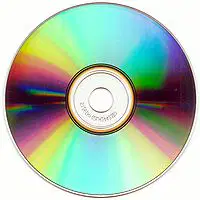
What type of secondary storage device is shown?
(a)


Name 3 chemicals released by devices as waste?
Water
Lead
Cadmium
Tin
Lead
Cadmium
Mercury
Lead
Iron
Mercury
Lead
Cadmium

