

wayground logo

Free Printable Worksheets

Font size

S
M
L
XL
Worksheets

PRELIM EXAMINATION 1B

Total questions: 57

Worksheet time: 3hrs 45mins

Name
Class
Date
1.
What does RAM stand for?
a)
Random Access Memory
b)
Random Accelerator Memory
c)
Random Authorization Memory
d)
None of the Above
2.
Which of the following is NOT a basic component of a computer system?
a)
Central Processing Unit (CPU)
b)
Random Access Memory (RAM)
c)
Input/Output devices (I/O)
d)
Internet Service Provider (ISP)
3.
What is the permanent memory built into your computer called ________?
a)
RAM
b)
ROM
c)
CD-ROM
d)
CPU
4.
Which of the following is not an input device?
a)
Keyboard
b)
Mouse
c)
Monitor
d)
Track Ball
5.
Which device allows your computer to talk to other computers over a telephone line as well as access the internet?
a)
RAM
b)
LAN CARD
c)
ROM
d)
MODEM
6.
All of the following are examples of storage devices except.
a)
Hard Disk Drive
b)
Solid State Drive
c)
CD Drive
d)
Printer
7.
The IC was invented by ___________.
a)
David Kilby
b)
Dov Frohman
c)
Jack Kilby
d)
Dov Kilby
8.
What does CPU stand for?
a)
Central Process Unit
b)
Central Processing Unit
c)
Centra Processing Unit
d)
Centre Processing Unit
9.
What is the purpose of an operating system in a computer system?
a)
To provide a user interface for interacting with the computer
b)
To manage and coordinate activities and sharing of resources on computer
c)
To store and organize files and data on the computer
d)
To provide power to the computer components
10.
The fourth generation was based on Integrated circuits.
a)
TRUE
b)
FALSE
11.
A __________ is an emerging branch in computer science, which interprets means and method of making computers think like human beings.
a)
Artificial Intelligence
b)
Cloud
c)
Block Chain
d)
None of the above
12.

In this generation computer networks, wireless technologies and the internet was used.

a)
1st
b)
2nd
c)
3rd
d)
4th
e)
5th
13.

VLSI stands for?

a)

Very Large Smooth Integration

b)

Very Large Society Integration

c)

Very Large Scale Integration

d)

Very Low Scale Integration

14.

The period of _________ generation was 1958-1963.

a)
1st
b)
2nd
c)
3rd
d)
4th
e)
5th
15.

The period of _________ generation was 1971- Present.

a)
1st
b)
2nd
c)
3rd
d)
4th
e)
5th
16.
What type of devices are computer speakers or headphones?
a)
Input Devices
b)
Output Devices
c)
Storage Devices
d)
None of the above
17.
A bar code reader is an example of ______?
a)
Input Devices
b)
Output Devices
c)
Storage Devices
d)
None of the above
18.
Which of the following is not an output device?
a)
Monitor
b)
Speaker
c)
Printer
d)
None of the Above
19.
VDU stands for ________.
a)
Visual Display Unique
b)
Video Display Unit
c)
Visual Display Unit
d)
None of the above
20.
SRAM chips use a matrix of __________transistors and no capacitors.
a)
5
b)
6
c)
7
d)
8
21.
Which device is used to generate an image on paper from the computer?
a)
Scanner
b)
Mouse
c)
Printer
d)
Monitor
22.
Computers are made up of __________ and __________?
a)
Inputs and Outputs
b)
Hardware and Software
c)
Plastic and Metal
d)
All of the above
23.
A ________ is a package of instructions that tell the computer what to do also known as an application.
a)
Output
b)
Hardware
c)
Software
d)
Input
24.
A hardware device that enables the computer to accept data is called an ___________ device.
a)
Input
b)
Output
c)
RAM
d)
ROM
25.
ROM is _______ and RAM is ___________?
a)
Temporary storage ; Permanent storage
b)
Smaller ; Larger
c)
Larger ; Smaller
d)
Permanent storage ; Temporary storage
26.

The period of _________ generation was 1946-1957.
a)
1st
b)
2nd
c)
3rd
d)
4th
e)
5th
27.
The CPU is often referred to as the______ of computer systems.
a)
brains
b)
heart
c)
backbone
d)
None of the above
28.
Where is ROM usually found inside a computer?
a)
Motherboard
b)
CPU
c)
Hard Drive
d)
All of the above
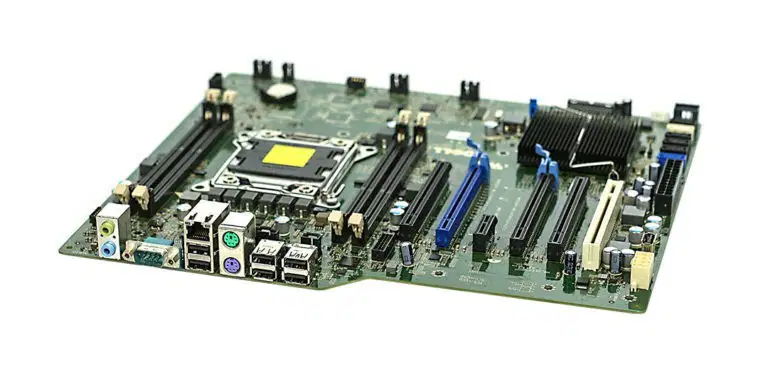
29.
What is this?
a)
CPU
b)
DVD-ROM
c)
Power Supply
d)
Motherboard
30.
What is an example of a secondary memory?
a)

ROM

b)

RAM

c)

Solid State Drive

d)

Cache Memory

31.

(TRUE OR FALSE): EEPROM is a non volatile memory chip that was invented by Dov Frohman in 1971.

(a)  

32.

(TRUE OR FALSE): MROM is read-only memory that can be modified only once by a user.

(a)  

33.

(TRUE OR FALSE): Jack Kilby is the Father of Computers.

(a)  

34.

(TRUE OR FALSE): A Memory is an electronic device that receives input, stores, or processes the input as per user instructions and provides output in desired format.

(a)  

35.

(TRUE OR FALSE): The CU perform all arithmetic operations and logical processes required to solve a computer problem.

(a)  

36.

(TRUE OR FALSE): RAM is known as TEMPORARY STORAGE

(a)  

37.

(TRUE OR FALSE): Microphone is an input device to input sound that is then stored in a digital form.

(a)  

38.

(TRUE OR FALSE): Read Only Memory is Non-Volatile.

(a)  

39.

(TRUE OR FALSE): The period of First generation was from 1959-1965.

(a)  

40.

(TRUE OR FALSE): Memory is the main circuit board of a microcomputer

(a)  

41.
Three Components of CPU
4 lines
42.
Three Types of Memory
4 lines
43.
Five Generations of Computer
4 lines
44.
Two Types of RAM
4 lines
45.
Four Types of ROM
4 lines
46.
What is the main difference between a Primary Memory and a Secondary Memory?
4 lines
47.
What is a Computer? What are the different functions of a computer?
4 lines
48.
Convert the binary number 11111010101010 to Decimal
4 lines
49.
Convert the binary number 1101010111011 to Octal
4 lines
50.
Convert the Hexadecimal number ABCF56 to Octal
4 lines
51.
Convert the Octal number 653123 to Decimal
4 lines
52.
Convert the Decimal number 972531 to Binary
4 lines
53.
Convert the Octal number 23415 to Binary
4 lines
54.
Convert the Hexadecimal number 342AD to Decimal
4 lines
55.
Convert the Decimal number 3528 to Hexadecimal
4 lines
56.
Convert the Decimal number 13465 to Binary
4 lines
57.
Convert the Binary number 111101010101 to Decimal
4 lines