
 Worksheets
Evolution quiz 1 and Phylogenetic Trees Quiz (KHAN)
Total questions: 20
Worksheet time: 38mins
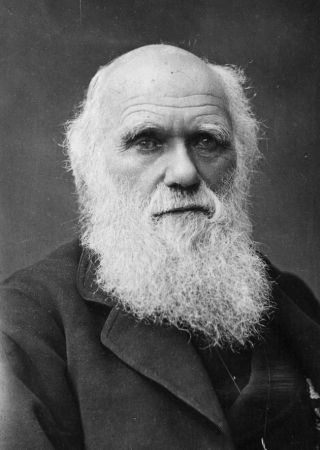
Who embarked on an epic voyage aboard the HMS Beagle, ultimately leading to the groundbreaking theory of evolution?
Charles Darwin
Mike Tyson
George Washington
Patton Manning
Ready to dive into the past? What's the ultimate purpose of piecing together a phylogenetic tree?
To embark on a quest comparing the smarts of various creatures
To turn back the clock and pinpoint the age of different species
To map out species based on their global hideouts
To unravel the web of evolutionary connections among diverse species
Ready to dive into the fascinating world of evolution? Let's start with a bang! What's the very first piece of evidence for evolution and natural selection we're discussing today?
Direct observation
Microbiology
Genetic similarity
Structural evidence
Ready to dive deep into the past? What secrets does the fossil record reveal about the history of life on Earth?
The lack of common ancestry among species
Gradual changes in species over millions of years
The immutability of species over time
The sudden appearance of modern species
Why are lungs not considered a trait for the sea bass in the example?
Because it is extinct
Because it is an outgroup
Because it has gills instead
Because it lives in water
What does 'phylogenetic' mean?
Study of fossils
Study of genes
Related to the evolutionary history of groups of organisms
Study of animal behavior
What is considered an 'outgroup' in the context of phylogenetic trees?
A species that is the most recent common ancestor
A species that shares no common traits with the others
A species that shares all traits with the others
A species that is the most genetically similar to all others
Which of the following is NOT a type of evidence for evolution mentioned?
Direct observation
Microbiological
Structural
Astrophysical
What common element do all life forms share according to the text?
fur
DNA
blood
RNA
What common trait do the bald eagle and the alligator share?
Lungs
Gizzard
Feathers
Fur
How much genetic similarity do humans have with chimpanzees according to the text?
About 75%
About 26%
About 98%
About 50%
What does 'homologous structures' refer to?
Structures with different origins but similar functions
Structures that have no similarities or functions
Structures with similar origins but different functions
Structures that are identical in different species
What evidence is suggested to refine phylogenetic trees?
Behavioral studies
Geographical distribution
Fossil records
Genetic evidence
Which of the following is an example of natural selection?
Cricket frogs prefer to sleep during the day, while red-eyed tree frogs prefer to sleep during the night.
Pesticides are sprayed in a field, resulting in an increase in crop growth and a decrease in insect population.
Rabbits with a mutation for longer, thicker fur survive an unusually cold winter, while many normal rabbits do not survive.


Which group of animals on this tree are most closely related to birds?
Saurischian dinosaurs
Ornithischian dinosaurs
Crocodiles
None of these are related to birds
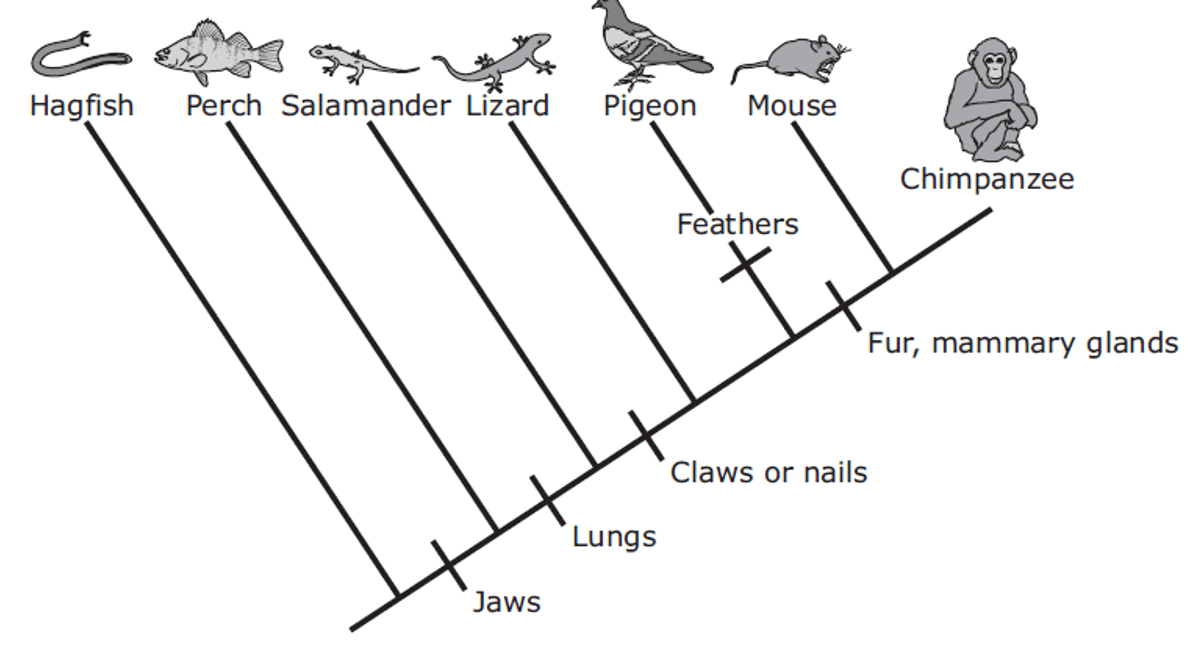
All the animals to the right of the salamander would have the common characteristic of...
Fur
Claws or nails
Lungs
Jaws
What is a Scientific Theory?
An explanation that has a conflicting evidence
An explanation that is based on observation, experimentation, and reasoning.
A Guess (or hypothesis) of how an experiment will result.
A description that is an opinion. It is okay to disagree with it.

