
Font size
 Worksheets
Test Review Atomic Structure and the Periodic Table
Total questions: 34
Worksheet time: 20mins
What is the nuclear symbol that represents 26 protons, 30 neutrons, and 23 electrons?


In terms of subatomic particles, what does Cr-54 (atomic number = 24) and Co-57 (atomic number = 27) have in common?
same number of protons in the nucleus
same number of neutrons in the nucleus
same number of electrons in the electron cloud
same number of subatomic particles in the nucleus

How many electrons does this ion have?
82
84
80
204
Which of the following could be the correct Bohr model for fluorine?


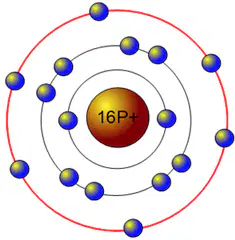
What will happen to the atom represented by the Bohr model when it ionizes? Select all that applies.
It will gain 2 electrons
It will have 8 valence electrons
It will develop a -2 charge
It will be a cation
It will be an anion

Could this element represented by the Bohr model be boron (B)?
No, Lewis structures only show valence electrons so this must be an element from group 15.
Yes, boron has 5 electrons.
A student made the statement that a nitrogen had 5 valence electrons and gained 3 electrons to form a -3 charge. Which of the statements below is a true statement?
The nitrogen atom gained 3 electrons to empty the outer shell.
The nitrogen atom gained 3 electrons in order to have 8 valence electrons.
The statement is incorrect because nitrogen would lose 5 valence electrons and develop a +5 charge.
The statement is not true because nitrogen would form a +3 charge.

Why does atomic radius increase down a group?
The number of particles in the nucleus increases.
The number of valence electrons increases.
The attractive force between the nucleus and the valence electrons decreases.
The repulsive force between the inner electrons and the valence electrons decreases.
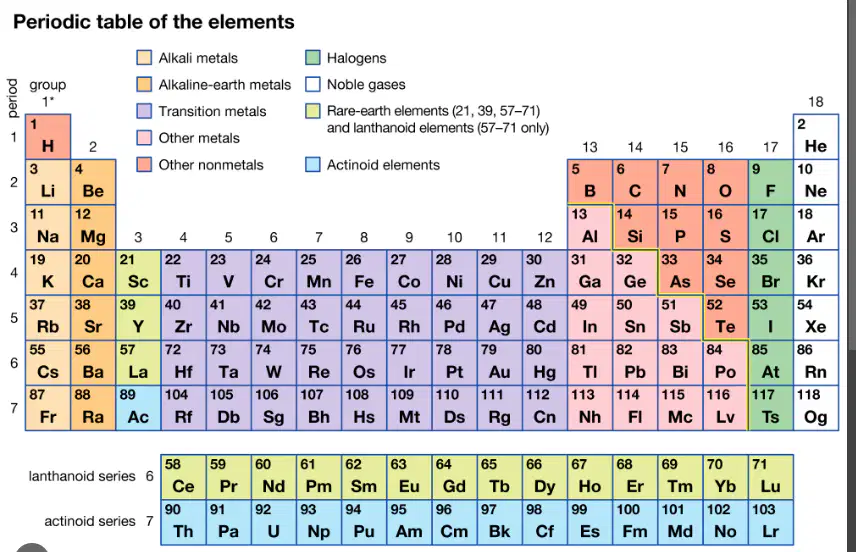
What do phosphorus, sulfur, and chlorine all have in common? Select all that apply.
They are all nonmetals
Their valence electrons are located in the 3rd energy level
They are all metals
They all have 3 valance electrons
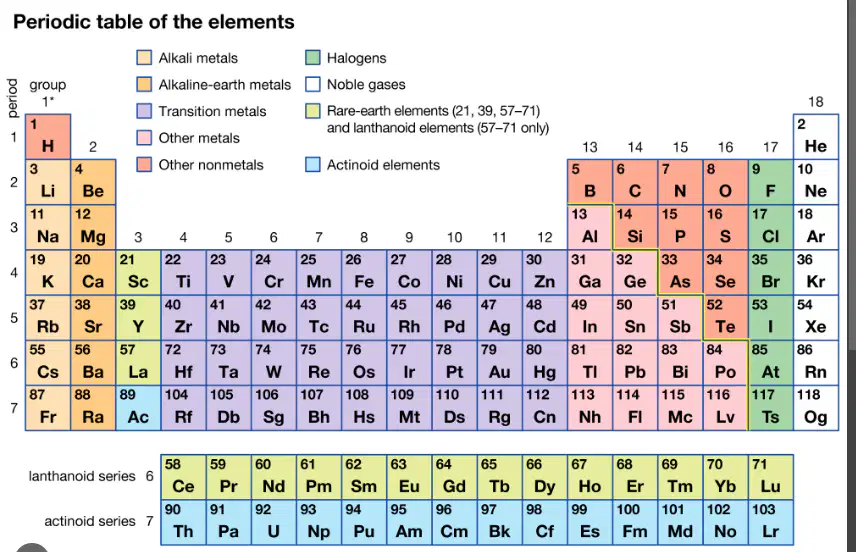
Why does electronegativity increase from left to right across the periodic table?
an increase in the size of the nucleus
an increase in the number of electrons
an increase in the number of protons
a decrease in shielding
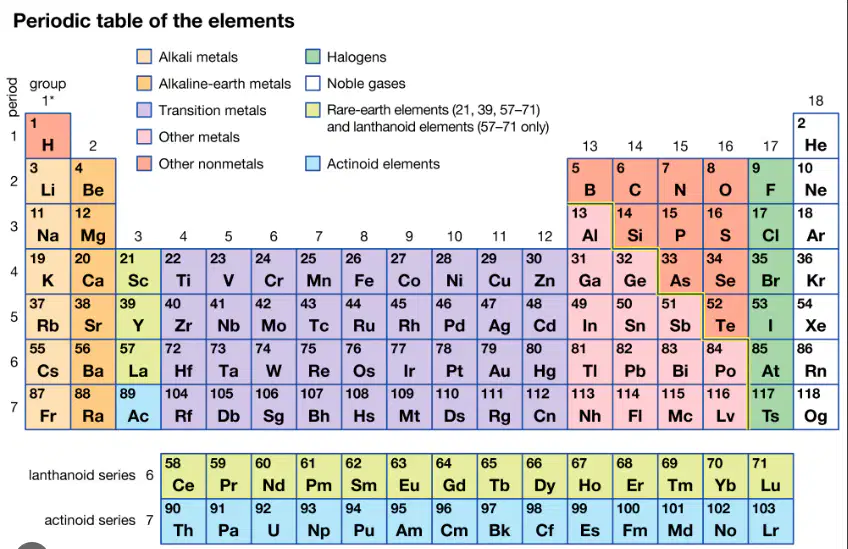
Which element has the smallest atomic radius?
Gallium (Ga)
Germanium (Ge)
Arsenic (As)
Antimony (Sb)
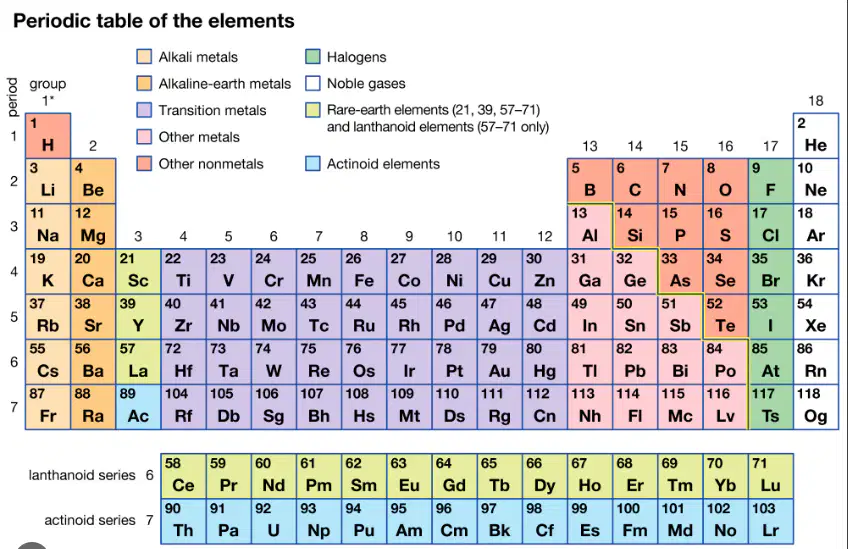
Which element has the highest electronegativity?
Gallium (Ga)
Germanium (Ge)
Arsenic (As)
Anitmony (Sb)
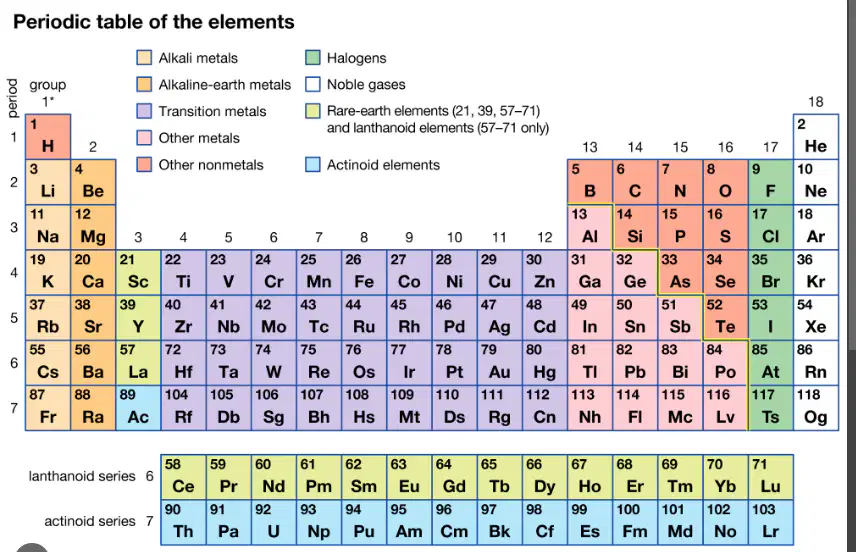
What is the trend down a group for atomic radius and electronegativity?
decreasing atomic radii and increasing electronegativity
increasing atomic radii and increasing electronegativity
decreasing atomic radii and decreasing electronegativity
increasing atomic radii and decreasing electronegativity
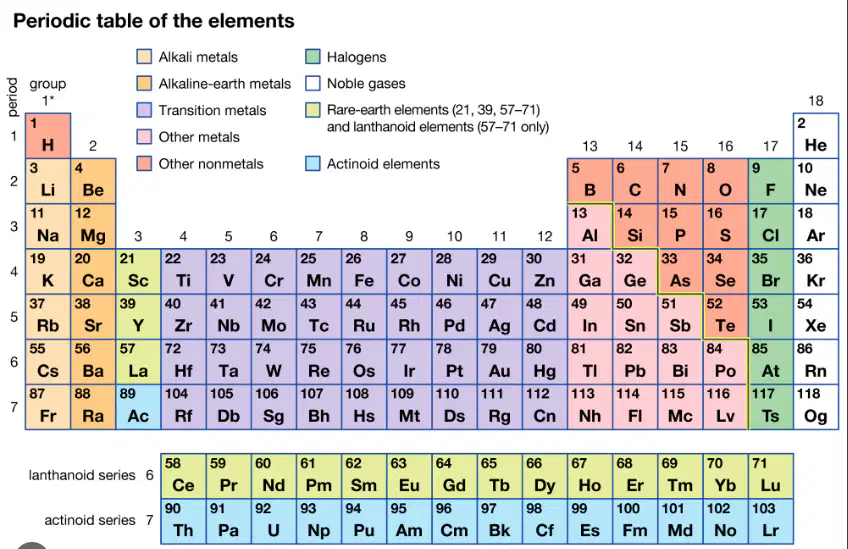
Which of the following elements do the valence electrons have the least attraction to the nucleus?
Arsenic (As)
Selenium (Se)
Bromine (Br)
Barium (Ba)

Identify the element from its electron configuration
chromium (Cr)
zinc (Zn)
silicon (Si)
chlorine (Cl)
How many significant figures does the following number have?
0.00403260
(a)
Perform the following calculation and round to the correct number of significant figures:
4.27 x 3.626 =
(a)
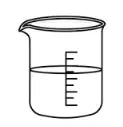
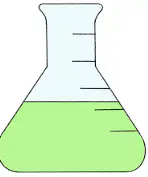
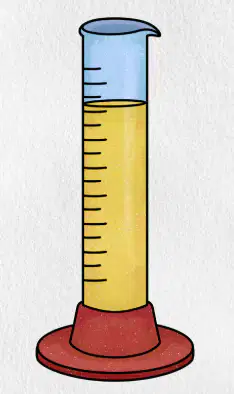
What is the most appropriate tool for measuring 25.0 mL of water?
In which group do the atoms have one valence electron?
alkali metals
alkaline earth metals
halogens
noble gases
What is the maximum number of electrons that can fit in the third energy level?
16
8
18
32
Which element is in group 13 period 4 on the periodic table?
Indium (In)
Thallium (Tl)
Gallium (Ga)
Aluminum (Al)

Provide the missing terms in the following equation:
X = ____ Y = ____ Z = ____
(a)
Which object is most likely the youngest?
Rock (5% radioactive material remains)
Bone (25% radioactive material remains)
Shell (52% radioactive material remains)
Wood (38% radioactive material remains)
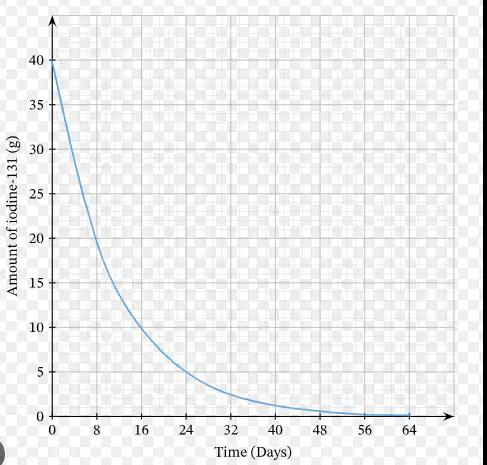
Based on the graph, how many half-lives have passed when there is only 10 g of I-131 remaining?
1 half life
2 half lives
3 half lives
4 half lives

What type of radiation is being released in this process?
alpha
beta
gamma
positron
What element has 33 protons?
(a)
How does the size of a cation different than the metal atoms that they formed from?
Metal atoms gain electrons when they ionize and become smaller
Metal atoms lose electrons and become smaller
Metal atoms gain electrons and become larger
Metal atoms gain electrons and become smaller
What is the formula for the compound that forms between potassium ions (K) and oxygen ions (O)
(a)
What is the formula for the compound that forms between calcium and phosphorus?
C3P
CP3
Ca3P2
Ca2P3
What do elements in group 17 all have in common?
They have 7 valence electrons
They are all gases at room temperature
They exist as cations in nature
They all exist as single atoms
One example of an ionic compound is _____.
O2
H2O
HCl
NaCl
The compound formed between element X and nitrogen has the formula X3P. Which element would X most likely represent?
Al
K
Mg
B
What type of bond would form between Mg and O?
Ionic
Covalent
Metallic
hydrogen bond

What type of radiation is representedby particle X?
alpha decay
beta decay
gamma decay
positron emission

