
 Worksheets
Somatosensory Neurophysiology Active learning session
Total questions: 8
Worksheet time: 4mins
What is the most prevalent type of somatosensory dysfunction that men and women over 70 suffer from?
Visual Impairment
Hearing Impairment
Balance Impairment
Loss of feeling in the feet
What type of neuropathy does patient C.T. demonstrate?
mononeuropathy
autonomic neuropathy
peripheral neuropathy
Radiculoplexus neuropathy

Sensory neuropathy is often classified as "small fiber" or "large fiber" neuropathy. Based on patient CT's normal pain/temperature sensations, but impaired vibratory sensation, which fibers are most likely damaged?
Small fiber neuropathy
Large fiber neuropathy
Both large and small fiber neuropathy
Don't know.

You conduct the grating orientation task on patient C.T.'s toes. Compared with a non-neuropathy patient, you would expect patient C.T.'s grating orientation discrimination THRESHOLD to be
Increased
Decreased
Stay the same
What is the grating orientation task?

Diabetic neuropathy most commonly occurs via demyelination of the compound axons. Which result would you expect from the nerve conduction test compared with a non-neuropathy patient?
Faster conduction velocity (CV)
Decreased amplitude of action potential
Slower conduction velocity (CV)
Increased amplitude of action potential
Patient CT has suffered a laceration on his heel. What change in the neurogenic inflammatory response would you expect compared with a non-diabetic patient?
Increased antidromic reflex
Increased CGRP-induced vasodilation
Increased SP-induced plasma extravasation
Impaired antidromic reflex
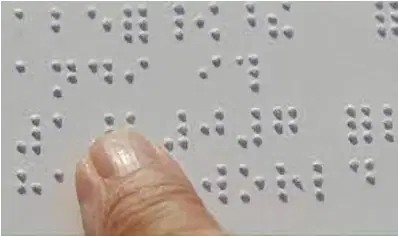
What is a likely cause of the superior spatial acuity in the fingertip of a blind patient?
Increased (larger) receptive field size.
lesion of the visual cortex
expanded area of cortical representation of the fingertip.
Slower conduction velocity of A-beta fibers innervating the fingers.
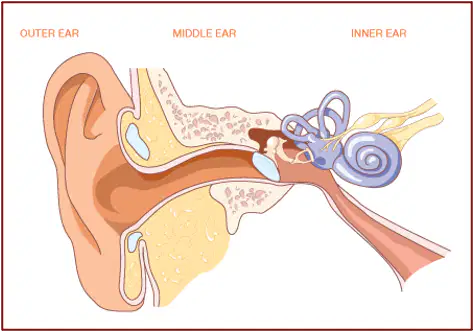
In this 5 year old patient, a clear ear canal and a normal-appearing and functioning tympanic membrane suggests the type of hearing loss is likely
Conductive
Sensorineural
Mixed hearing loss
presbycusis

