
 Worksheets
SPLE Structural Quiz 1
Total questions: 20
Worksheet time: 15mins
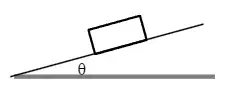
The steepest angle at which a sloping surface formed of a particular loose material is stable. It varies locally according to the mechanics and strength.
Angle of repose
Angle of friction
Acute angle
300 angle
It is the SI unit of a force required to give a mass of 1 kg an acceleration of 1 m/s2 and is equivalent to 100,000 dynes
Pascal or Pa
Load
Mass
Newton or N
It is the strength of the structure that resists the external applied forces. It is also the pressure or tension exerted on a material object. NSCP defines it as force per unit area
Hardness
Durability
Stress
Rigidity
What stress is developed when the force applied tends to shorten the structure
Axial
Shear
Compressive
Flexural
A hinge support has two reaction components for 2 dimensional axis; how may reaction components for 3-dimensional axis.
1
2
3
4
The distance between two structural supports of a roof truss is called span length. What do you call the spacing between trusses
Effective length
clear distance
Span Length
Bay length
Why is it the long-spanned trusses are cambered
For longer life span
Aesthetics design to look good
To minimize or prevent deflection
NSCP requirement
These structure are generally compressed, as such, they are considered "compression members"
Truss members
Beams
Columns
Footings
The angle between the total reaction and the normal force when limiting friction is acting is called?
angle of friction
Angle of repose
Angle of contact
Coefficient of friction
Newton (N) is the SI unit of Force and was named after Isaac Newton in recognition of his contributions to the field of Mechanics. It is denoted by N and is expressed in
kg. m2/s2
kg.m/s2
kg.m/s
kg.m2/s
A type of stress developed when the force applied tends to elongate the structure.
Axial stress
Flexural stress
Shear stress
Tensile stress
None of the above
The deformation of a material from stress. It is simply a ratio of the change in length to the original length.
Strain
Elongation
Tensile Stress
Deflection
This Law states that “the stress is proportional to strain”.
Law of Supply and Demand
Law of Gravity
Pascal’s law
Hooke’s law
The distance between two structural supports is called:
Bay Length
Span Length
Overhang
Development length
What is the purpose of the truss?
Acts as rain shield
Aesthetics
Supports roofing materials & ceiling loads
None of the above
The _____ oof a body is the point where there is equal volume on all sides. For a solid body made from a single material it is the center of its mass
Centroid
Plate Center
Moment Center
middle
For a force system to be in equilibrium, the algebraic sum of acting and reacting forces must be:
100%
maximum
minimum
zero
They are forces whose lines of action meet at a common point
Applied Force
Parallel Force
Concurrent forces
Couple
Law of equilibrium condition: " For every action, There is an equal and opposite reaction."
Newton’s Third Law of Motion
Pascal’s Law
Varignon’s Theorem
Law of Supply and Demand
It is the ratio of the stress in a body to the corresponding strain (as in bulk modulus and shear modulus). It is also called Young's modulus.
Elastic Limit
Modulus of Elasticity
Yield Point
Proportional Limit

