
NEW
Font size
 Worksheets
Supply side policy
Total questions: 12
Worksheet time: 6mins
What would be classified as a supply-side policy measure?
a law to alter the power of trade unions
a reduction in the government’s fiscal deficit
an open market sale of securities
the imposition of a tariff on imported goods
What can be considered an expansionary supply-side policy?
an increase in government expenditure on training
an increase in sales tax
an increase in the rate of interest
an increase (revaluation) of the exchange rate
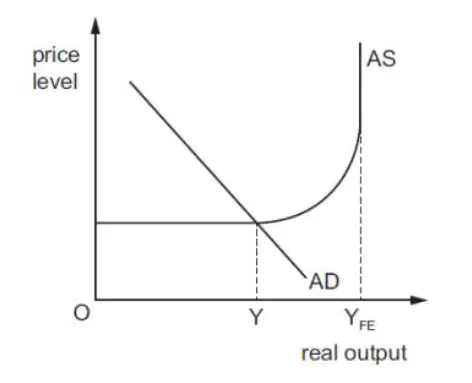
An economy has an equilibrium level of real output Y, but wishes to move towards its full employment level of real output YFE. Which combination of policy measures is most likely to achieve this wish without high inflation?
decreasing interest rates and raising investment in new technology
decreasing the money supply and raising corporation tax rates
increasing interest rates and raising income tax thresholds
increasing the money supply and raising welfare benefit payment
What is the best example of an expansionary supply-side policy?
the Argentinan central bank’s decision to cut the interest rate in 2018.
the US president’s plan to cut income tax rates in 2017.
the UK government plan to build 500 new schools by 2020
the Chinese government’s decision to devalue their currency by almost 7% in 2016.
To encourage people to work, a government increases the minimum income level at which people start to pay income tax. Which types of macroeconomic policy are being followed here?
fiscal and supply side policy
monetary and supply side policy
fiscal, monetary and supply side policy
fiscal and monetary policy
Supply side policies can lead to
higher economic growth and lower inflation.
higher economic growth and higher inflation.
lower economic growth and lower inflation.
lower economic growth and higher inflation.
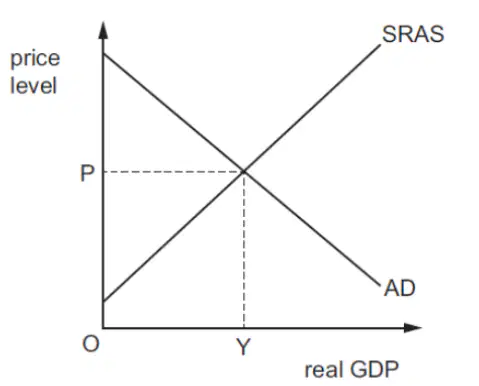
An economy is currently in the position PY shown on the diagram. which short-run effects is government spending on education likely to have on unemployment and inflation?
Unemployment: Fall;
Inflation: Fall
Unemployment: Fall;
Inflation: Rise
Unemployment: Rise
Inflation: Fall
Unemployment: Rise
Inflation: Rise
Privatization involves
the sale of private businesses to the public sector
the sale of public sector businesses to the private sector
the production of public goods by the private sector
the sale of public goods by the private sector
Which of the following supply-side policies is less likely to have demand-side effects?
reducing unemployment benefits
reducing labour union power
provision of infrastructure
industrial policies
A drawback of most supply-side policies is that they:
increase unemployment
increase inflation
often take effect ater a long time
have opportunity costs of government spending
What is privatization and how does it relate to supply side policy?
Privatization results in higher taxes and less market freedom
Privatization has no impact on competition and innovation
Privatization promotes competition, efficiency, and innovation in the market.
Privatization leads to government control and inefficiency
Explain the concept of deregulation and how it can impact the economy.
Deregulation has no impact on the economy
Deregulation only benefits large corporations
Deregulation can impact the economy by promoting competition, reducing barriers to entry for new businesses, and potentially leading to lower prices for consumers.
Deregulation leads to higher prices for consumers

