
 Worksheets
Algebra EOC Vocabulary
Total questions: 89
Worksheet time: 2hrs 7mins
(x does NOT repeat)
is in what form?
y = mx + b
Who is the slope?
x
m
b

f(x) means
x first
f times x
function notation
no clue
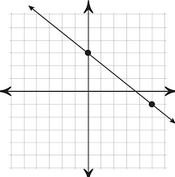


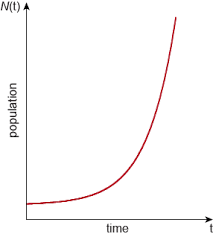

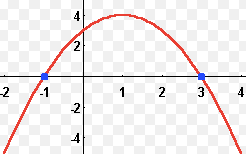
solutions
If the graph of a quadratic opens down, which of the following must be true?
y= -ax2
y=ax2


The point in which a graph hits the x-axis is know as the _____
Solution
x-intercept
Root
All answers are correct
Zeros
An equation that can be written in the form y = ax2 + bx + c
Quadratic equation
MInimum
Linear equation
Maximum
Vertex (x, y)
Who is the maximum?
x
y
Vertex (x, y)
Who is the minimum?
x
y
Vertex (x, y)
Who is the axis of symmetry?
x
y
The highest or lowest POINT on the parabola
Parabola
Domain
Vertex
Range
All possible x-values
Domain
Range
Parabola
Vertex
All possible y-values
Domain
Range
Parabola
Vertex
the highest point of the quadratic function
Maximum
Minimum
Parabola
Vertex
the lowest point of the quadratic function
Maximum
Minimum
Parabola
Vertex
Exponential growth is when...
The rate is bigger than one
The rate is smaller than one
The initial value is positive
The initial value is negative
Exponential decay is when...
The rate is bigger than one
The rate is smaller than one
The initial value is positive
The initial value is negative
The problem asks to solve for the zeros/solutions/roots. What else is this asking for...
X values
Y values
Me to cry
Distribute and square everything
How do you find slope with 2 points?
Desmos
y=mx+b
Desmos
y1~mx1+b

Is this VUX or HOY?
HOY
VUX
Is this y= or x=?
x=
y=

This is an example of:
Slope-Intercept Form
Point-Slope Form
Standard Form


Identify the slope as positive or negative.
positive
negative
y=x2 would create a ——- shaped graph
Linear
Exponential
QuadratIc
An answer that looked like 6<x<20 would be representing
The range values
The domain Values
In the following problem, 4x2 − 27x + 8 The value of “b” is what?
4
-27
8
Batman
which answer would describe the range of this parabola
-3<x<1
y<4
y>4
all real numbers
Domain for a parabola is ALWAYS?
-3<x<1
All Real Numbers
y>4
whats Range

which equation best fits this graph
y=ax
y=a2
y=mx+b
y=∣x∣
Along comes another long ridiculous word problem asking what the maximum height of another random object. What do you do?!?
Cry and call mommy
Find the x value of the vertex
Find the y value of the vertex
Find the roots/solutions

What is the solution to this system?
(1,3)
(0,2)
(0,6)
what is a solution?

What correlation does this represent
Strong positive
Strong negative
Weak positive
No Correlation
How do you solve Systems of Equations?
Menu 3 1, x
y1~mx1+b
Matrix

What is the horizontal asymptote for the function f(x)?
y=3
y=-3
y=0
What is the horizontal asymptote for the function g(x)?
y=3
y=-3
y=0
What is the horizontal asymptote for the function h(x)?
y=3
y=-3
y=0
How do you read the Domain?
Lowest to Highest
Left to Right
How do you read the Range?
Lowest to Highest
Left to Right
What best represents slope? Select that all that apply.
x
rate of change
rise over run
m
What is the b in y=mx+b?
the y-intercept
the initial value
slope
y
How do you solve equations?
For example, 3x+5=8x-2
Menu 3 1, X
change the x's and the y's to any other variable and change the = to ~
Menu 3 2
Matrix

What is the "a" in the exponential function?
rate
initial value
multiplier
starting point
What is the "b" in the exponential function?
rate
initial value
multiplier
starting point

What does the dashed line mean?
asymptote
HOY
axis of symmetry
slope
When you see three numbers, what do you do?
Rule of 3
Proportions
multiply the 3 numbers
Add the three numbers
y=120(1.86)^x
Decay
Growth
y=120(1.86)^x
Who is the initial value?
120
1.86
y=120(1.86)^x
Who is the rate?
120
1.86
y=120(0.05)^x
Who is the rate?
0.05
120
y=120(0.05)^x
Growth or Decay?
Decay
Growth

This only works for...


This only works for...
Quadratics
Lines
Exponentials

How do you do this in Desmos?


How do you convert 2.5 as a fraction?
Menu 31, x
Menu 1 5
Menu 6 1
Menu 2 2 Enter

How do you graph it on TI?


Solid line or dashed line?
Dashed
Solid

Solid line or dashed?
Solid
Dashed
For every input (x), there's only one output (y) is known as ______.
(x's cannot repeat)
Function
Domain
Range
Vertical Line Test

What is the equation of the horizontal asymptote for following exponential function?
y = -4
y > -4
y < -4
(0, -3)

What is the equation of the horizontal asymptote for following exponential function?
y = 1
y = 2
y > 1
(0, 2)
Is this an exponential growth or decay function?
f(x)=18(1.04)x
growth
decay
Who is the initial value?
f(x)=18(1.04)x
1.04
18

What is the asymptote of the function? g(x)=5(21)x
y=∞
x=0
y=0
x=−∞
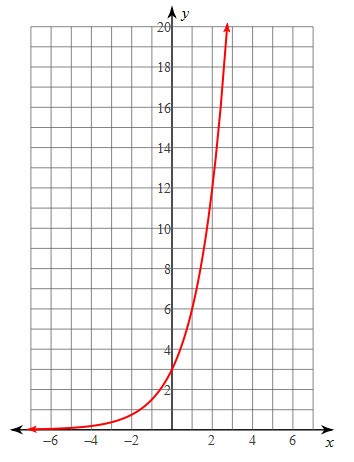

What is the vertex form of a quadratic function?
f(x) = 2a(x-h)2 + k
f(x) = a(x-h)2 + k
f(x) = (x+h)2 + k
f(x) = a(x-h) - k
Identify the vertex of f(x) = -2(x+1)2 + 3
(h,k)
(3, 1)
(-1,-3)
(-1,3)

