
 Worksheets
Tutorials- Midterm Review
Total questions: 15
Worksheet time: 8mins
An advertisement for a health supplement for dogs claims to build lean muscle and provide energy. Which two biomolecules must the supplement contain to provide these benefits?
Carbohydrates and Lipids
Proteins and Carbohydrates
Nucleic Acids and Carbohydrates
Lipids and Nucleic Acids
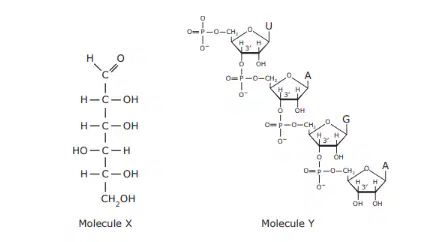
Which of the following best describes these biomolecules?
Molecule X and Molecule Y are both carbohydrates.
Molecule X is a nucleic acid and Molecule Y is a carbohydrate.
Molecule X and Molecule Y are both nucleic acids.
Molecule X is a carbohydrate and Molecule Y is a nucleic acid.
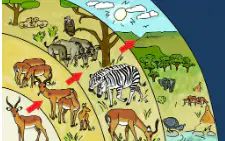
What is the order of the levels of organization shown in the image above?
organ system →community→ecosystem→population
organism→population→community→ecosystem
organ→population→organism→ecosystem
population→organism→ecosystem→community
What are the monomers of proteins?
monosaccharides
glycerol and fatty acids
nucleotides
amimo acids
Macromolecules are formed via
Hydrolysis- the adding of H20
Dehydration Synthesis- the removal of H20
Enzymes are proteins that have a 3D shape that is "specific" to a particular SUBSTRATE. Environmental conditions can change the shape of the protein. What is the most likely result if the shape of the enzyme changes?
The substrate will change its shape to match the enzyme.
The enzyme will be able to bind to more diverse substrates than before.
The enzyme will no longer be able to catalyze the reaction with the substrate.
The products made from the enzyme and the substrate will be changed.
Which statement BEST describes how enzymes affect the speed of a metabolic reaction?
Enzymes increase the concentration of reactants, which increases the speed of the reaction.
Enzymes prevent products from being converted back into reactants, which decreases the speed of the reaction.
Enzymes decrease the energy needed to start a reaction, which increases the speed of the reaction.
Enzymes replace the reactants in a chemical reaction, which decreases the speed of the reaction.
For an enzyme to be able to catalyze a reaction, the active site must
be occupied by an inhibitor.
cause the enzyme to be destroyed in the reaction.
increase the activation energy level.
have a complimentary shape to the substrate.
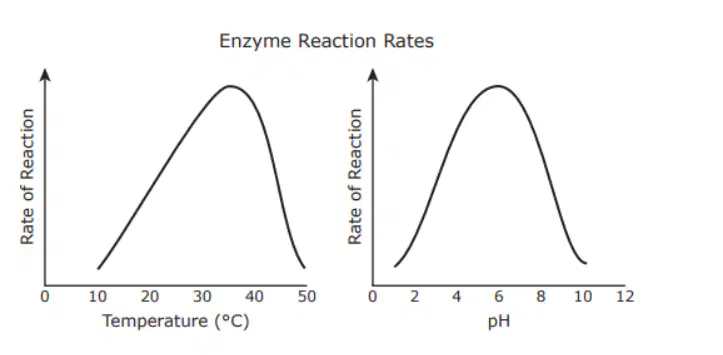
Based on the data, this enzyme functions best at what temperature and pH?
Temperature of 50°C and a pH of 10
Temperature of 40°C and a pH of 8
Temperture of 27°C and a pH of 4
Temperature of 37°C and a pH of 6
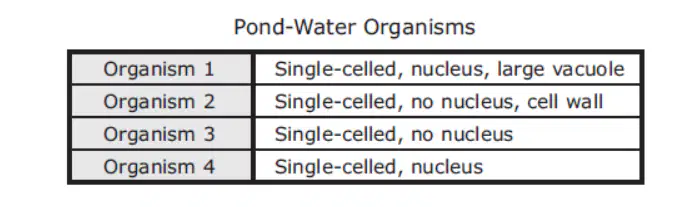
A student identified the following characterisitcs of four organisms found in a sample of pond water. Based on the observations, which organisms belong to the taxonomic group of BACTERIA?
Organisms 2 and 3
Organisms 1 and 2
Organisms 3 and 4
Organisms 1 and 4
Viruses can be transmitted through air, water, food, insect bites and direct skin contact. Once a virus gains entry to the body, it invades a host cell in order to
metabolize host proteins and grow.
synthesize antibodies for defense.
access cellular processes for replication.
deactivate the host cell's defenses.
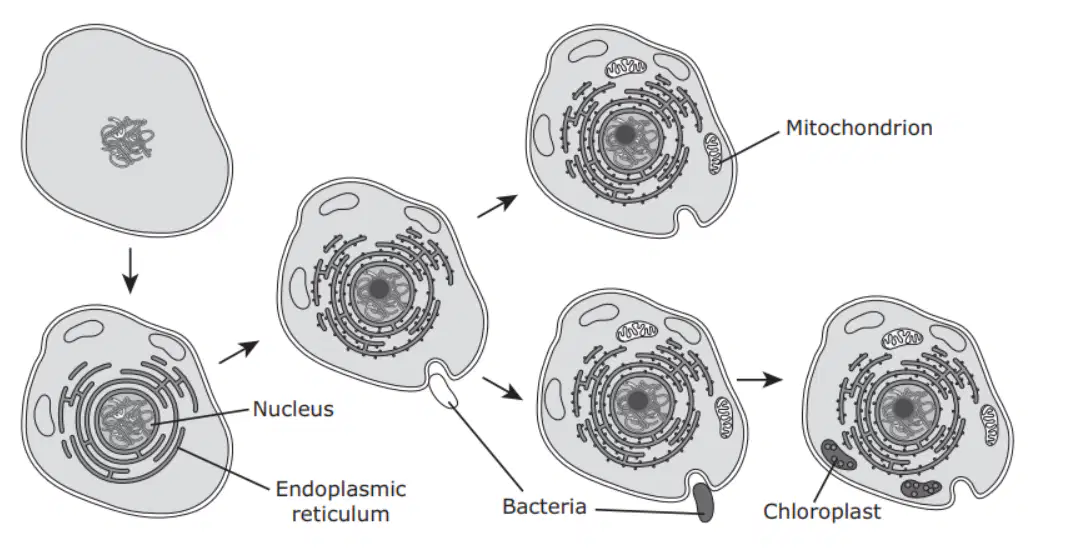
Which theory is represented in diagram?
The theory that all living organisms are made of cells.
The theory that all living organisms share the same basic genetic components.
The theory that complex cells evolved after primitive cells were engulfed and continued functioning.
The theory that organisms function best when their internal conditions are maintained within narrow limits.
Unlike an eukaryotic cell, a prokaryotic cell lacks
ribosomes and energy propelled flagella.
DNA and cytoplasm.
a nucleus and membrane bound organelles.
a cell wall and cell membrane.
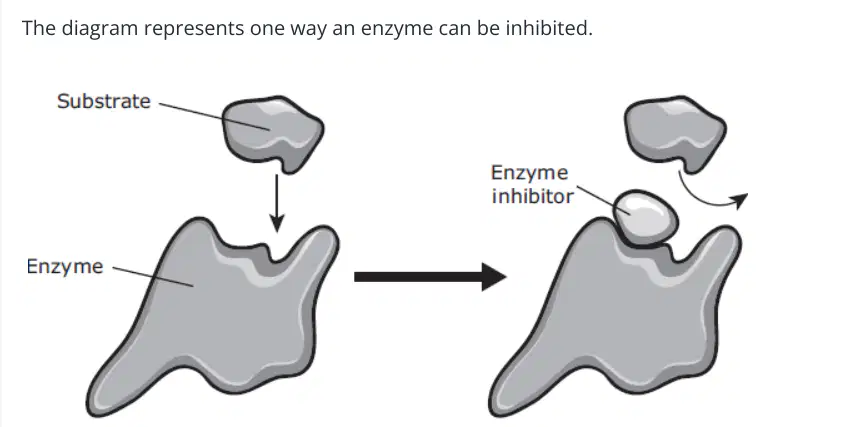
Which statement explains the effect of an inhibitor on an enzyme?
A substrate will be able to bond with the enzyme.
The enzyme will likely be attacked by immune cells.
A substrate will be unable to attach to the enzyme.
The enzyme will be unable to produce more enzymes.
Which of the following includes abiotic factors?
oak tree, water, oxygen and soil
fish, grass, water and carbon dioxide
oxygen, water, nitrogen and carbohydrates
decomposers, scavengers, oxygen and krill

