Worksheets
Characteristics of Living things
Total questions: 90
Worksheet time: 1hrs 11mins
Which of the following is a term used to describe all the chemical reactions that take place in a living thing?
A plant growing towards a light source is an example of which of the following?
attracting a mate
destroying infectious germs
responding to a stimuli
obtaining moisture from the air
Infants will often smile when they hear a parent’s voice. In this situation, the parent’s voice is considered
stimulus
response
adaptation
resource
Identify all of the following that are living.
Volcano
Tree
Sun
Fungus
Identify all of the following that are nonliving.
Rock
Oxygen
Bacteria
Battery
Which of the following is an example of homeostasis?
adapting to your environment
maintaining an appropriate respiration rate
the sum of all of your chemical reactions
being composed of more than one cell

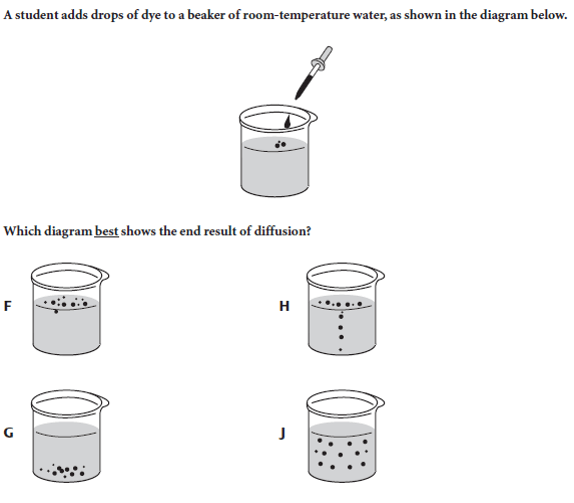
Which characteristic of living things is represented in the picture?
Share similar chemicals
Grows and develops
Responds to stimuli
Evolves (as a population)

Which characteristic of living things is represented in the picture?
Respond to stimuli
Grow and develop
Evolution
Made of cells

Which characteristic is shown in the image?
Organisms grow and develop
Organisms react to stimuli
Organisms can adapt
Organisms use and obtain energy
Organisms are made up of cells

Which characteristic is shown in the image?
Organisms reproduce
Organisms react to stimuli
Organisms can adapt
Organisms use and obtain energy
Organisms are made up of cells
A process where an organism becomes larger (bigger in size)
Growth
Development
Stimulus
Response
Read the following statement and choose which characteristic of living things it describes. A bear hibernates when it's cold.
Obtain and Use Resources
Respond to a Stimulus
Grow and Develop
Reproduce
Read the following statement and choose which characteristic of living things it describes. A caterpillar eats the leaves of a plant.
Obtain and use energy
Respond to a Stimulus
Grow and Develop
Reproduce
Which statement is a part of the cell theory?
eukaryotic cells are complex
all cells come from preexisting cells
bacteria are prokaryotic cells
humans are multicellular
Rocks are not living because
they never move
they aren't needed for humans
they are not made of cells
they don't break down
What do living things use energy for?
To do things like grow, heal and digest.
To find friends
To succeed in school
To reach their goal
What is an organism whose entire body is only 1 cell known as?
Multicellular
Unicellular
Which of the following is a term used to describe all the chemical reactions that take place in a living thing?
A plant growing towards a light source is an example of which of the following?
attracting a mate
destroying infectious germs
responding to a stimuli
obtaining moisture from the air
this organelle makes ATP.
chloroplast
mitochondria
ribosome
nucleolus
Which of the following is an example of homeostasis?
adapting to your environment
maintaining an appropriate respiration rate
the sum of all of your chemical reactions
being composed of more than one cell
What is the correct hierarchy of cells?
tissues-cells-organ systems-organs-organisms
cell-organisms-tissues-organs-organ systems
cells-tissues-organs-organ systems-organisms
organs-tissues-cells-organ systems-organisms


Infants will often smile when they hear a parent’s voice. In this situation, the parent’s voice is considered
stimulus
response
adaptation
resource

Stores food and water like a refrigerator for the cell
Chloroplast
Vacuole
Lysosome
Cytoplasm
What is the function of the mitochondria?
Structure that manufactures ribosomes
Structures that converts nutrients to energy
Stack of membranes that packages chemicals
Structure that contains DNA and directs the cell
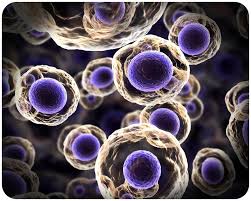

This holds water, food, or waste.
lysosome
vacuole
cell wall
cell membrane
Organelles are suspended in this.
nucleus
cytoplasm
golgi body
ribosome
The cell membrane is located...
underneath the cell wall of a plant cell.
outside of the cell wall of a plant cell.
This is responsible for removing waste and dead parts from the cell.
mitochondria
lysosome
vacuole
cell wall