
 Worksheets
revision Year 11
Total questions: 123
Worksheet time: 7hrs 26mins
Energy is the ability to cause _________.
change
problems
channels
solutions
Energy is measured in _________.
joules
kilometers
newtons
meters per second
When you ride a playground swing, your potential energy is greatest at the _________ point.
highest
lowest
mid
far
__________ energy travels from the Sun to Earth and is transformed into chemical energy by plants.
Chemical
Solar
Mechanical
Kinetic
As mass decreases, kinetic energy ________.
decreases
increases
stays the same
is not related
Lowering an object __________ its potential energy.
decreases
increases
does not change
doubles
The sum of potential and kinetic energy in a system is called the ________ energy.
mechanical
solar
chemical
electrical
Energy from the Sun and energy from food are just different forms of the same thing.
True
False
Carbohydrates and fats provide our bodies with energy in the form of ________.
calories
cookies
newtons
meters
The kinetic energy of an object increases as its ____ increases.
gravitational energy
heat energy
potential energy
velocity
Increasing the speed of an object ____ its potential energy.
changes
decreases
does not affect
increases
The SI unit for energy is the ____.
calorie
joule
kilogram
meter per second
You can calculate kinetic energy by using the equation: KE = _____.
m (kg) x 9.8 m/s2 x h (m)
1/2 m (kg) x v2 (m2/s2)
w (m) x h (m)
9.8 m/s2 x 1/2 m (kg)
You can calculate gravitational potential energy by using the equation: GPE (J) =
1/2 m (kg) x 1/2h (m)
h (m) x 9.8 m/s2
m (kg) x 9.8 m/s2 x h (m)
1/2 h (m) x w (m)
Which of the following devices does not make use of electrical energy?
upright piano
toaster
digital camera
radio
A bus engine transfers chemical potential energy into ____ so that the bus moves.
thermal energy
electrical energy
gravitational potential energy
kinetic energy
According to the law of conservation of energy, the total amount of energy in the universe ____.
remains constant
increases
changes constantly
decreases
Stored energy is also known as ______ energy.
kinetic
potential
mechanical
none of these
The unit for work is the _____, named after James Prescott _____. [same word for each blank space]
Joule
Watt
Newton
none of these
Energy stored by things attracted to each other by the force of gravity is called _________ potential energy.
gravitational
elastic
mechanical
none of these
In order for work to be done on an object, the object must ______.
have a force applied in any direction
move in a direction opposite of the applied force
move in the direction of the applied force
none of these

What location on the coaster has the greatest potential energy
W
X
Y
Z

Which location has the least potential energy but the most kinetic energy.
W
X
Y
Z
A ball has 100 J of potential energy when it is on a shelf. What happens to the potential energy and the kinetic energy as the ball falls, and find the amount of kinetic energy the ball has at the instant it hits the floor?
Greater than 100 Joules because it is speeding up
100 Joules if you neglect the energy lost due to friction
Less than 100 Joules because the energy is lost
none of these
The specific heat of platinum is 0.133 J/g°C. How much heat(Q) is released when a 10 g piece of platinum cools from 100°C to 50°C?
66.5 J
665 J
0.0266 J
0.665 J
20 g of water. specific heat of water is 4.18 J/g°C. temperature changes from 25° C to 20° C, how much heat energy (Q) moves from the water to the surroundings?
418 J
209 J
83 J
4.18 J
Determine the heat energy needed to heat the water in the pot to boiling.
The SI units J kg-1°C-1 measures
Specific heat capacity
Heat capacity
temperature
heat energy
The specific heat(c) of copper is 390 J kg−1°C−1 . What is the temperature change when 100 J of heat is applied on the 20 g of copper?
12 °C
24.12°C
1.95 °C
12.82 °C

_______________ states that the amount of heat energy is required to raise 1 kg of object's temperature of 1°C.
Conduction
Convection
Specific heat capacity
Heat capacity

Which material heats up quickest?
Aluminium
Concrete
Diamond
Glass
Water
What is the equation for specific heat capacity?
Q=mcΔθ
Q=Δθmc
Q=mcΔθ
Q=mcΔθ
Q=mΔcT

Which will heat up faster?
copper
granite
iron
basalt

Which will heat up slower?
water
lead
granite
iron
Which of the following best explains why the sand at the beach is hotter than the water?
Sand has a higher specific heat than water.
Sand has a lower specific heat than water.
There is more water than sand at the beach.
There is more sand than water at the beach.
The amount of energy required to raise the temperature 1ºC for every gram is called____?
Thermal Energy
Specific Heat
Temperature
Kinetic Energy
_______________ states that the amount of heat energy is required to raise 1 kg of object's temperature of 1°C.
Conduction
Convection
Specific heat capacity
Heat capacity


(or brightness)

main sequence>
red giant >
white dwarf
main sequence>
white dwarf>
red giant
protostar>
white dwarf>
red giant
red giant >
main sequence>
white dwarf


What is a cloud of gas and dust held together by gravity?
Black Hole
Nebula
Supernova
Avalanche
What does every star start out as?
Neutron
Black Hole
Nebula
Supernova

What stage of a star's life is this?
Main Sequence
Nebula
Red Giant
Supernova

What stage of a star's life is this?
Red Giant
Main Sequence
Planetary Nebula
Black Hole

What stage of a star's life is this?
Main Sequence
Planetary Nebula
Red Giant
Supernova

What stage of a star's life is this?
Red Giant
Main Sequence
Planetary Nebula
Supernova

What stage of a star's life is this?
Supernova
Planetary Nebula
Red Giant
Neutron Star

What stage of a star's life is this?
Nebula
Black Hole
Neutron Star
White Dwarf

What stage of a star's life is this?
Nebula
Neutron Star
White Dwarf
Black Hole
What stage of a star's life is this?
Nebula
Black Hole
Neutron Star
White Dwarf
When the nebula collapses from gravity, what happens in the core to give birth to a star?
Nuclear Explosion
Nuclear Combustion
Nuclear Waste
Nuclear Fusion
What is a star's main source of fuel?
Petroleum
Gasoline
Oxygen
Hydrogen
What stage occurs when the star runs out of fuel in the core?
Red Giant
Main Sequence
Black Hole
Neutron Star
The length of a star's life depends on...
Water Levels
CO2 Levels
Size
Chemical Composition
What is another term used for a star's brightness?
Lucidity
Luminosity
Lightity
Luridity
what is needed to make electricity flow
a good power source
a complete cuircuit
donald trump
rubber coating on the wire, which allows the electricity to be chaneled better

what is this the symbol for
(a)

what symbol is the bottom one for?
(a)

what is this the symbol for?
(a)

what is this the symbol for?
(a)

what is this the symbol for?
(a)

what is this the symbol for?
(a)

what is this the symbol for?
(a)
current is the flow of (a)
(a) is the flow of charge
what is current measured in?
(a)
what are electrical conductors?
(a)
all metals are electrical conductors; true or false?
(a)
what do you call materials that do not allow current to flow through them?
(a)
what do you call a group of cells conected in a series?
(a)
what is a battery?
(a)
true or false, current is used up as it flows around a curcuit?
(a)
true or false; energy can be used up and batterys can go flat?
(a)
does current stay the same in a series curcuit?
(a)
what is a series curcuit?
a circuit in which there are no components apart from the volt meter, switch ect.
donald trump
a circuit which has two paths, which conect later in the curcuit
a circuit in which there is more than one component, not encluding switch and voltmeter ect
would the lights be more dim in a series circuit, and if so why?
yes they would, because the energy is shared across lots of different components
yes, because the lights are evil and are sucking the energy out.
no, it all stays the same
no, they all burn brighter because all the bulbs make friends and are made brighter by the power of frendship.
what is a parallel circuit?
donald trump
A parallel circuit comprises branches so that the current divides and only part of it flows through any branch.
a curcuit with two different paths, one of them with a switch, the other one empty
frendship is magic :)
a (a) circuit has junctions
-------- can be used to controll the current and break or start the flow of energy
(a)

Gold has a density of 19.3g/cm3 What would the mass of a 2cm x 3cm x 4cm block be?
38.6g
463.1g
115.8g
231.6g
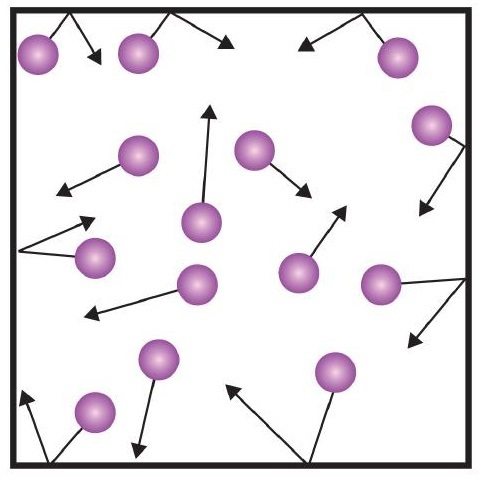
What causes gas pressure?
The gas particles condensing on the surface of a container
The gas particles colliding with each other
The gas particles colliding with the surface of the container
Assuming temperature remains constant, what will happen to the pressure of a gas if the volume is decreased?
the pressure will increase
the pressure will decrease
the pressure will not change.


Latent Heat of Fusion: The amount of energy required to change the state of 1kg a substance from solid to liquid at fixed _____________
Quantity
Heat Energy
Temperature
Pressure
A cube of metal has side 2 cm. It weighs 10g. Find its density.
5 g / cm3
20 g / cm3
0.2 g / cm3
1.25 g / cm3

Increasing the temperature of a gas increases the store of which energy type of the particles?
Potential Energy
Chemical Energy
Kinetic Energy
Pressure
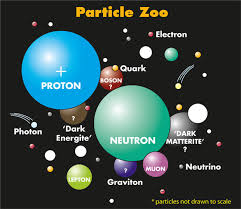
1 of the 5 main ideas of the particle model is
All matter is made up of tiny particles too small to see
All matter is made up of large particles
Matter is only found in Science laboratories
Matter is only found in solids

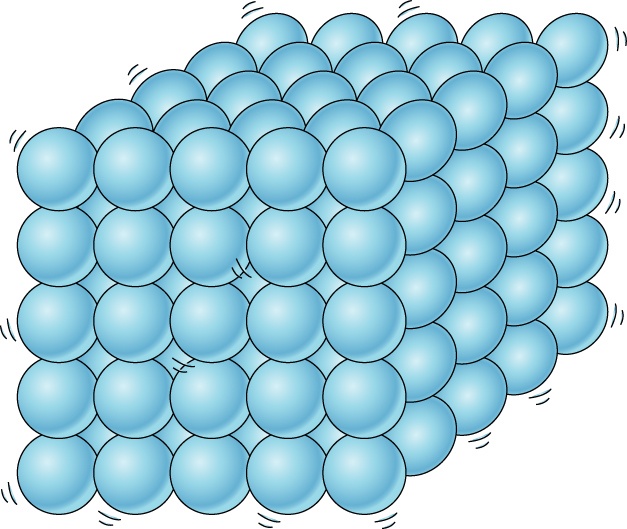
what state does this particle model diagram represent?
solid
liquid
gas

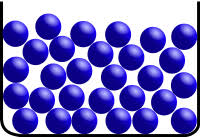
what state does this particle model represent?
solid
liquid
gas
Which will heat up faster?
copper
granite
iron
basalt
Which will heat up slower?
water
lead
granite
iron


