wayground logo

Free Printable Worksheets

NEW

Font size

S
M
L
XL
Worksheets

Review of Unit 6, Lessons 1 & 2

Total questions: 36

Worksheet time: 59mins

Name
Class
Date
1.
A tick and a dog have this type of relationship.
a)
mutualism
b)
commensalism
c)
neutralism
d)
parasitism
2.
Cattle egrets are birds that forage in fields among cattle. The egrets get easy access to food and the cattle don't care if they are there or not.
a)
mutualism
b)
commensalism
c)
competition
d)
parasitism
3.
a relationship that occurs when two or more organims of the same species need the same resource at the same time
a)
competition
b)
symbiosis
c)
predation
4.

The close relationship between two different species in an ecosystem

a)

Biosphere

b)

Ecology

c)

Symbiosis

d)

Environment

5.
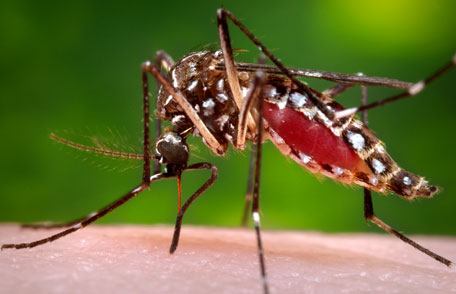
When a mosquito bites you, you are the __________ and the mosquito is the  ____________.
a)
host, hostess
b)
parasite, host
c)
host, parasite
d)
prey, predator
6.

A frog eats a fly. The frog and fly are demonstrating ________.

a)

mutualism

b)

competition

c)

predator/prey

d)

parasitism

7.
Mistletoe takes water and nutrients from the oak tree. This is good for the mistletoe but bad for the tree.
a)
mutualism
b)
commensalism
c)
parasitism
d)
competition
8.
A bison walks through the grass, insects fly up and are seen and eaten by egretsThis neither harms nor helps the bison, but it is easier for the egrets to get food.
a)
mutualism
b)
parasitsm
c)
commensalism
d)
competition
9.
in this food web, the lizard and the hawk have this relationship
a)
mutualism
b)
commensalism
c)
predation
d)
parasitsm
10.
In this food web, the grasshopper and the mouse have this relationship:
a)
mutualism
b)
commensalism
c)
competition
d)
predation
11.
True or False:  A symbiotic relationship between organisms is one that benefits both organisms without causing any harm.
a)
True
b)
False
12.
A high number of the same species of animals living in the same area, would most likely have what affect on their habitat?
a)
destroy most of the abiotic elements in the habitat
b)
raise the competition level for resources
c)
neither answer is correct
d)
both answers are correct
13.
Which of the following is TRUE about the predator/prey relationship?
a)
The prey is the consumer of the predator
b)
The predator is the consumer of the prey
c)
The predator is considered to be the host
d)
The prey is considered to be the parasite
14.
In a natural habitat, species compete most for which one of the following resources?
a)
shelter
b)
oxygen
c)
food
d)
space
15.
Which of the following would be considered to be prey?
a)
an animal that has to hunt for its food
b)
an animal that is eaten by another animal
c)
an organism that makes it own food
d)
an organism that feeds on the blood of another animal
16.
True or False:  A parasite is an organism that brings harm to its host
a)
True
b)
False
17.
Commensalism occurs when what happens between organisms?
a)
Both organisms are destroyed
b)
One organism benefits while the other is neither harmed or benefitted
c)
Both organisms need the other for survival
d)
One organism is harmed while the other organism benefits
18.
What does symbiosis mean?
a)
living separately, no relationship between 2 species
b)
living together, close relationship between 2 species
c)
Living separately, long distance relationship between 2 species
d)
When one species kills and eats another
19.

Oxpeckers are a type of small bird that land on zebras and eat ticks and other parasites that live on the zebra’s skin. The oxpeckers get food and the zebras get pests removed. This is an example of -

a)

Mutualism

b)

Commensalism

c)

Parasitism

d)

Predation

20.

Which type of relationship helps regulate the population?

a)

Mutualism

b)

Predator Prey

c)

Commensalism

d)

Parasitism

21.
A clownfish uses a sea anenome as a safe place to live. While living there, the clownfish lures in food for the anenome. This is an example of what type of relationship?
a)
Predator-Prey
b)
Commensalism
c)
Mutualism
d)
Parasitism
22.
This is known as a relationship in which both organisms involved benefit. 
a)
Predator-Prey
b)
Commensalism
c)
Mutualism
d)
Decomposition
23.

An owl swoops down and grabs a small rodent in its sharp claws. This is an example of what type of relationship?

a)

mutualism

b)

predation

c)

commensalism

d)

competiton

24.

What is a niche?

a)

the job of an organism in an ecosystem

b)

a tree branch with a notch cut out of it

c)

water eroding soil from the edge of a river

d)

plants competing for sunlight

25.

Barnacles are animals that cannot move. In order to get food, they attach to whales and catch any floating plankton in the water. The whale is neither helped nor harmed in the interaction. What type of symbiosis is this?

a)

Mutualism

b)

Commensalism

c)

Parasitism

d)

Neutralism

26.

In an ecosystem, there are populations of moose, rabbits, grass, and pine trees. Suddenly, a fire blazes through the area, which kills all of the populations. As the months go on, new species of grass begin to take root. This attracts animals, and eventually the ecosystem is restored.


What type of ecological succession happened?

a)

Primary succession

b)

Secondary succession

c)

Tertiary succession

d)

None of the above

27.

Individuals in a population that have the traits needed to survive in the environment get to survive and reproduce. Their offspring inherit those traits. Over time, a greater percentage of the population will have those successful traits.

a)

Natural selection

b)

Selective breeding

c)

Artificial selection

d)

Mutations

28.
Series of changes where an existing community is destroyed
a)
primary succession
b)
secondary succession
c)
commensalism
d)
competition
29.
Series of changes where other organisms have not previously lived
a)
primary succession
b)
secondary succession
c)
commensalism
d)
competition
30.
First species to arrive in an area
a)
invasive species
b)
abiotic components
c)
pioneer species
d)
parasites
31.

An ______ includes all living and nonliving things together in an area.

a)

population

b)

ecosystem

c)

consumers

d)

producers

32.
A giraffe’s niche is feeding on the canopy of trees.  What physical biological trait must the giraffes keep in order to support this niche?
a)
a long neck
b)
small antenna
c)
short ears
d)
large brown spots
33.
All of the following are examples of environmental changes that can be caused by humans except - 
a)
clearing land for housing developments
b)
pesticides
c)
volcanic eruption
d)
pollution
34.
An organism that cannot adapt to changes in the environment will most likely - 
a)
produce more offspring
b)
die
c)
change its traits to survive
d)
store more food
35.
Plant life starting to grow on a volcano
a)
primary succession
b)
secondary succession
c)
tertiary succession
d)
variable succession
36.
First species occuring in areas of primary succession are mosses and
a)
grasses
b)
wildflowers
c)
trees
d)
lichens