wayground logo

Free Printable Worksheets

Font size

S
M
L
XL
Worksheets

Magnetism

Total questions: 200

Worksheet time: 5hrs 0mins

Name
Class
Date
1.
Solenoids and Electromagnets use _________ to create Magnetism
a)
Magnetism
b)
Electricity
c)
Wires
2.
A _________ is a device that produces magnetism by spinning a coil of wire around a nail.
a)
Generator
b)
Electromagnet
c)
Battery
d)
Galvonometer
3.
Electricity can be used to create a magnet
a)
True
b)
False
4.
A _________ is a device that produces magnetism by spinning a coil of wire around a nail.
a)
Generator
b)
Electromagnet
c)
Battery
d)
Galvonometer
5.
A Magnet can be used to create electricity
a)
True
b)
False
6.
Solenoids and Electromagnets use _________ to create Magnetism
a)
Magnetism
b)
Electricity
c)
Wires
7.
Electricity can be used to create a magnet
a)
True
b)
False
8.
A Magnet can be used to create electricity
a)
True
b)
False
9.
Electricity & Magnetism are interconnected
a)
True
b)
False
10.
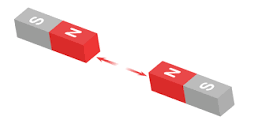
What will happen when these magnets are brought close together?
a)
They will attract each other.
b)
They will repel each other.
c)
Both magnets will turn to the left
d)
Both magnets will turn to the right
11.
How is Earth's magnetic field similar to that of a magnet?
a)
It is hundreds of miles long
b)
It has north and south poles
c)
It is made in Earth's core
d)
It is shaped like a horseshoe
12.
As the distance between two magnets increases (they get farther apart), the force between them:
a)
Increases
b)
Decreases
c)
Stays the Same
13.
The strongest part of a magnet is...
a)
the bars.
b)
the force field.
c)
the poles. 
d)
the middle.
14.

What makes an electromagnet stronger?

a)

greater number of loops

b)

smaller number of loops

c)

decreasing the current

d)

decreasing the voltage

15.
Magnetism is a type of ____________
a)
force
b)
book
c)
plant
d)
animal
16.
A magnet will pick up a nail, but not a penny because the nail
a)
has rust on it.
b)
is lighter than the penny.
c)
has a sharp point.
d)
contains iron.
17.
Which of these is attracted to a magnet?
a)
iron nail
b)
copper penny
c)
piece of paper
d)
notebook
18.
Magnets have a north and a south ___________
a)
shape
b)
color
c)
pole
d)
region
19.

Magnets can pull on things without touching them.

a)

True

b)

False

20.

When iron touches a magnet, it becomes a magnet too.

a)

True

b)

False

21.

Once a paperclip touches a magnet and becomes a magnet itself, does a paperclip STAY that way? Or does it stop being a magnet?

a)

stay that way forever

b)

stop being a magnet

c)

stay that way for a short time

22.
A device that uses a free-moving magnetic needle to show direction is a:
a)
lodestone
b)
magnet
c)
compass
d)
magnetic field
23.
You can make an electromagnet stronger by...
a)
increasing the current through the wire
b)
make the iron core bigger
c)
increase the number of loops around the core
d)
All of these
24.
A Magnet can be used to create electricity
a)
True
b)
False
25.
Electricity can be used to create a magnet
a)
True
b)
False
26.
This is a picture of a simple electromagnet. How can the electromagnet be made stronger?
a)
Add more coils of wire to the nail.
b)
Use a smaller battery.
c)
Reverse the poles of the magnet.
d)
Remove all the coils and the nail.
27.
The lines on this image are called...
a)
magnetic field lines
b)
iron fillings
c)
graphite lines
d)
none of these
28.
True or False: All metals stick to magnets.
a)
True
b)
False
29.

A type of magnet that has temporary magnetic effect when electric current flows through it.


This refer to

a)

Electric

b)

Electronic

c)

Electrostatic

d)

Electromagnet

30.
What will happen when these magnets are brought close together?
a)
They will attract each other.
b)
They will repel each other.
c)
Both magnets will turn to the left
d)
Both magnets will turn to the right
31.

Every magnet has both a _________ pole and a __________ pole.

a)

North, South

b)

East, West

c)

Positive, Negative

d)

Positive, South

32.

What characteristics do magnetic substances have?

a)

They are always black in color and cold when you touch them.

b)

They have the ability to push and pull objects.

c)

The shock you when you come in contact with them.

d)

When dropped, they will fall quickly.

33.

True or False: An electromagnet can be switched off.

a)

True

b)

False

34.

What happens when you turn off the electric current used to produce a magnetic field (an electromagnet)?

a)

The magnet's strength will increase.

b)

The magnet's strength will decrease.

c)

The magnet's strength will remain the same.

d)

The poles of the magnet will switch.

35.

Which is an example of an electromagnet?

a)

The magnet on your fridge

b)

A light bulb

c)

Rocks

d)

The type of magnet in a car motor

36.
Magnetism is....
a)
The part of the magnet where the force is the strongest
b)
A force created by magnets that pulls some metals
c)
To Pull towards
d)
An object able to pull some metals towards itself
37.
I keep magnetism for a short amount of time. What am I?
a)
permanent magnet
b)
temporary magnet
c)
lines of force
d)
magnetism
38.
A magnetized iron nail is called a ________ magnet.
a)
permanent
b)
temporary
c)
horseshoe
d)
industrial
39.
The material best attracted by a magnet is ________________.
a)
silver
b)
copper
c)
iron
d)
glass
40.
The north and south poles of two magnets ______________ each other.
a)
a. have no reaction to
b)
b. move away from
c)
c. repel
d)
d. attract
41.
Earth acts like a giant magnet because its center is made up MOSTLY of
a)
granite
b)
limestone
c)
iron
d)
nickel
42.
Why does a compass needle point north?
a)
The compass is a bar magnet
b)
Because north is up
c)
Because it's magic
d)
It lines up with the Earth's magnetic field
43.
The force of magnetism is stronger when magnets are ________________
a)
cold
b)
round
c)
closer together
d)
farther apart
44.
A magnet would be attracted to a rubber band.
a)
true
b)
false
45.
A maglev train uses magnets to help it run.
a)
true
b)
false
46.
Bright Lights above the poles are called auroras.
a)

true

b)
false
47.
A magnetized needle that is allowed to swing freely is a compass.
a)
true
b)
false
48.
A type of natural magnet found in earth is steel.
a)
true
b)
false
49.
The Earth is a giant magnet.
a)
true
b)
false
50.
I attract iron for a short amount of time.
a)
permanent magnet
b)
lines of force
c)
temporary magnet
d)
levitation
51.
All metals are attracted to magnets
a)
true
b)
false
52.
Iron filings form this when sprinkled on a piece of paper over a magnet.
a)
temporary magnet
b)
lines of force
c)
magnetism
d)
north pole
53.
I am attracted to the south pole of a magnet.
a)
south pole
b)
magnetism
c)
north pole
d)
lines of force
54.
I keep magnetism for a short amount of time. What am I?
a)
permanent magnet
b)
temporary magnet
c)
lines of force
d)
magnetism
55.
The property that attracts iron and steel.
a)
magnetism
b)
electricity
c)
north pole
d)
south pole
56.
A magnetized iron nail is called a ________ magnet.
a)
permanent
b)
temporary
c)
horseshoe
d)
industrial
57.
The material best attracted by a magnet is ________________.
a)
silver
b)
copper
c)
iron
d)
glass
58.
If you placed the south pole of one bar magnet near the south pole of another bar magnet, the two magnets would __________ each other.
a)
attract
b)
cancel
c)
repel
d)
discharge
59.
The north and south poles of two magnets ______________ each other.
a)
a. have no reaction to
b)
b. move away from
c)
c. repel
d)
d. attract
60.
A horseshoe magnet has __________
a)
a. a battery on each end
b)
b. two south poles
c)
c. two north poles
d)
d. a north pole and a south pole
61.
The space in which the force of a magnet can act is its magnetic field.
a)
true
b)
false
62.
What happens when two north poles of a magnet are placed together?
a)
they repel
b)
they attract
c)
they cancel each other out
d)
the strength of the magnet is doubled
63.
Which of the following is true of a bar magnet?
a)
Its magnetic field is strongest near its center.
b)
It is surrounded by a magnetic field.
c)
The north pole is stronger than the south pole.
d)
The south pole is stronger than the north pole.
64.
How is Earth's magnetic field similar to that of a magnet?
a)
It is hundreds of miles long
b)
It has north and south poles
c)
It is made in Earth's core
d)
It is shaped like a horseshoe
65.
What characteristics do magnetic substances have?
a)
They can give you a "shock" when you touch them
b)
They can push or pull objects without touching them
c)
They are always black and cold to touch
d)
They fall faster than other objects when you drop them
66.
Iron, Nickel and cobalt are all __________________ materials
a)
Shiny
b)
poles
c)
magnetic
d)
cold
67.
This large crane magnet functions only when the electrical current is ON.  The crane magnet is an example of what type of magnet?
a)
NIB Magnet
b)
Ceramic Magnet
c)
Electromagnet
d)
funnel magnet
68.
What will happen when these magnets are brought close together?
a)
They will attract each other.
b)
They will repel each other.
c)
Both magnets will turn to the left
d)
Both magnets will turn to the right
69.
When two magnets repel, they ________________
a)
change color
b)
pull together
c)
push apart
d)
get colder
70.
Earth's magnetic field and a bar magnet attract particles to the same locations. Where are they?
a)
The middle
b)
All around the outside
c)
The north and south poles
d)
First to the middle, then to the ends
71.
When two magnets attract, they ______________
a)
push apart
b)
change color
c)
get colder
d)
pull together
72.
Where is Earth's magnetic field strongest?
a)
Along the outside lines
b)
Along the inside lines on either side
c)
Where the lines are close together at the poles
d)
In the space outside of the lines
73.
Why does a compass needle point north?
a)
The compass is a bar magnet
b)
Because north is up
c)
Because it's magic
d)
It lines up with the Earth's magnetic field
74.
Earth's magnetic field and a bar magnet attract particles to the same locations. Where are they?
a)
The middle
b)
All around the outside
c)
The north and south poles
d)
First to the middle, then to the ends
75.
Where is the force of attraction the strongest on a magnet?
a)
at the poles
b)
in the middle
c)
above the magnet
d)
below the magnet
76.
It is possible for a magnet to have only one pole.
a)
True
b)
False
77.
A device that uses a free-moving magnetic needle to show direction is a:
a)
lodestone
b)
magnet
c)
compass
d)
magnetic field
78.
True or False: All metals stick to magnets.
a)
True
b)
False
79.
Earth acts like a giant magnet because its center is made up MOSTLY of
a)
granite
b)
limestone
c)
iron
d)
nickel
80.
How is a permanent magnet DIFFERENT from a temporary magnet?
a)
A permanent magnet attracts materials made of iron.
b)
A permanent magnet has poles.
c)
A permanent magnet has a magnetic field.
d)
A permanent magnet keeps its magnetism for a long time.
81.
A magnet cannot not move which of the following objects?
a)
a paper clip
b)
a nail
c)
a toothpick
d)
a staple
82.
A north pole and a south pole will attract.
a)
True
b)
False
83.

A magnet will not work in water.

a)

True

b)

False

84.

All metal objects are magnetic.

a)

True

b)

False

85.

All magnets have _____ poles.

a)

1

b)

2

c)

3

d)

4

86.

A magnet will be attracted to a _____.

a)

styrofoam

b)

cork

c)

nail

d)

paper

87.

Magnets cannot attract other magnets.

a)

True

b)

False

88.

Magnets that push away from each other are said to _____.

a)

attract

b)

repel

c)

annoy

d)

newton

89.
nail
a)
Magnetic
b)
Not Magnetic
90.

North and south magnet poles facing each other will _____.

a)

repel

b)

attract

91.

Every magnet has a _____ pole.

a)

North

b)

South

c)

North and South

92.

A magnet attracts _____.

a)

cloth

b)

iron

c)

aluminum

d)

wood

93.
Metal Tack
a)
Magnetic
b)
Not Magnetic
94.

Magnetism is a force.

a)

True

b)

False

95.
eraser
a)
Magnetic
b)
Not Magnetic
96.
Do these magnets attract or repel?
a)
Attrack
b)
Repel
97.
Coin
a)
Magnetic
b)
Not Magnetic
98.
A magnet is...
a)
To push away
b)
A force created by magnets that pulls some metals
c)
To Pull towards
d)
An object able to pull some metals towards itself
99.
Do these magnets attract or repel? 
a)
Attract
b)
Repel
100.
pencil
a)
magnetic
b)
not magnetic 
101.
To attract means....
a)
The part of the magnet where the force is the strongest
b)
A force created by magnets that pulls some metals
c)
To Pull towards
d)
An object able to pull some metals towards itself
102.
To repel means....
a)
To push away
b)
A force created by magnets that pulls some metals
c)
To Pull towards
d)
An object able to pull some metals towards itself
103.
nail
a)
Magnetic
b)
Not Magnetic
104.
Poles are ....
a)
The part of the magnet where the force is the strongest
b)
A force created by magnets that pulls some metals
c)
To Pull towards
d)
An object able to pull some metals towards itself
105.
Magnetism is....
a)
The part of the magnet where the force is the strongest
b)
A force created by magnets that pulls some metals
c)
To Pull towards
d)
An object able to pull some metals towards itself
106.
Metal Tack
a)
Magnetic
b)
Not Magnetic
107.
eraser
a)
Magnetic
b)
Not Magnetic
108.
Coin
a)
Magnetic
b)
Not Magnetic
109.

The activities that can cause a magnet lose its magnetism permanently are shown ....

a)

stored in dry place

b)

dropped from a height

c)

kept away from a high temperature

d)

alternating current is passed through it

110.

There are 3 magnets. The correct poles of magnet at D and E if the pole of

magnet at C is north are .... and .... (write using 'and')

(a)  

111.
A magnet is...
a)
To push away
b)
A force created by magnets that pulls some metals
c)
To Pull towards
d)
An object able to pull some metals towards itself
112.

The property of magnet based on the picture is ....

a)

magnet can pull certain objects

b)

magnetic force can pass through thin objects

c)

magnetic force is strongest at the two poles

d)

magnet has pull and push forces

113.
To repel means....
a)
To push away
b)
A force created by magnets that pulls some metals
c)
To Pull towards
d)
An object able to pull some metals towards itself
114.
To attract means....
a)
The part of the magnet where the force is the strongest
b)
A force created by magnets that pulls some metals
c)
To Pull towards
d)
An object able to pull some metals towards itself
115.
Magnetism is....
a)
The part of the magnet where the force is the strongest
b)
A force created by magnets that pulls some metals
c)
To Pull towards
d)
An object able to pull some metals towards itself
116.
Poles are ....
a)
The part of the magnet where the force is the strongest
b)
A force created by magnets that pulls some metals
c)
To Pull towards
d)
An object able to pull some metals towards itself
117.

Magnet can be used to separate metal and non-metal waste. The tool that

can be used is ....

a)

generator

b)

scrap yard crane

c)

bicycle dynamo

d)

tailor scissors

118.

Magnetic materials are ....

a)

plastic

b)

iron

c)

steel

d)

cobalt

e)

wood

119.

The activities that can cause a magnet lose its magnetism permanently are shown ....

a)

stored in dry place

b)

dropped from a height

c)

kept away from a high temperature

d)

alternating current is passed through it

120.

There are 3 magnets. The correct poles of magnet at D and E if the pole of

magnet at C is north are .... and .... (write using 'and')

(a)  

121.

The property of magnet based on the picture is ....

a)

magnet can pull certain objects

b)

magnetic force can pass through thin objects

c)

magnetic force is strongest at the two poles

d)

magnet has pull and push forces

122.

The strongest magnetic force is located at either pole of a magnet. The

correct picture based on this statement is ....

a)

b)

c)

d)

123.

A material that is NOT attracted to a magnet is called------------?

a)

attract

b)

static

c)

nonmagnetic

d)

magnetic

124.

What are the poles of a magnet?

a)

north and south

b)

east and west

c)

north and west

d)

west and south

125.

Magnet can be used to separate metal and non-metal waste. The tool that

can be used is ....

a)

generator

b)

scrap yard crane

c)

bicycle dynamo

d)

tailor scissors

126.

How many poles does a magnet have?

a)

1

b)

2

c)

3

d)

4

127.

What property does this show?

a)

Magnets attract objects made of magnetic materials

b)

Like poles repel, unlike poles attract

c)

A freely suspended magnet comes to rest in the north-south direction

d)

A magnet has greatest magnetic strength at its poles

e)

Magnetism can pass through non-magnetic materials

128.

Magnetic materials are ....

a)

plastic

b)

iron

c)

steel

d)

cobalt

e)

wood

129.

What property does this show?

a)

Magnets attract objects made of magnetic materials

b)

Like poles repel, unlike poles attract

c)

A freely suspended magnet comes to rest in the north-south direction

d)

A magnet has greatest magnetic strength at its poles

e)

Magnetism can pass through non-magnetic materials

130.

There are 3 ways to make magnet, except ....

a)

Induction

b)

Electromagnetic

c)

Stroking

d)

Stretching

131.

The strongest magnetic force is located at either pole of a magnet. The

correct picture based on this statement is ....

a)

b)

c)

d)

132.

Mention 3 properties of magnet! (using coma)

4 lines
133.

A material that is NOT attracted to a magnet is called------------?

a)

attract

b)

static

c)

nonmagnetic

d)

magnetic

134.

What are the poles of a magnet?

a)

north and south

b)

east and west

c)

north and west

d)

west and south

135.

How many poles does a magnet have?

a)

1

b)

2

c)

3

d)

4

136.

What property does this show?

a)

Magnets attract objects made of magnetic materials

b)

Like poles repel, unlike poles attract

c)

A freely suspended magnet comes to rest in the north-south direction

d)

A magnet has greatest magnetic strength at its poles

e)

Magnetism can pass through non-magnetic materials

137.

What property does this show?

a)

Magnets attract objects made of magnetic materials

b)

Like poles repel, unlike poles attract

c)

A freely suspended magnet comes to rest in the north-south direction

d)

A magnet has greatest magnetic strength at its poles

e)

Magnetism can pass through non-magnetic materials

138.

There are 3 ways to make magnet, except ....

a)

Induction

b)

Electromagnetic

c)

Stroking

d)

Stretching

139.

Mention 3 properties of magnet! (using coma)

4 lines
140.

Why shouldn't bar magnets be rubbed together?

a)

It can make the magnetic field too strong.

b)

It can weaken the magnetic field.

c)

It can change the magnet's color.

d)

It can create too much oxygen.

141.
I keep magnetism for a short amount of time. What am I?
a)
permanent magnet
b)
temporary magnet
c)
lines of force
d)
magnetism
142.
A magnetized iron nail is called a ________ magnet.
a)
permanent
b)
temporary
c)
horseshoe
d)
industrial
143.

A magnet can attract things without ..... them.

a)

touching

b)

attracting

c)

pulling

144.

Why can't a magnet attract plastic?

a)

because plastic is not a metal

b)

because plastic is metal

145.

The south pole of a magnet will . . . .

a)

repel to the north pole of another magnet

b)

repel to a copper nail

c)

repel to the south pole of another magnet

d)

attract to the south pole of another magnet

146.

The south pole of a magnet will . . . .

a)

repel to the north pole of another magnet

b)

repel to a copper nail

c)

repel to the south pole of another magnet

d)

attract to the south pole of another magnet

147.

Identify whether or not the item in the picture is a magnet.

a)

Yes

b)

No

148.

Identify the type of magnet shown in the picture.

a)

Disc magnet

b)

Horseshoe magnet

c)

Bar magnet

149.

What is the example non magnetic metal?

a)

Wood

b)

Gold

c)

Iron

d)

Steel

150.

What will happen to the magnets?

(a)  

151.

The strongest attraction parts of the magnets are in their . . .

a)

tails

b)

body

c)

compass

d)

poles

152.

Identify the type of magnet shown in the picture.

a)

Disc magnet

b)

Horseshoe magnet

c)

Bar magnet

153.

Identify whether or not the item in the picture is a magnet.

a)

Yes

b)

No

154.
What will happen when these magnets are brought close together?
a)
They will attract each other.
b)
They will repel each other.
c)
Both magnets will turn to the left
d)
Both magnets will turn to the right
155.

Which statement is true?

a)

All magnets have a north and south pole.

b)

All magnets can attract large objects.

c)

Magnets can not attract through a paper.

d)

All magnets have the same shape and size

156.

What is the example non magnetic metal?

a)

Wood

b)

Gold

c)

Iron

d)

Steel

157.

What will happen to the magnets?

(a)  

158.

Which one is the bar magnet?

a)
b)
c)
d)
159.

The strongest attraction parts of the magnets are in their . . .

a)

tails

b)

body

c)

compass

d)

poles

160.

Magnet cannot attract objects made of . . . and . . .

a)

iron and wood

b)

steel and plastic

c)

plastic and wood

d)

iron and glass

161.

Magnet can attract objects that contain . . . and . . .

a)

aluminum and copper

b)

steel and iron

c)

gold and silver

d)

gold and steel

162.

Which statement is true?

a)

All magnets have a north and south pole.

b)

All magnets can attract large objects.

c)

Magnets can not attract through a paper.

d)

All magnets have the same shape and size

163.
What will happen when these magnets are brought close together?
a)
They will attract each other.
b)
They will repel each other.
c)
Both magnets will turn to the left
d)
Both magnets will turn to the right
164.

True or False.

Magnets can not attract metal objects without touching them.

a)

True

b)

False

165.

If we put paper clip on upper of paper, paper clip will be . . . by magnet.

a)

repel

b)

attracted

c)

do not attracted

166.

Which one is the bar magnet?

a)
b)
c)
d)
167.

Magnet cannot attract objects made of . . . and . . .

a)

iron and wood

b)

steel and plastic

c)

plastic and wood

d)

iron and glass

168.

Magnet can attract objects that contain . . . and . . .

a)

aluminum and copper

b)

steel and iron

c)

gold and silver

d)

gold and steel

169.

If we put paper clip on upper of paper, paper clip will be . . . by magnet.

a)

repel

b)

attracted

c)

do not attracted

170.

Which of the following will be attracted to magnets?

a)
b)
c)
d)
171.

Look at the picture! The objects . . . by magnet.

a)

repel

b)

do not attracted

c)

attracted

172.

True or False.

Magnets can not attract metal objects without touching them.

a)

True

b)

False

173.

Look at the picture! Those objects are . . . by magnets.

a)

repel

b)

do not attracted

c)

attracted

174.

If two bar magnets we close each other as on picture, it will be . . .

a)

repel

b)

attract

c)

both are true

175.

An magnet that we can use as compas is . . .

a)

magnetic needle

b)

horseshoe magnet

c)

bar magnet

176.

Look at the picture! The objects . . . by magnet.

a)

repel

b)

do not attracted

c)

attracted

177.

Which of the following will be attracted to magnets?

a)
b)
c)
d)
178.

Look at the picture! Those objects are . . . by magnets.

a)

repel

b)

do not attracted

c)

attracted

179.

If two bar magnets we close each other as on picture, it will be . . .

a)

repel

b)

attract

c)

both are true

180.

An magnet that we can use as compas is . . .

a)

magnetic needle

b)

horseshoe magnet

c)

bar magnet

181.

A magnet will pick up an object that is made of...

a)

plastic

b)

iron or steel

c)

glass

d)

copper

182.

The strongest parts of the magnet are ...

a)

fronts

b)

backs

c)

poles

d)

middle

183.

What would happen is a north pole of a magnet came close to a north pole of another magnet?

a)

they would be attracted to each other

b)

they would be repelled from each other

184.

The area around a magnet is called the .....

a)

attraction zone

b)

work area

c)

magnetic field

d)

hot zone

185.
A north pole and a south pole will attract.
a)
True
b)
False
186.
True or False: All metals stick to magnets.
a)
True
b)
False
187.

Why does the compass needle move at different locations?

a)

Because the needle is attracted to the magnetic field produced by the magnet

b)

Because north is up

c)

Because it is being attracted to the Magnetic North Pole

d)

Because north is down

188.

Every magnet has a:

a)

East and West pole

b)

North and South pole

c)

East and South pole

d)

North and West pole

e)

Chicago and Saint pole

189.
The picture is an example of an:
a)
Electric circuit
b)
Electromagnet
c)
Electric nail
d)
Electric power cell
190.

These magnetic domains are:

a)

strongly magnetized

b)

slightly magnetized

c)

unmagnetized

191.

To make this electromagnet stronger you could:

a)

use less wire

b)

have fewer wire coils around the nail

c)

have more wire coils around the nail

d)

use a plastic core

192.
What is true about electricity and magnetic fields?
a)
Electricity is needed to create any magnet.
b)
Electricity always creates a magnetic field.
c)
Electricity is stronger than a magnetic field.
d)
Electricity prevents magnetic fields from occurring.
193.
A compass needle responds to a magnetic field, because the compass needle is a
a)
A. generator.
b)
B. motor.   
c)
C. magnet.
d)
D. transformer.
194.
Are the magnetic field lines in the picture correct?
a)
Yes, because they point from north to south.
b)
No, because they point from north to south (they're supposed to go the other way).
c)
Yes, because the North pole is on the left in all pictures.
d)
No, because the North pole is on the left in all pictures (it's supposed to be on the right).
195.
Why does a compass needle point north?
a)
The compass is a bar magnet
b)
Because north is up
c)
Because it's magic
d)
It lines up with the Earth's magnetic field
196.
Electric current flowing through a wire produces
a)
static electricity
b)
an open circuit
c)
a permanent magnet
d)
a magnetic field
197.

When running a current through a wire, what do the blue lines represent?

a)

The wire spinning

b)

A magnetic field that was created

c)

Electrons leaving

d)

Electricity

198.

Which one represents the magnetic field lines of magnets repelling?

a)

A

b)

B

199.

Which one represents the magnetic field lines of magnets attracting?

a)

A

b)

B

200.

What does the magnetic field look like on a straight wire?

a)
b)
c)
d)