
 Worksheets
Spring Benchmark Retest
Total questions: 15
Worksheet time: 8mins

This Map shows the US following the compromise of 1850.
Based on the map and your knowledge of U.S. history, which outcomes resulted from this compromise? Select TWO correct answers.
California was admitted into the union as a free state.
A parallel was designated as the boundary between free and slave states.
Southern state legislators failed to get a new fugitive-slave law passed.
New territories were given the power to decide the issue of slavery.
The Florida territory was purchased from Spain and admitted as a free state.
Which examples list unalienable rights?
Protection against unreasonable searches and seizures
Public trial by a fair and impartial jury
Freedom of religion, speech, and the press
Life, liberty, and the pursuit of happiness
Which action led the United States into the War of 1812?
American warships were captured at sea and forced to fight for Britain.
American merchant sailors smuggling goods to Europe were imprisoned in Britain.
American merchant sailors were impressed into naval service to fight for Britain.
American warships sailing from European ports were boarded and impounded in Britain.

This excerpt is from the US Constitution.
Which action describes a violation of the 5th Amendment?
A state government annexing a farmer's land without providing payment
a state judge requiring a person accused of a crime to remain in jail until the trial
A mayor proposing a plan to replace old buildings with new construction
A governor using the pardoning power to release a person from jail

Why was the proclamation line shown on the map significant?
It provided job opportunities to colonists who could protect the new borders and trade with the French.
It gave the French control of the land west of the Appalachian Mountains and angered colonists.
It marked areas that belonged to American Indians and made it easier for the colonist to claim those lands.
It prevented colonists from settling westward and contributed to the American Revolution.
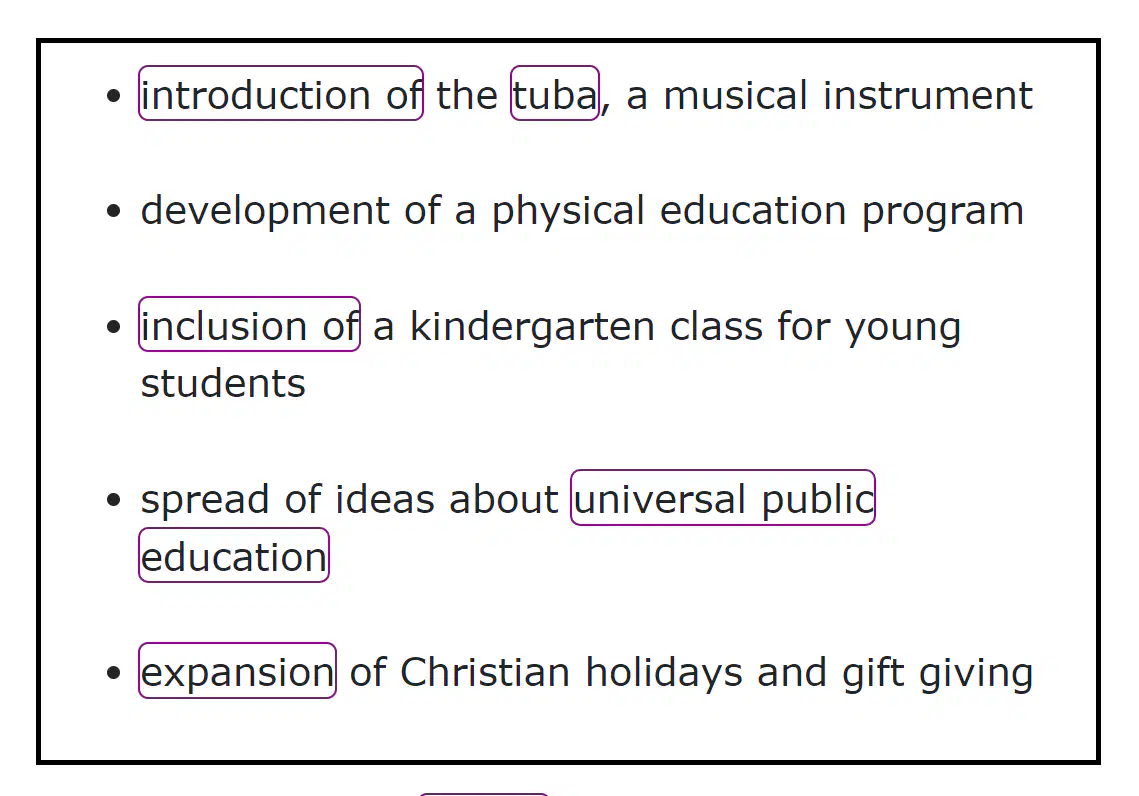
This list describes some contributions to American culture by German immigrants.
Which statement describes the impact these contributions had on American culture?
People began to distribute candy every fall in their neighborhoods.
Families were encouraged to send young children to school.
People started celebrating the new year with their families.
Public demand for live orchestral performances decreased.

This excerpt is from a song about the temperance movement.
Based on the excerpt and your knowledge of U.S. history, which generalization can be made about the temperance movement?
Women were prohibited from participating in the temperance movement.
Women gained social influence through their involvement in the temperance movement.
Women were uninterested in solving the social problems that led to the temperance movement.
Women became involved in the temperance movement in order to gain equal rights with men.
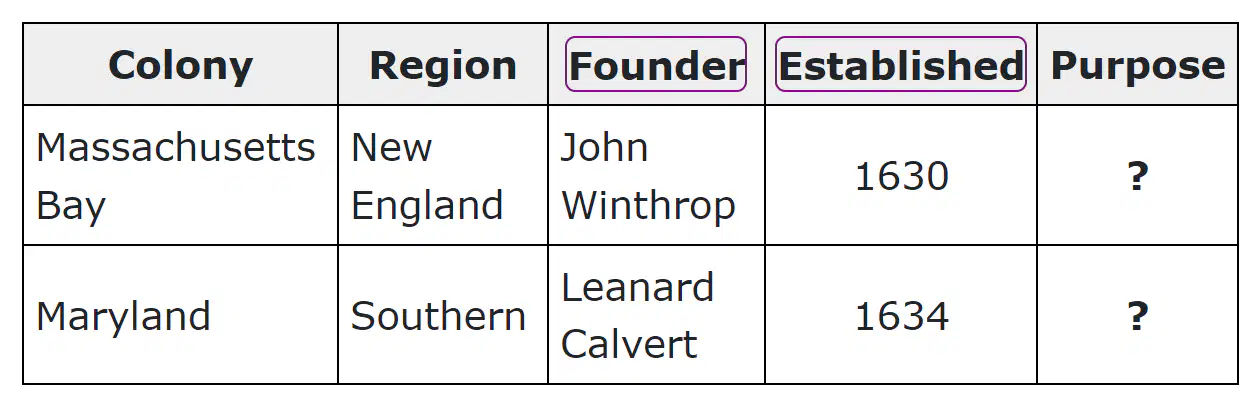
This table shows details about two English colonies in North America.
Which purpose completes the table for why these colonies were established?
To escape religious persecution
To avoid debtors' prison
To block Spanish settlements
To extend triangular trade routes
In 1828, the U.S. House of Representatives passed a bill to approve the Tariff of Abominations by a vote of 105 to 94. Why did this tariff create division within the United States?
The tariff lowered interest rates but raised personal taxes.
The tariff raised Northern business profits but lowered Southern consumer prices.
The tariff hurt Southern plantation owners but helped Western farmers.
The tariff helped international trade but hurt domestic trade.
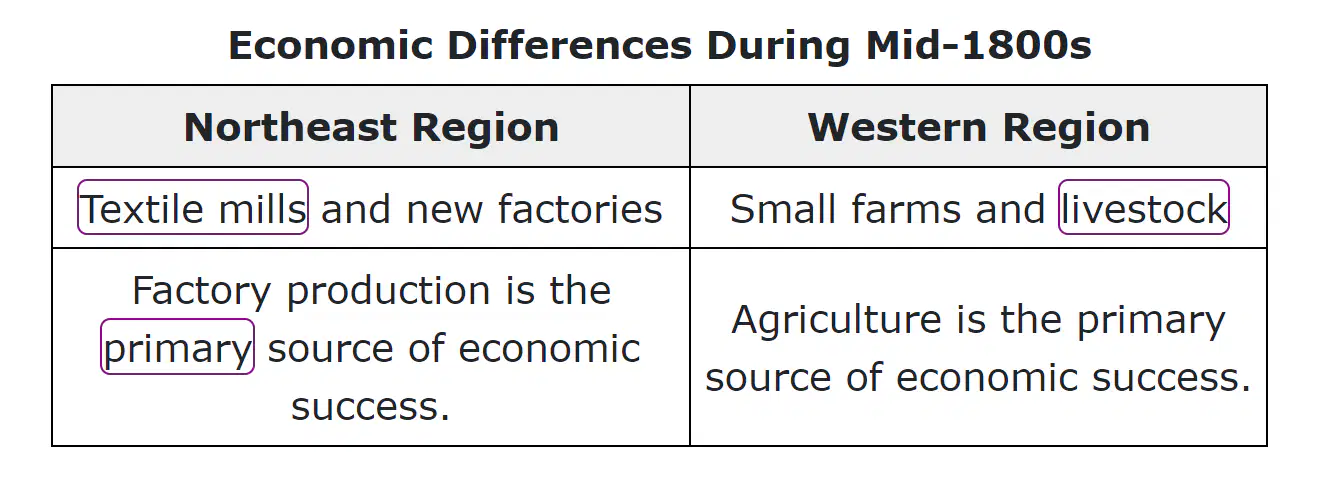
This table compares the economies of two regions in the United States during the mid-1800s.
How did these differences affect the economic development in these two regions?
Western settlers signed fair lad treaties with American Indians and increased agricultural production.
Improvements in agricultural technology increased western settlers' efficiency and productivity.
Many industrial towns in the Northeast banned women from working in factories, and unemployment increased.
Settlers saw that the Great Plains' climate made agriculture easier, and western migration increased.

This excerpt is from a speech by a candidate to the Illinois House of Representatives in the 1850s.
Based on the excerpt and your knowledge of U.S. history, which cause of sectionalism did Lincoln "hate"?
Western expansion
The enforcement of tariffs
The spread of slavery
Northern manufacturing
Which reason explains a purpose of the Northwest Ordinance of 1787?
To establish the western boundary of the country
To fund the exploration of the Louisiana Territory
To create a process to admit new states to the country
To settle territorial disputes with Great Britain

This excerpt describes a challenging moment in U.S. history during the 1790s.
How did these events challenge the U.S. government?
It was the first time federal taxes were introduced in the United States.
It was the first test of state cooperation in the United States.
It was the first test of federal authority in the United States.
It was the first time southern states opposed northern states in the United States.
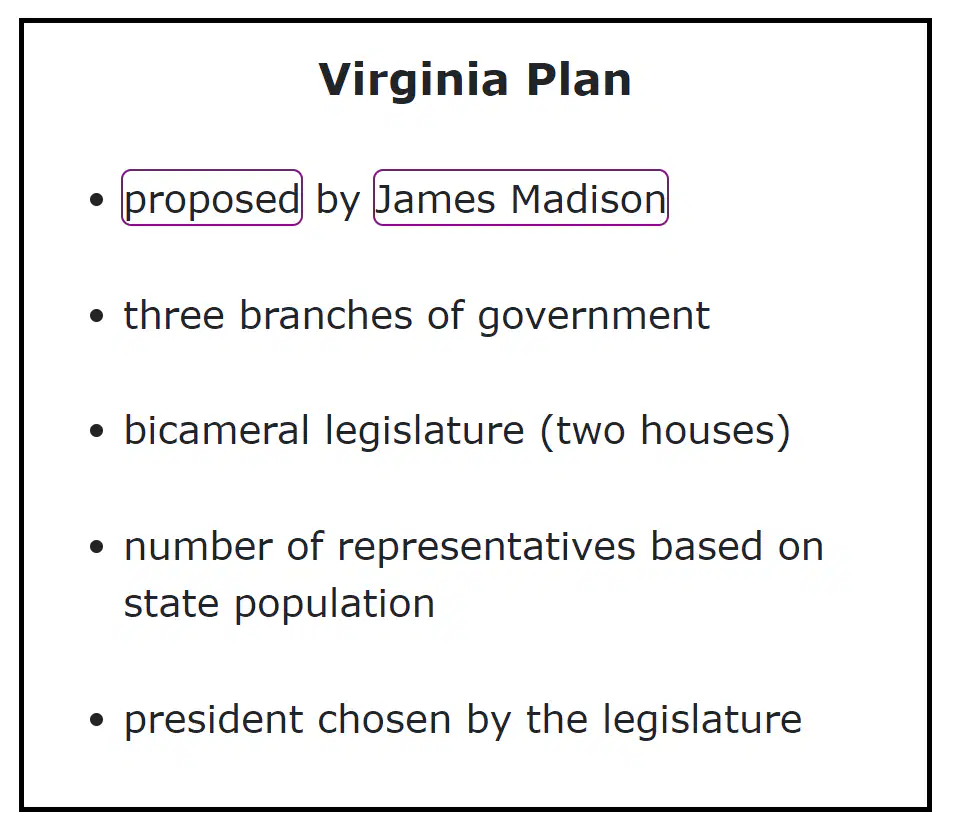
This list summarizes a proposal submitted to the delegates at the Constitutional Convention in 1787.
Why was this plan amended as part of the Great Compromise?
Because using state population for representation in the House was less fair
Because it was decided that two branches of government was best
Because it was decided that the president would be appointed by the judiciary
Because using equal state representation in the Senate would be more fair

This excerpt is from a newspaper article published in Tennessee during the late 1800s.
Based on the excerpt and your knowledge of U.S. history, which outcome was President Johnson trying to prevent?
The use of government resources to protect the rights of citizens to practice any religion of their choice
The abolition of slavery within the country and in all territories under government control
Protecting the rights of individuals to bear arms and assemble in peaceful protest
Granting citizenship and equal protection under the law to all persons born in the country

