
 Worksheets
Wheel Bearing
Total questions: 46
Worksheet time: 43mins
What is NOT a fact about races?
Matches the contour of rollers or balls

What is the name for this?
Cylindrical roller bearing
Ball bearing
Double row ball bearing
Tapered roller bearing

What is the name for this?
Cylindrical roller bearing
Ball bearing
Double row ball bearing
Tapered roller bearing

What is the name for this?
Double row Cylindrical roller bearing
Double row ball bearing
Double row tapered roller bearing
Double row tapered ball bearing

What is the name for this?
Double row ball bearing
Double row cylindrical roller bearing
Double row tapered roller bearing
Double row tapered ball bearing

What is the name for this?
Ball bearing
Cylindrical roller bearing
Tapered ball bearing
Tapered roller bearing
All of the following issues may be caused by tire problems except _____.
abnormal tire tread wear patterns
steering wheel vibrations or noises
engine hesitation during acceleration
steering wheel pull
Automotive tire tread depth that measures less than about _____ is considered worn and requires tire replacement based on safety guidelines.
1″ (25.4 mm)
1/8″ (3.175 mm)
1/2″ (12.7 mm)
5/8″ (15.875 mm)
True or False? Underinflation causes the center area of the tire’s tread to expand outward and wear before the outer corners.
True
False
Tire sidewalls can bulge outward and form an air bubble in the sidewall due to _____.
valve stem and valve core separation
inner tube collapse
TPMS pressure sensor malfunction
ply separation
A vehicle’s weight pressing down on _____ produces noticeable humming or growling sounds.
a new set of tires
worn suspension shocks or struts
the vehicle’s frame
unlubricated, worn, or damaged wheel bearings
True or False? The purpose of performing a tire rotation on a vehicle is to help even out tire tread wear and extend tire service life.
True
False
The phrase pack the bearings means to _____ the wheel bearings.
clean and blow dry
restrict the movement of
organize and store
lubricate
Overtorquing lug nuts can cause wheel or hub distortion, vibration, and excessive _____.
suspension jounce and rebound
tire speed
runout
steering wheel pull
Technician A says tire impact damage cannot occur when the vehicle is traveling at highway speeds. Technician B says often even minor tire damage, cuts, air bubbles, and tread wear patterns require tire replacement to ensure safe driving characteristics. Who is right?
A only
B only
Both A and B
Neither A nor B
Technician A says torquing lug nuts correctly means tightening them in a crisscross pattern. Technician B says overtorquing lug nuts is beneficial and recommended on vehicles equipped with aluminum wheels and lightweight hubs. Who is right?
A only
B only
Both A and B
Neither A nor B
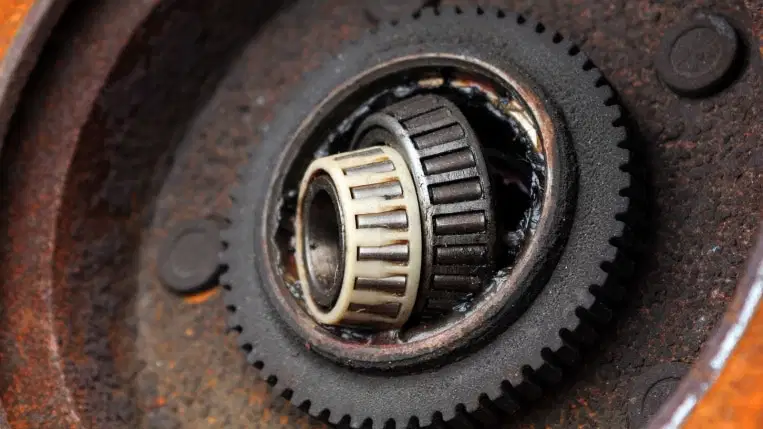
Identify the type of wheel bearing.
Ball Bearing
Needle Bearing
Roller Bearing
Taper Roller Bearing

Identify the type of wheel bearing. Goes usually on FWD Vehicle.
Taper Roller Bearing
Double Row Sealed Bearing
Single Row Bearing
LLR
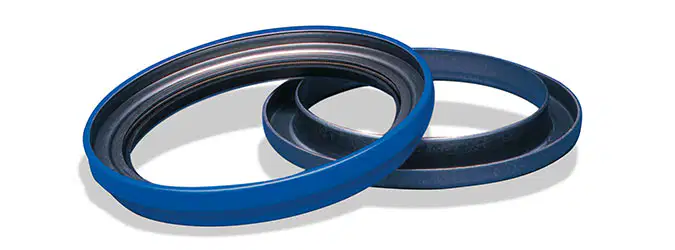
Identify the type of component!!!!!
Wheel Seal
Axle Bearing
Radiator Cap
Oil Cap

Identify the type of wheel bearing.
Taper Roller Bearing
Needle Bearing
Roller Bearing
Ball Bearing

Identify the type of wheel bearing.
Roller Bearing
Needle Bearing
Ball Bearing
Taper Roller Bearing


Technician A says today’s automotive tires use a system of two conjoined inner tubes to hold air pressure and prevent leaks. Technician B says one of the functions of an automotive tire is to provide adequate traction with the road surface. Who is correct?
Technician A only.
Technician B only.
Both Technician A and B.
Neither Technician A nor B.
Technician A says an automotive tire’s belts stretch horizontally across the beads to form the carcass, or body, of the tire. Technician B says an automotive tire’s liner provides a leakproof membrane for tubeless tires. Who is correct?
Technician A only.
Technician B only.
Both Technician A and B.
Neither Technician A nor B.
Technician A says a radial ply tire’s belts are sometimes made of steel. Technician B says a radial ply tire’s belts are sometimes made of fiberglass. Who is correct?
Technician A only.
Technician B only.
Both Technician A and B.
Neither Technician A nor B.
Technician A says tire markings on the sidewall of a tire give information about a tire’s load-carrying ability. Technician B says tire markings on the sidewall of a tire provide the tire’s speed rating. Who is correct?
Technician A only.
Technician B only.
Both Technician A and B.
Neither Technician A nor B.
A tire size measurement given in the P-metric size designation is listed as: P235/50 R18. Technician A says the number 50 is the aspect ratio, which measures the tire’s weight at 50% of the tire’s cross-sectional width. Technician B says the number 18 signifies the tire’s year of manufacture in the 21st century, which is 2018. Who is correct?
Technician A only.
Technician B only.
Both Technician A and B.
Neither Technician A nor B.
Tire grades and tire markings are being discussed. Technician A says tire tread wear, tire traction, and tire temperature resistance ratings are all part of the Uniform Tire Quality Grading System. Technician B says a tire’s load index is listed as a letter from B to Y on the tire sidewall that correlates to a weight-carrying capacity range of between 1,000–1,500lb (456–680 kg). Who is correct?
Technician A only.
Technician B only.
Both Technician A and B.
Neither Technician A nor B.
Technician A says vehicle manufacturers instruct owners to drive on a compact spare tire in the exact manner as they would drive on a traditional full-size automotive tire. Technician B says run-flat tires are constructed with wear bars that serve as a supplementary protective layer over the tire tread. Who is correct?
Technician A only.
Technician B only.
Both Technician A and B.
Neither Technician A nor B.
Tire pressure monitoring systems (TPMS) are being discussed. Technician A says a TPMS is installed only in commercially used vans and trucks in the United States. Technician B says some TPMS give the air pressure reading for each tire on the dash display. Who is correct?
Technician A only.
Technician B only.
Both Technician A and B.
Neither Technician A nor B.
Technician A says on passenger vehicles, the center wheel section of a drop-center wheel has a smaller diameter than the rim to ease tire installation and removal. Technician B says the majority of automotive wheels are made of aluminum. Who is correct?
Technician A only.
Technician B only.
Both Technician A and B.
Neither Technician A nor B.
Technician A says that depending on the vehicle manufacturer, lug nuts are manufactured with both right-hand threads (turn clockwise to tighten) or left-hand threads (turn counterclockwise to tighten). Technician B says lug bolts are press-fit into the hub or axle flange and can only be removed with manufacturer-specific tools. Who is correct?
Technician A only.
Technician B only.
Both Technician A and B.
Neither Technician A nor B.
Wheel weights are being discussed. Technician A says wheel weights are thin metal strips that are pressed into the grooves of a rubber tire tread to offset tread height manufacturing inconsistencies. Technician B says wheel manufacturers recommend using a hammer to apply clip-on lead weights to an aluminum wheel. Who is correct?
Technician A only.
Technician B only.
Both Technician A and B.
Neither Technician A nor B.
Technician A says wheel bearings in several vehicle models are the tapered roller bearing type. Technician B says wheel bearings in certain vehicle models are the ball bearing type. Who is correct?
Technician A only.
Technician B only.
Both Technician A and B.
Neither Technician A nor B.
The basic parts of an automotive wheel bearing are being discussed. Technician A says a wheel bearing’s outer race is sometimes pressed into the automobile’s steering knuckle. Technician B says the bearing’s outer race is sometimes pressed into the hub. Who is correct?
Technician A only.
Technician B only.
Both Technician A and B.
Neither Technician A nor B.
Technician A says a steering knuckle is a basic component in a driving hub and wheel bearing assembly. Technician B says the inner stub shaft is a basic component in a driving hub and wheel bearing assembly. Who is correct?
Technician A only.
Technician B only.
Both Technician A and B.
Neither Technician A nor B.
Technician A says an automotive tire’s beads are used to stiffen the tire treads. Technician B says an automotive tire’s beads are used to hold the tire’s sidewalls against the wheel rim. Who is correct?
Technician A only.
Technician B only.
Both Technician A and B.
Neither Technician A nor B.

