
 Worksheets
Tissues
Total questions: 63
Worksheet time: 38mins

Girth of stem increases due to
apical meristem
lateral meristem
intercalary meristem
vertical meristem

Guard cells are present in
cork
cortex
stomata
vascular bundle

Husk of coconut is made of
sclerenchymatous tissue
sclerenchymatous tissue
collenchyma
chlorenchyma

Which one of the following tissue gives mechanical support to young dicotyledonous stem?
parenchyma
collenchyma
sclerenchyma
chlorenchyma

Grass stems elongates by the activity of
primary meristem
secondary meristem
intercalary meristem
apical meristem

Phloem in the plants performs the function of
conduction of food
conduction of water
providing support
photosynthesis

Lignified elongated dead cells are
parenchyma
collenchyma
sclerenchyma
none of the above

Whose living cells provide tensile and mechanical strength?
collenchyma
sclerenchyma
phloem
sclereids

Simple tissues are these
parenchyma, xylem and collenchyma
parenchyma, collenchyma and sclerenchyma
parenchyma, xylem and sclerenchyma
parenchyma, xylem and phloem

The most common type of ground tissue is
epidermis
collenchyma
sclerenchyma
parenchyma

Which of the following is NOT a function of the roots?
Store sugars
Absorb water and minerals
Anchor plant to the ground
Photosynthesis


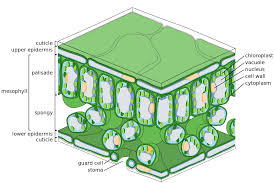

A mango tree can grow up to a height of 40 metres. This growth is brought about by
apical meristem
lateral meristem
intercalary meristem
vertical meristem
Xylem and phloem form a part of _______________.
conducting tissue
vascular tissue
complex tissue
all of the above
Which of the following tissues whose role is to protect and cover the plant?
Dermal tissue
Epidurial tissue
Ground tissue
Vascular tissue
Intercalary meristems are found in which part of the plants?
Growing tips
Lateral side
Nodes
Tissues with active cell division
Permanent
Meristematic

What are the levels of organization in plants?
Plants have cells, but not tissues.
Plants are made up of cells, tissues, organs, and organ systems
Plants contain cells and tissues, but not organs.
Which of the following is NOT a function of the roots?
Store sugars
Absorb water and minerals
Anchor plant to the ground
Photosynthesis

It helps water Hyacinth to float on water. What type of parenchyma tissue is it?
Chlorenchyma
collenchyma
Aerenchyma
schlerenchyma
I am a kind of parenchymatous cell, and I perform photosynthesis. Who am I?
Collenchyma
Aerenchyma
Chlorenchyma
Sclerenchyma
There is more Intercellular space found in this tissue
Collenchyma
Sclerenchyma
Parenchyma
Epidermis
This type of tissue contains cells of same types
Simple permanent tissues
Complex permanent tissues
Intercalary meristems are found in which part of the plants?
Growing tips
Lateral side
Nodes
Do meristematic tissues have vacuoles present in them?
Yes
No
Tissues are
Group of cells that perform similar functions
Groups of organelles that perform similar functions
Groups of organs.
Important for the survival of living organisms
Both a plant and animal cells have a cell wall
True
False
Tissues commonly found in the fruit wall of nuts
Parenchyma
Sclerenchyma
Collenchyma
Parenchyma walls are made up of
Pectin
Hemicellulose
Cellulose
Meristems at the tip of roots and shoots
Lateral
Apical
Ploem
Tissues with active cell division
Permanent
Meristematic

Plants have two organ systems, the _________________ system and the root system.
vascular
seedless
shoot
non-vascular
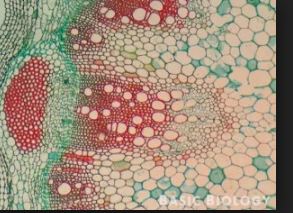
_____________________ is a vascular tissue that carries sugars and other foods throughout a plant.
stems
phloem
roots
xylem

The body of a plant is made up of organs called roots, ________, and leaves.
vacuole
stems
cones

What is the vascular tissue that carries water throughout a plant?
phloem
seedling
xylem
What are the levels of organization in plants?
Plants have cells, but not tissues.
Plants are made up of cells, tissues, organs, and organ systems
Plants contain cells and tissues, but not organs.
Which of the following statements about meristematic tissue is incorrect?
Thin-walled cells with large prominent nuclei
Thick-walled cells with large intercellular spaces
Divide actively leading to growth
Small cells rich in cytoplasm
It is difficult to pull out the husk of coconut because
sclerenchyma cells are closely packed
collenchyma cells have thickened corners
xylem gives mechanical strength
epidermis has a thick cuticle
When a grass lawn is mowed, its meristematic tissues get cut off. However, they still regrow. This is due to the presence of
lateral meristem
intercalary meristem
epidermis
apical meristem
The flexibility in plants is due to a tissue called ___________.
chlorenchyma
parenchyma
sclerenchyma
collenchyma
Which of the following is not a function of epidermal tissue?
Protection
Absorption of water
Transport of water
Gaseous exchange
A twig of white-coloured flowers is placed in a beaker containing coloured water. After some time, the white petals become coloured. Which tissue is responsible for this?
Xylem
Phloem
cork
cambium
Sieve tubes and companion cells are present in _____________.
xylem
phloem
cork
cambium
The size of the stem increases in width due to ___________.
primary meristem
apical meristem
intercalary meristem
lateral meristem