
 Worksheets
Unit 1 - Study Guide/LEAP PRACTICE
Total questions: 81
Worksheet time: 1hrs 26mins
The Sun warms your skin on a cold day.
Conduction
Convection
Radiation
Hot chocolate is stirred with a spoon and the spoon gets hot.
Conduction
Convection
Radiation
Macaroni rises and falls in a pot of heated water.
Conduction
Convection
Radiation
You burn your hand by touching a hot stove.
Conduction
Convection
Radiation
Warming your feet in front of a fire.
Conduction
Convection
Radiation
Hot air balloon rises.
Conduction
Convection
Radiation
The air near the ceiling in a room is warmer than the air near the floor.
Conduction
Convection
Radiation
The sidewalk increases in temperature on a sunny day.
Conduction
Convection
Radiation
What is the definition of CONDUCTION?
When heat is transferred from objects like rays of light or electromagnetically.
a hot liquid or air that expands, becomes less dense, and rises or becomes more dense, and sinks.
When heat transfers from objects that are touching.
When heat transfers through the heater or AC in your house.
What is the definition of CONVECTION
When heat transfers through waves.
When heat transfers from objects that are touching.
a hot liquid or air that expands, becomes less dense, and rises or becomes more dense, and sinks.
Heat traveling from the sun
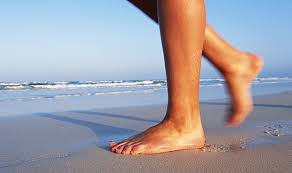
Walking on the warm sand sand with your bare feet demonstrates this type of heat transfer.
conduction
convection
radiation

A group of friends gather around a fire to stay warm.
conduction
convection
radiation

In heat transfer, heat always flows from the _______________ substance to the _______________ substance.
Hotter to colder
Colder to hotter
Hotter to hotter
Colder to colder

The handle of a metal spoon warms up when it is placed in a hot bowl of soup because of
Convection
Conduction
Radiation
insulation.

When you use a microwave, what is the main way that heat is transferred?
Convection
Conduction
Radiation
insulation.

Near the ceiling of a room the air is warmer. The warm air rises because of
conduction
convection
radiation
The condition where two substances in physical contact with each other exchange no heat energy. They are said to be the same temperature.
Thermal Energy
Cooler to Warmer
Energy Transfer
Thermal Equilibrium
heat always travels from _____ to ______ objects
hot to cold
cold to hot
cold to cold
hot to hot
Two objects have different temperatures. Object A has a temperature of 42 degrees and Object B is 37 degrees. Which direction should the energy transfer between Objects A and B?
From Object A to Object B
From Object B to Object A
Energy will not transfer
Energy will transfer both directions

What happens to the temperature if I add ice cubes to a glass of soda
The heat transfers from the coke to the ice
The heat transfers from the ice to the coke
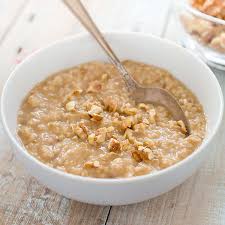
You leave your cold spoon in a hot bowl of oatmeal. What happens after an hour?
The temperature of both the oatmeal and the spoon stay the same
The spoon and the oatmeal become the same temperature
Only the temperature of the oatmeal will change
Only the temperature of the spoon will change
What are some examples of heat transfer?
conduction
convection
radiation
all of the above
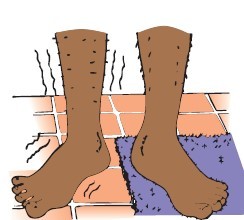
After taking a hot shower, James steps out of the shower onto the tile floor. The tile felt cold to his feet. Which explanation below best describes James' experience?
Heat from his feet is transferred to the tile floor
Heat from the tile floor is transferred to his feet
Cold from the tile floor is transferred to his feet
Cold from his feet is transferred to the tile floor
The most common temperature scale used in the world where water freezes at 0 degrees and boils at 100 degrees is called the __________________ scale.
Celsius
Fahrenheit
Pound
Kelvin
Heating will continue until what is reached?
Energizers
Equilibrium
Equality
Energy
Temperature is a measure of the...
total energy in a substance
total kinetic energy in a substance
average potential energy in a substance
average kinetic energy of molecules in a substance

High temperature is connected to:
Low kinetic energy.
High kinetic energy.
Zero net energy.
Equal kinetic energies.
How does heat move?
In many directions
from warm places to cooler places
from cold places to warm places
Both B and C
Energy from the Sun travels to Earth as
Conduction
Convection
Insulation
Radiation

What causes hot and cold water to become the same temperature once they are combined?
The heat moves from cooler temperature to warmer temperature.
The energy of the hot water runs out.
Heat (thermal) energy from the hot water is transferred to the cold water.
Heat (thermal) energy causes the water to boil.
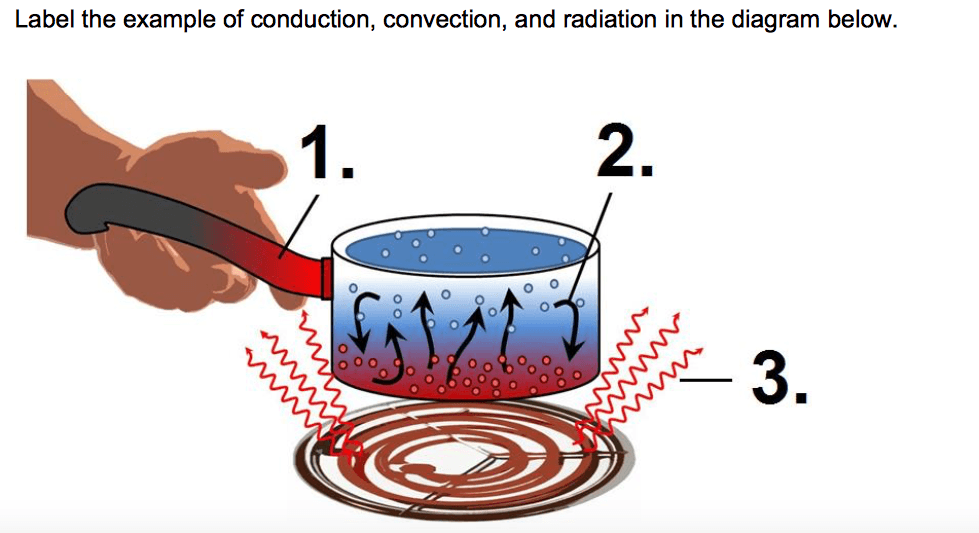
What type of thermal energy transfer is number 1 pointing to?
Convection
Conduction
Radiation
Insulation

What type of thermal energy transfer is number 2 pointing to?
Convection
Conduction
Radiation
Insulation

What type of thermal energy transfer is number 3 pointing to?
Convection
Conduction
Radiation
Insulation

heat flows through
conduction
convection
radiation
You're holding hands with your best friend. Your friend's hands are REALLY warm and yours are really cold. After a few minutes, this has changed. How might you explain what happened?
The cold energy from your hand transferred to your friend's hand through conduction.
The heat energy from your friend's hand transferred to your hand through conduction.
The cold energy from your hand transferred to your friend's hand through convection.
The heat energy from your friend's hand transferred to your hand through convection.

The diagram shows a metal sphere P at 80oC is immersed in a cooler liquid Q. Thermal equilibrium is reached when
temperature of P = temperature of Q
mass of Q displaced = mass of P
volume of Q = volume of P
specific heat capacity of P = specific heat capacity of Q

What happens when the coffee and the cup are in thermal equilibrium?
The temperature of the cup is increasing
The temperature of the coffee is decreasing
There is no net heat flow from the coffee to the cup
There is a net flow from the coffee to the cup

Diagram shows a spoon is placed in a bowl of soup at 95 °C. Which statement is correct when thermal equilibrium is reached?
Temperature of soup is unchanged
Temperature of spoon is unchanged
No flow of heat between soup and spoon
Soup and spoon has the same temperature
Everything has thermal energy
False
True
All matter is made up of atoms that are constantly moving
True
False
Hot things have ____________ thermal energy than cold things
more
less
same
potato
Objects with MORE MASS have______________
lower potential energy
lower number of atoms
higher thermal energy
higher temperature
Cold things often have a _________ kinetic energy because_______
lower; particles are moving around less
lower; particles are moving around more
higher; particles are moving around the same
higher; particles do not move
As temperature increases, molecules _____________
move slower
move the same
move faster
stop moving
Matter that has its own shape and definite volume.
solid
liquid
gas
plasma
Molecules are closest together in a
Solid
Liquid
Gas
plasma
Freezing
Solid to gas
Liquid to solid
Gas to solid
Liquid to gas
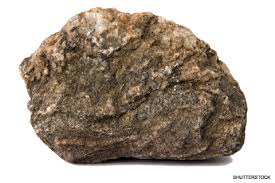
Which state of matter has tightly packed molecules?
solid
liquid
gas
plasma
Particles of a liquid
are tightly packed together and stay in a fixed position.
have no viscosity.
decrease in volume with increasing temperature.
are free to move around one another but still touch.
Particles (molecules) in a ______________________ have more energy than the other states of matter.
Solid
Liquid
Gas
Ice Cube


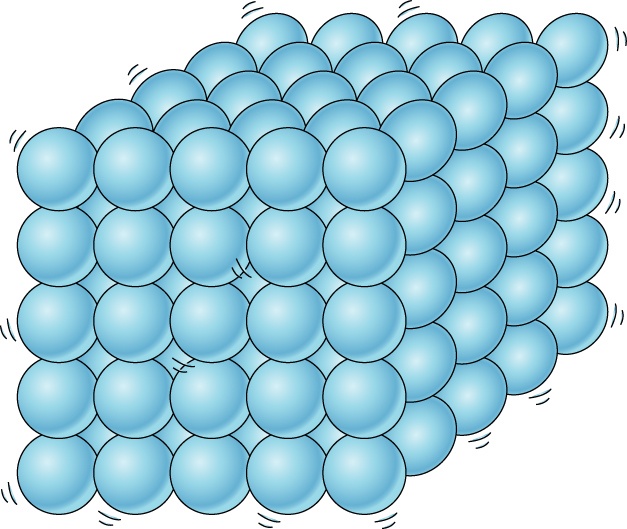
What state of matter?
Solid
Liquid
Gas
Plasma!!!
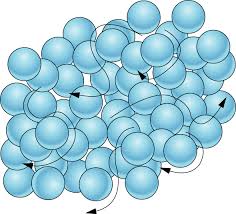
What state of matter?
Solid
Liquid
Gas
Plasma
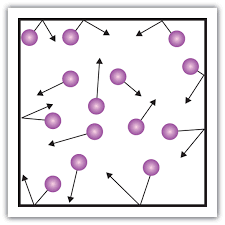
What state of matter?
Solid
Liquid
Gas
Plasma
Which process could cause a material to change state from gas to liquid?
Adding heat
Adding energy
Removing particles
Removing energy
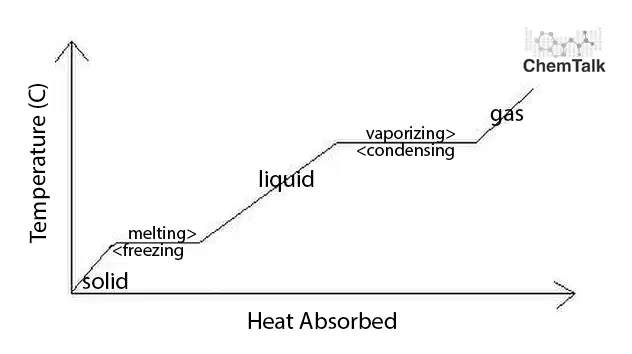
When heating an object, we observe a temperature pause at 0° C and 100° C. The temperature will not change until all the ice has melted or all the liquid has evaporated. Why?
Water is crazy like that.
Space llamas.
The heat energy provided is being used to break bonds instead of increase particle speed.
The heat energy undergoes thermosynthesis.
If I add heat to a solid, how will the motion of the particles be affected?
They will move slower
They will stop moving
They will move faster
They will move to a different container
How can you stop the movement of particles?
Increase the temperature
Decrease the temperature
You can't.
Hold them still with your hands.
What is evaporation?
solid to a gas
liquid to a gas
solid to a liquid
liquid to a solid
What is melting?
Solid to a gas
Gas to a solid
Liquid to a solid
Solid to a liquid
Removing energy from particles makes the particles
move faster
move slower
stop moving all together
remain the same
The particles in a _____________ vibrate, are close together, and do not move freely.
liquid
gas
solid
Anything that has mass and takes up space is called
mass
volume
matter
solid

Which of these three states represents a liquid?
A
B
C

In which state of matter are the particles least able to move?
A
B
C
State of matter with a definite shape and definite volume.
solid
liquid
gas
State of matter with a definite volume, but no definite shape.
solid
liquid
gas
State of matter with no definite shape and no definite volume.
solid
liquid
gas
Basic state of matter with the least amount of energy.
solid
liquid
gas
Basic state of matter with an intermediate (medium) amount of energy.
solid
liquid
gas
Basic state of matter with the greatest amount of energy.
solid
liquid
gas
What happens to particles when their temperature increases?
The particles move slower
The particles move faster
The particles lose mass
The particles gain mass
When ice sits out on a counter and melts, it is because the ice has...
gained mass
gained energy
lost mass
lost energy
When water sits in the freezer and freezes into ice, it is because the water has...
gained mass
gained energy
lost mass
lost energy
The transfer of thermal energy from a warmer object to a cooler one is...
Heat
Volume
Thermal Energy
Temperature
The energy of MOTION is...
chemical energy
radiant energy
potential energy
kinetic energy
What holds a solid together in it's rigid shape?
Thermal Energy
The bonds between molecules
Thermal Equilibrium
Glue

