
Font size
 Worksheets
Our solar system test review
Total questions: 41
Worksheet time: 42mins

This object is made of frozen gas and can take an elliptical or parabolic orbit. It has a long tail composed of evaporating ice.
Terrestrial planets in order 1 being closest to the sun
Mercury
Venus
Earth
Mars
Jovian planets in order 1 being closest to the sun
Jupiter
Saturn
Uranus
Neptune
Match the following
Can float on water
Saturn
Brightest Planet
Venus
Largest volcanic mountain
Mars
Great red spot
Jupiter
20 year seasons
Uranus
Match the term to the location of the item
Meteor
Meteorite
Meteoroid
Where is Pluto located?
The Kuiper Belt
The Asteroid Belt
What type of planet is Pluto?
A "regular" planet
A dwarf planet
An exoplanet
When a meteoroid enters Earth's atmosphere, friction causes it to burn up and produce a streak of light called a ____________.
meteor
meteorite
comet
asteroid
To be considered a planet, what must occur?
Orbits a star
Cleared its orbit of other objects
Be rounded
Spin on its axis
Neptune has rings
True
False

The gas element ___ is responsible for the overall colors of both Uranus & Neptune.
methane
hydrogen
helium
nitrogen
What are the TWO types of craters?
complex craters
big craters
simple craters
moon craters
1. Rays of ejected material radiate ________from an impact crater in all directions.
outward
inward
stays the same
Older surfaces generally contain _______ craters than newer surfaces.
more
less
the same amount of
Planet that is heavily cratered.
pluto
Earth
Mercury
Saturn
Most of these are located between the orbits of Mars and Jupiter.
Comet
Meteor
Asteroid
What does EVE solve in about three seconds in WALL-E?
The Pythagorean Theorem
A Rubik's Cube
World Hunger
Climate Change
What force acted on the massive nebula to collapse it and eventually formed our sun?
A nebula is
a cloud of gas and dust
an asteroid
a protosun
a planet
What is the solar nebular theory?
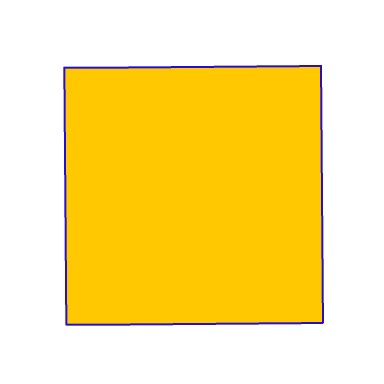
What is the name of this shape?
Circle
Triangle
Rectangle
Square

What type of energy makes things warm?
gravity
friction
Heat

Smaller particles of metal and dust collecting together into larger and larger objects is called . . .
accretion
contraction
explosion
rotation
A nebula exists and starts to cool off. Matter will condense based off of temperature and location. Metals and silicates are created and past the _______ ice particles, silicate, and light metal form.
During the process explained in the solar nebula theory, metal, rock, and ice collect into planetesimals, then what happens?
A black hole is created
What step happens before a solar system is formed?
the nebula will speed up, spin, flatten, and finally collapse.
What is the shape of the Oort Cloud that surrounds the Sun, planets, and Kuiper belt objects?
Cylindrical tube
Flat disk
Cube
Spherical shell
What is Pluto
Dwarf
Planet
Dwarf Planet
A Solar System
Which is not an example of things that support the solar nebula theory?
Solar winds and radiation pressure remove excess gas
Planets orbit in the same direction
Planets are in the same plane
Why is it so hard to identify meteorites and Earth rocks?
Meteorites and Earth rocks are both made primarily of Silicate

Uranus spins ...
just like the other planets in the solar system
on its side

According to the Nebular Theory, what are planetesimals?
Small asteroids outside the solar system
Clumps of matter in the protoplanetary disk
Gases in the nebula
Stars forming near the solar system
What is the result of angular momentum in a collapsing molecular cloud?
The cloud disperses into space
The cloud remains static
The cloud spins into a disk
The cloud expands uniformly
Why do the Jovian planets have shorter days than us?
The Jovian planets rotate slowly due to their small size.
The Jovian planets have shorter days because they are farther from the sun.
The Jovian planets have shorter days due to their rapid rotation speeds and mass.

