
 Worksheets
Creation and Covenant Unit Review
Total questions: 48
Worksheet time: 58mins
What is the purpose of Catholic Education? (Choose two)
Cuz.
So you don't have to go to public school.
To gain knowledge.
The form the whole person (body, mind and soul) through the integration of religious faith and life.

What are the Catholic Graduate Expectations?
37 rules you have to follow to graduate.
Statements related to the knowledge, skills, values, attitudes and actions that educators hope students will gain when they graduate.
Job prospects for graduates of Catholic schools.

There are _____ Catholic Graduate Expectations.
Five
Six
Seven
Eight

Select ALL of the CGE you see listed.
An Effective Communicator
A Responsible Citizen
A good friend
A Collaborative Contributor
A Discerning Believer Formed in the Catholic Faith Community
Select ALL of the CGEs you see listed.
Engaging Speaker
Humble Servent
A Reflective and Creative Thinker
A Self-Directed, Responsible, Lifelong Learner
A Caring Family Member
What order do we write scripture passages?
Book title, Chapter #, Verse #
Verse #, Chapter title, Book #
Chapter #, Verse #
Book #, Chapter #, Verse #
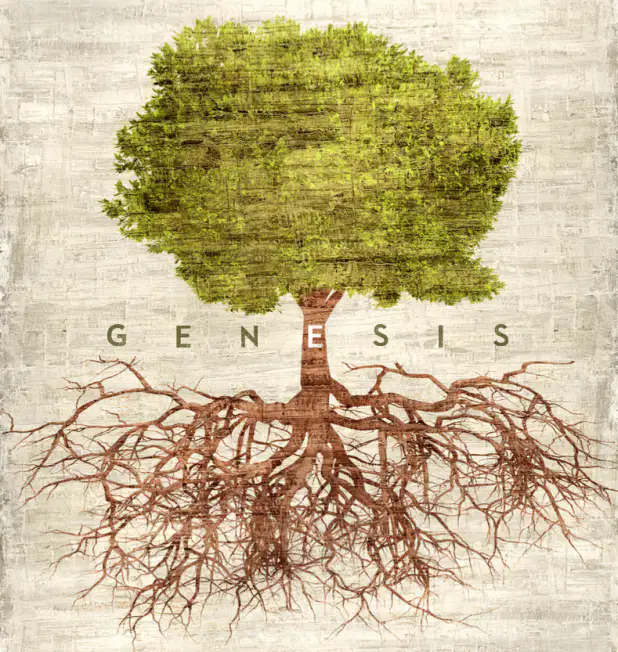
How would you condense the following scripture passage?
The Book of Genesis, Chapter 2, Verse 1-3
The word “bible” comes from the Greek word Biblos meaning __________.
"Best"
"Beautiful"
"Beneficial"
"Books"
“Inerrancy” means...
you are in a hurry to get to church on time for Sunday Mass.
the Bible contains eternal truths that teach us about who we are and what it means to be in relationship with God.
running errands with your family.
you read the Bible and pray to God every night before bed.
When talking about the Bible, “Inspiration” means...
that God inspired the authors of the books of the Bible to record the work of God in their time, and their own lives.
you are creative!
having an aha moment
“Testament” means...
test questions
to answer to God
to walk with God
witness or agreement.
The Gospels are the heart of all the Scriptures "because they are our principal source for the life and teaching of the Incarnate Word, our Saviour". The three stages in the formation of the Gospels are: (select all three).
Stages 1 to 5
The oral tradition
The life and teaching of Jesus
The written Gospels
The illustrated Gospels
There are three different ways to interpret the Bible. What do you call someone who reads the text only?
Dei Verbum
Contextualist
Texter
Textualist
There are three different ways to interpret the Bible. What do you call someone who reads the text along with its context (history, culture, etc.)?
Dei Verbum
Contextualist
Texter
Textualist
There are three different ways to interpret the Bible. What do you call it when the interpreter must investigate what meaning the sacred writer intended to express and actually expressed in particular circumstances?
Dei Verbum
Contextualist
Texter
Textualist
The Old Testament can be best defined as ______________.
God’s agreement with the Hebrew people through Moses
God’s agreement with all people through Jesus
a good book to read
a collection of stories about Jesus' adventures
The New Testament can be best defined as ______________.
God’s agreement with the Hebrew people through Moses
God’s agreement with all people through Jesus
a good book to read
two chapters long
Define Sacred Scripture.
Stories that are scary.
It is the title of a play.
Don't pick this answer.
Sacred (or holy) scripture refers to writings that are regarded as holy in a particular religion, for example the Bible in Christianity.
5 Different Kinds of Truths: select the definition of RELIGIOUS TRUTH.
Using a variety of stories and proverbs (pieces of wisdom) the Bible teaches us what is right versus what is wrong.
Using myths, allegories and parables the Bible teaches us the lessons that a person requires to live their lives in goodness.
The Bible contains the most accurate history of the Hebrew people that we know.
The Bible has recorded how humans have responded and failed to respond with God over the centuries
The Bible reflects the scientific beliefs of the various times it was written.
5 Different Kinds of Truths: select the definition of MORAL AND PROVERBIAL TRUTH.
Using a variety of stories and proverbs (pieces of wisdom) the Bible teaches us what is right versus what is wrong.
Using myths, allegories and parables the Bible teaches us the lessons that a person requires to live their lives in goodness.
The Bible contains the most accurate history of the Hebrew people that we know.
The Bible has recorded how humans have responded and failed to respond with God over the centuries
The Bible reflects the scientific beliefs of the various times it was written.
5 Different Kinds of Truths: select the definition of SYMBOLIC TRUTH.
Using a variety of stories and proverbs (pieces of wisdom) the Bible teaches us what is right versus what is wrong.
Using myths, allegories and parables the Bible teaches us the lessons that a person requires to live their lives in goodness.
The Bible contains the most accurate history of the Hebrew people that we know.
The Bible has recorded how humans have responded and failed to respond with God over the centuries
The Bible reflects the scientific beliefs of the various times it was written.
5 Different Kinds of Truths: select the definition of HISTORICAL TRUTH.
Using a variety of stories and proverbs (pieces of wisdom) the Bible teaches us what is right versus what is wrong.
Using myths, allegories and parables the Bible teaches us the lessons that a person requires to live their lives in goodness.
The Bible contains the most accurate history of the Hebrew people that we know.
The Bible has recorded how humans have responded and failed to respond with God over the centuries
The Bible reflects the scientific beliefs of the various times it was written.
5 Different Kinds of Truths: select the definition of SCIENTIFIC TRUTH.
Using a variety of stories and proverbs (pieces of wisdom) the Bible teaches us what is right versus what is wrong.
Using myths, allegories and parables the Bible teaches us the lessons that a person requires to live their lives in goodness.
The Bible contains the most accurate history of the Hebrew people that we know.
The Bible has recorded how humans have responded and failed to respond with God over the centuries
The Bible reflects the scientific beliefs of the various times it was written.
Select the THREE types of history
Written History- Written stories, guidelines, instructions, historical records
Edited History- The compilers selected the best of what was told and written
Best History- The history that Jesus likes best
Modern History- history of today and how we act based on the Bible
Oral History- Memorized and retold songs, stories and lesson
There are ten literary forms in the Bible. Which literary form is this?
A story about people’s lives, including dialogue and interaction
Drama
Myth
History
Prophecy
There are ten literary forms in the Bible. Which literary form is this?
A speech of a serious or solemn kind, often based on a passage from the Bible
Law
Sermon
Letter
Drama
What literary form is this?
A story which serves to teach a lesson or provide insights into human nature.
Sermon
Law
Parable
Letter
What literary form is this?
A written message, sometimes of a personal nature.
Sermon
Law
Parable
Letter
What literary form is this?
A record or account of past events.
Sermon
Myth
History
Letter
What literary form is this?
Rules telling us how to behave.
Parable
Law
Myth
Letter
What literary form is this?
A prediction made under divine influence and direction, to tell of future events or to warn people about the consequences of their actions.
Prophecy
Poetry
Myth
Letter
What literary form is this?
Expressing the poet’s personal and inner feelings on love.
Prophecy
List
Poetry
Letter
What literary form is this?
A series of names, events, or words, usually in a set order.
Prophecy
List
Poetry
Letter
What literary form is this?
A traditional story focusing on the acts of gods or heroes, often in explanation of some mysteries of life or ways of a particular culture.
Myth
Drama
Poetry
Letter
Name one of the Literary Forms in the Bible. Hint: the last ten questions were about them!!!
Select the TWO main messages from the Creation Stories.
Support and Care for Human Dignity
To love our fellow man
Thou shall not steal
Care for Creation and Stewardship for the Earth
True or False: we have a responsibility to those who come after us and to God's creation to protect both ‘the human environment’ and the natural environment.
True
False
True or False: each and every person is made in the image and likeness of God
True
False
True or False: When respect for human dignity forms the basis of our relationships, God’s divine nature shines forth in a true communion of persons.
True
False
What word can be defined as: "an utterance, a deed, or a desire contrary to the eternal law."
(a)
Sin is often viewed as the harming of a relationship. Select the four major relationships everyone possesses:
GOD
NATURE
YOURSELF
OTHERS (family, peers, etc.)
SCHOOL
There are five forms of de-creation (sin); type in one of the forms.
Hint: Person vs. ________
Select the five forms of de-creation (sin).
Person vs. God
Person vs. Self
Person vs. Others
Person vs. Nature
Person vs. Group
There are three types of De-Creation in the Modern World: Social Justice Issues, Environmental Issues, and Natural Disasters.
Give an example of one of these issues.
Hint: think of the topic of your prayer.
True or False: A covenant and a contract are the same thing.
True
False
The definition of a contract is...
the state or condition of physical touching
an everlasting and solemn agreement made between two or more people
something you buy at the store
a written or spoken agreement that is enforced by law
What is the definition of a covenant?
A written or spoken agreement to be enforcable by law
It is a type of animal
An everlasting and solemn agreement made between two or more people
Fill in the cycle of creation.


